Agility’s Digit 5 Sits Down So It Can’t Fall on You
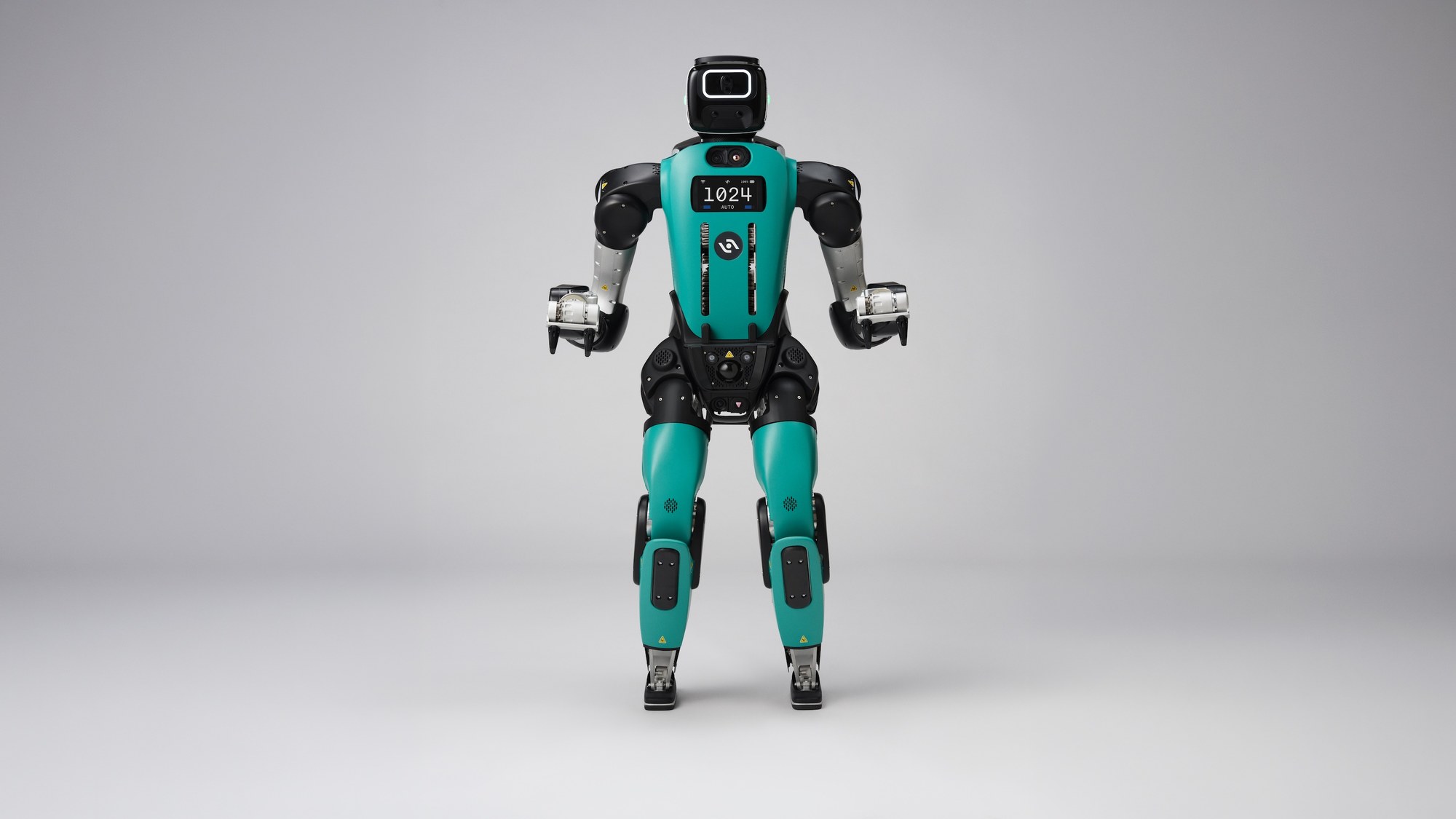
Agility unveiled Digit 5 on September 15 as its first humanoid built for “cooperatively safe” work at scale: close to people, without the cages that still surround most industrial robots. The Salem, Oregon company says the machine can repeatedly lift 50 lb (22.7 kg), run 90 minutes and recharge in 9 minutes, and reach 7.2 ft (2.2 m) from a 5 ft 11 in (1.81 m) stance.
Early access is expected in the first half of 2027, with general availability by the end of that year. Agility also plans EU and UK deployments, with a CE mark described as expected rather than already in hand.
What “cooperative safety” actually does
The safety stack has three named pieces: detect people, signal intent, and supervise motion independently.
- Human detection: proprietary AI plus multiple sensors, watching for nearby people.
- Safety cues: visual and auditory signals so a person can tell what the robot is about to do.
- Safe motion control: a separate controller that can avoid, stop, or put Digit into a seated pose.
IEEE Spectrum’s Evan Ackerman puts the sit-down in plain language: as a person approaches, Digit is supposed to set down its load and, if needed, sit so it is physically unable to fall onto anyone. It is not elegant. It is a verifiable answer to “what if the biped tips.”
Agility CTO Pras Velagapudi told Ars Technica the robot uses “a few different types of vision-based sensors” and NVIDIA IGX Thor plus Halos for Robotics as part of the safety case. Agility also lists itself as a contributor to ANSI/A3 TR R15.108 and ISO 25785-1, the draft humanoid safety standard.
“The robot was designed with a complex safe motion system that can take a variety of different mitigations depending on exactly what sort of human presence is detected,” Velagapudi told Ars.
Hardware that is built for lifts, not bird-legs
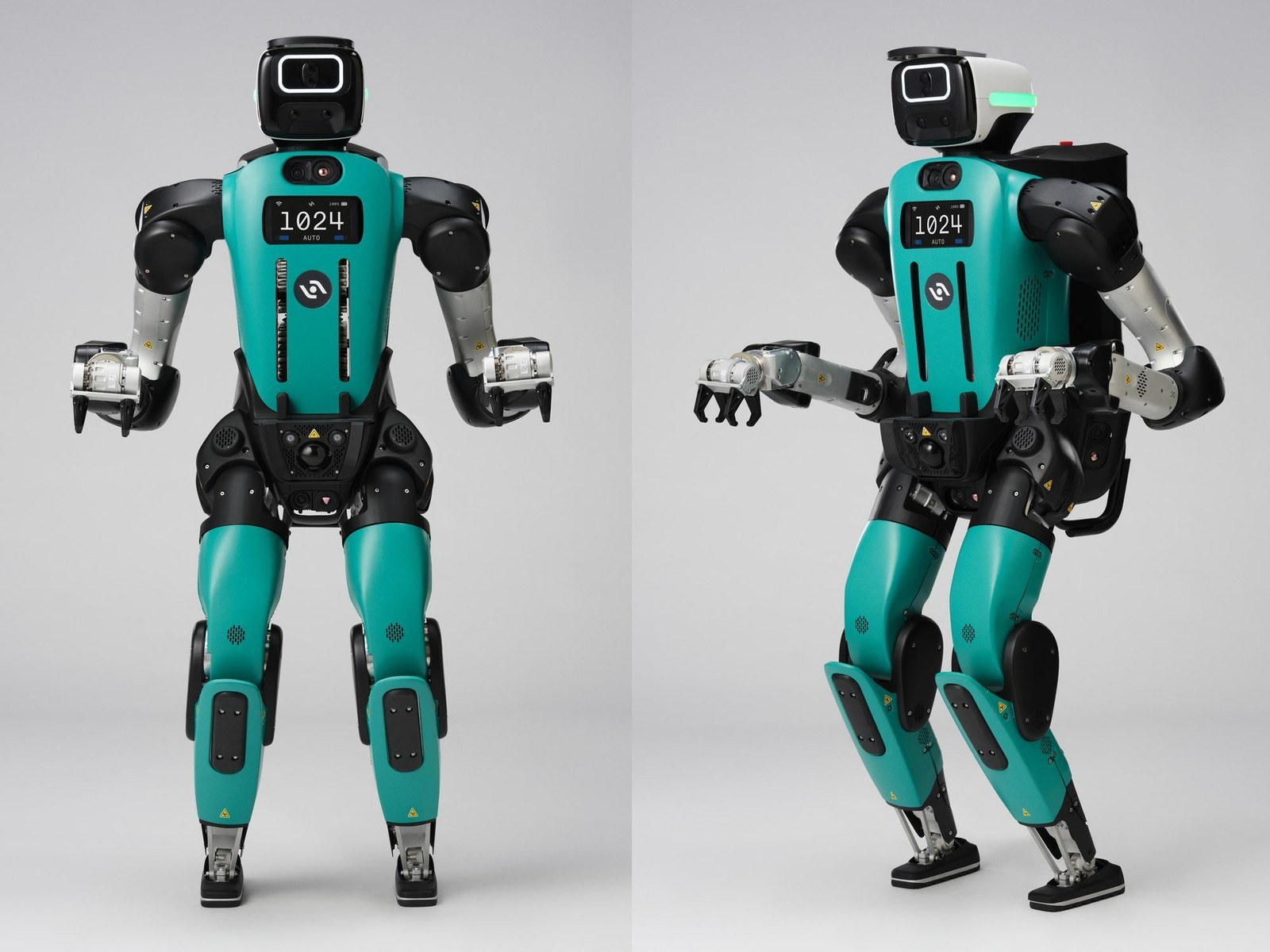
The visible change is the legs. Earlier Digits inherited Cassie’s reverse-knee look. Spectrum notes that bird-like legs are better for dynamic gait, while human-style legs are better for squats and lifts. Digit 5’s new legs use Agility’s cycloidal actuators and are rated for repetitive 50 lb lifts, a 40% payload bump that Agility says covers OSHA single-person lift tasks.
Other numbers from the announcement:
- Weight: 284 lb / 129 kg
- Run-to-charge: 10:1, up from Digit 4’s 2:1, which Agility says supports more than 20 hours of work in a 24-hour day via repeated dock cycles, not one charge
- Grippers: swappable, ISO-standard flanges
- Reach: 7.2 ft, up from Digit 4’s 5.5 ft
Humanoids Daily flags the product-page disclaimer: specs are preliminary estimates from pre-production testing, and some safety features are still in development.
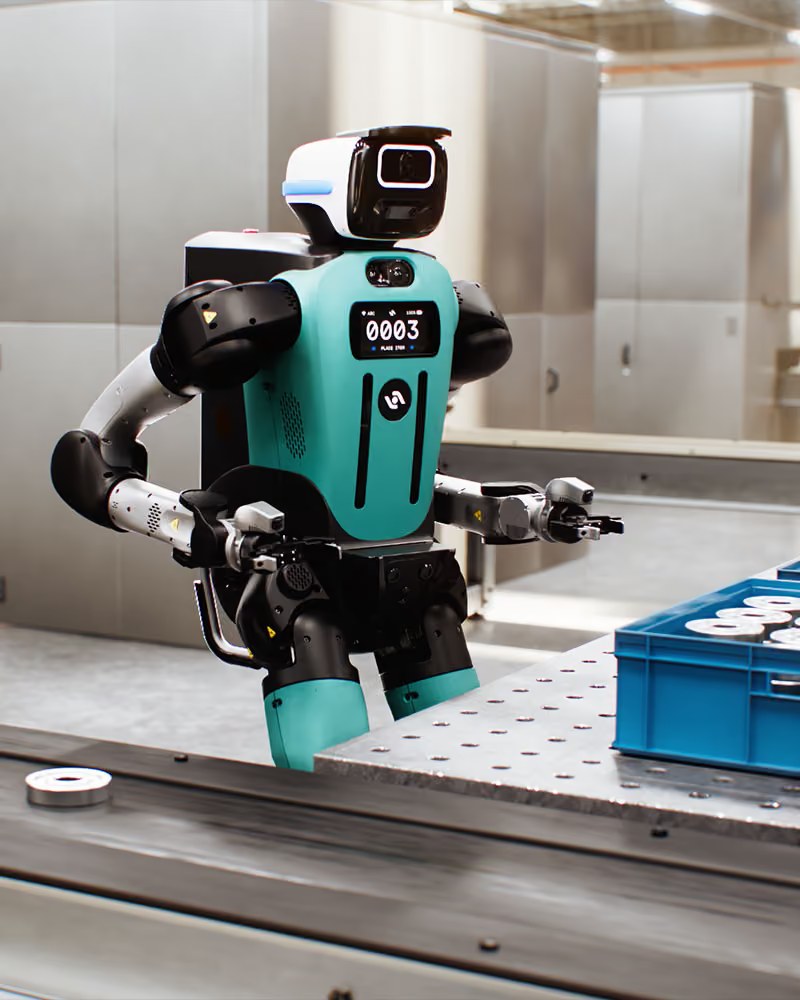
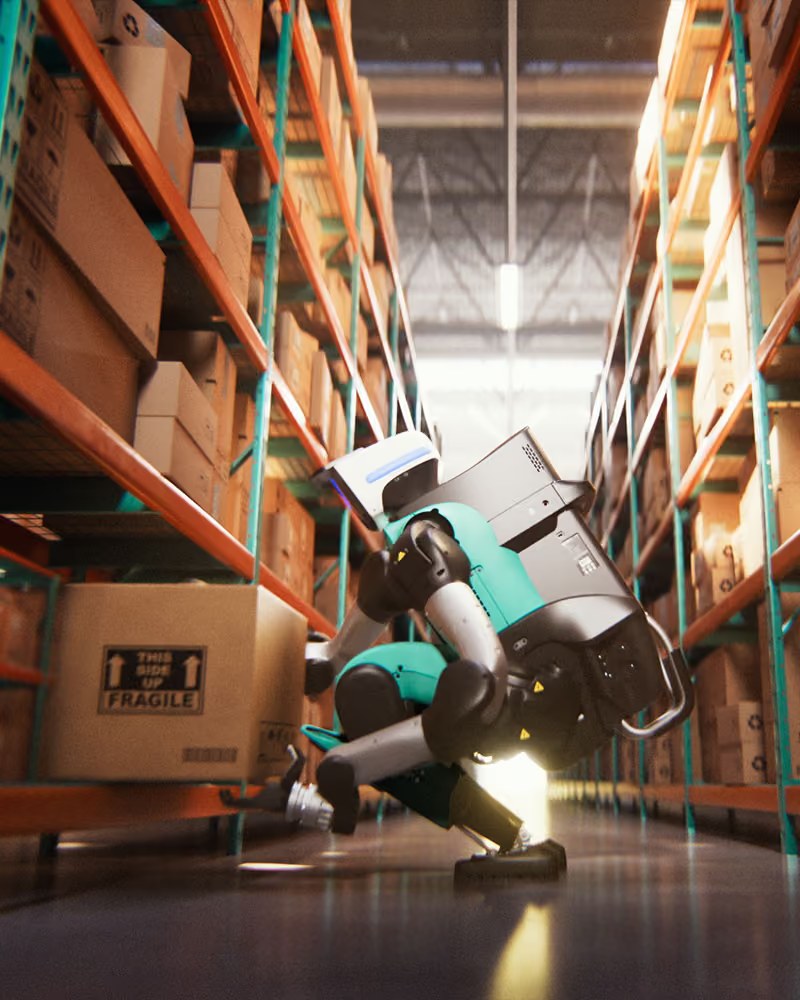
Digit 4 has logged more than 65,000 hours at sites including GXO, Schaeffler, Amazon, and Toyota Motor Manufacturing Canada. At GXO Flowery Branch near Atlanta, Digit 4 hit a cumulative 100,000-tote mark at about 98% on-task accuracy, according to Agility. Digit 5 is supposed to expand from tote handling into depalletizing, machine tending, kitting, sequencing, inspection, and outbound palletizing, coordinated through Agility Arc.
CEO Peggy Johnson said customers asked for this after three years of Digit 4 on their floors, and that as of May 2026 Agility had more than $300 million in multi-year Digit 5 orders subject to contractual milestones.
A Human’s Take
Sitting down so you cannot fall on someone is the first humanoid safety story I have read that I can actually picture on a warehouse floor. The rest of the pitch still has to survive 2027: early access is a year out, the specs are pre-production, and the $300 million backlog is milestone-gated, not cash in the door. If Digit 5 really runs 20 hours a day next to people without a cage, that is the product. Until a customer logs a shift like that, it is a well-photographed safety concept with a new squat.
Sources
- Agility — Digit 5 press release
- Agility — Digit 5 product page
- IEEE Spectrum — Digit 5 May Be the First Humanoid Robot Worker That’s Truly Safe
- Ars Technica — Agility’s new humanoid robot will stop, squat to avoid harming human coworkers
- Humanoids Daily — Agility unveils Digit 5, designed to work closer to people
- Agility Digit 5 launch video — YouTube