ART Lets a VLA Call Night-Vision Instead of Retraining
End-to-end VLAs hate a dark room and a new camera angle. Modular tool stacks hate dexterous action. ART (Agentic Robot with Tool-use), from Astribot, Tsinghua, Juxi, IntelliFusion, and CUHK, fine-tunes a VLA so it can flip on an off-the-shelf tool, then go back to emitting continuous actions.
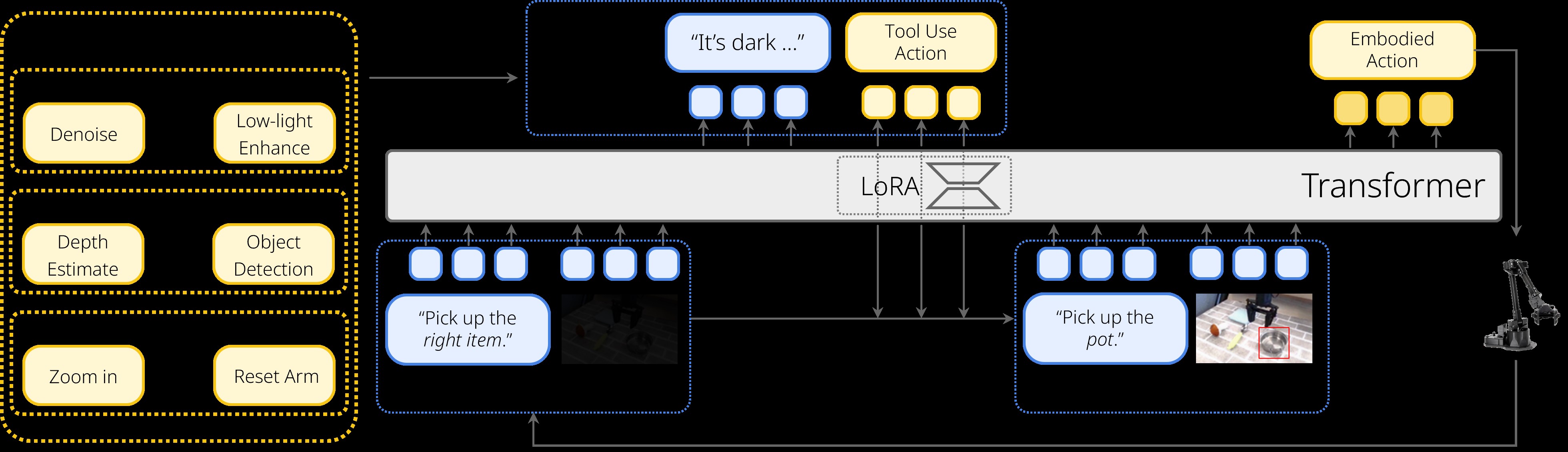
The backbone is pre-trained 3B π-FAST. A LoRA adapter does the tool reasoning. After the tools run, LoRA outputs are masked so the original action head is the one that moves the arm.
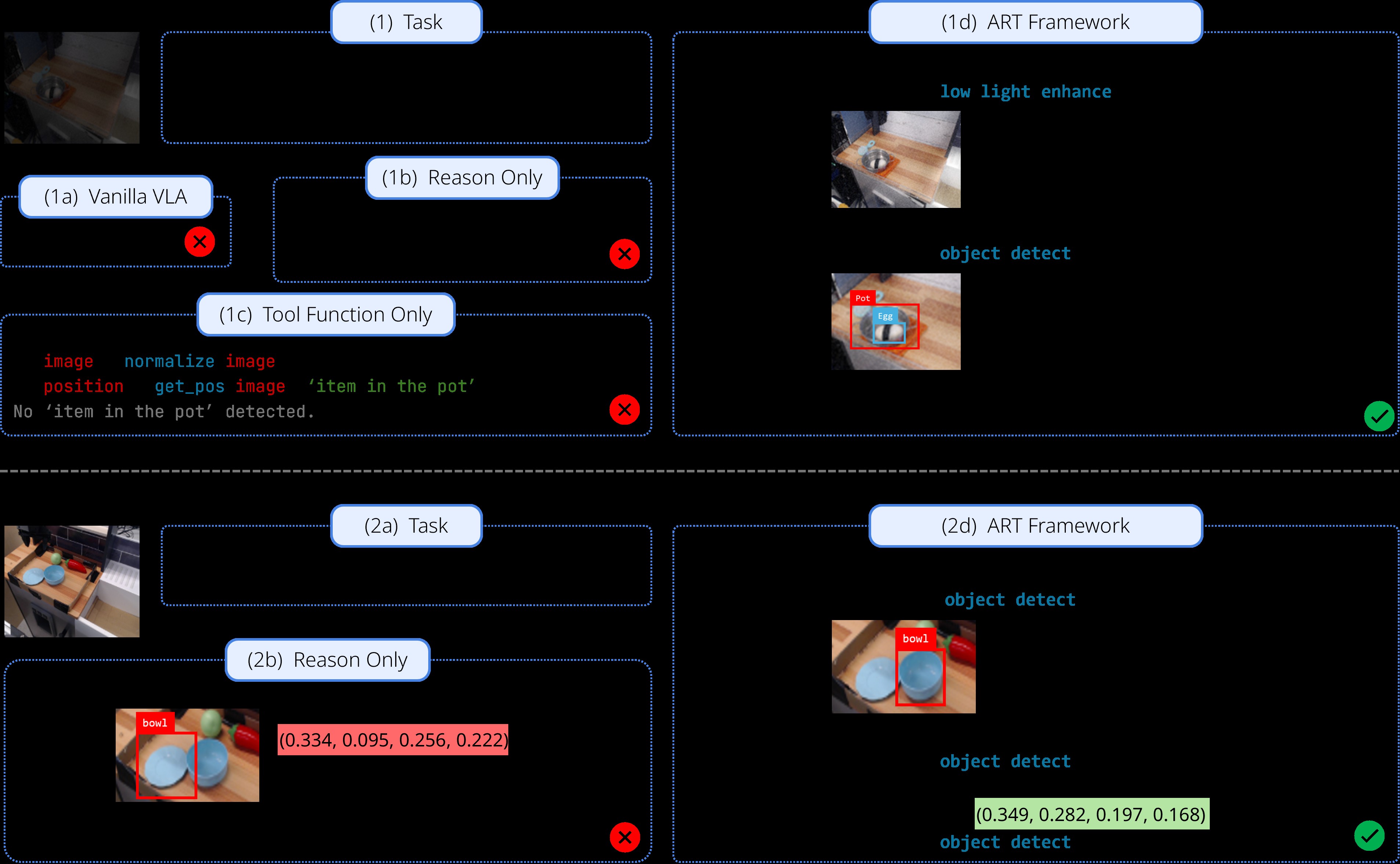
30k synthetic tool traces, not a new teleop farm
They start from existing VLA datasets and “degrade” them: add low light, noise, blur, jitter; rewrite language so the model must ask for depth or detection; shift viewpoint or arm start pose. A language model then writes the tool chain.
Tools come in three buckets:
- Vision: 10 enhancers (low-light, denoise, deblur, jitter fix)
- Affordance: depth estimation and object detection
- Embodiment: camera rotate/zoom and a body reset
The result is AT, which they call the first VLA set with long-trajectory tool reasoning. Fine-tune is 1 epoch on 30k tool trajectories, 8× A800, batch 24, LR 5×10⁻⁵.
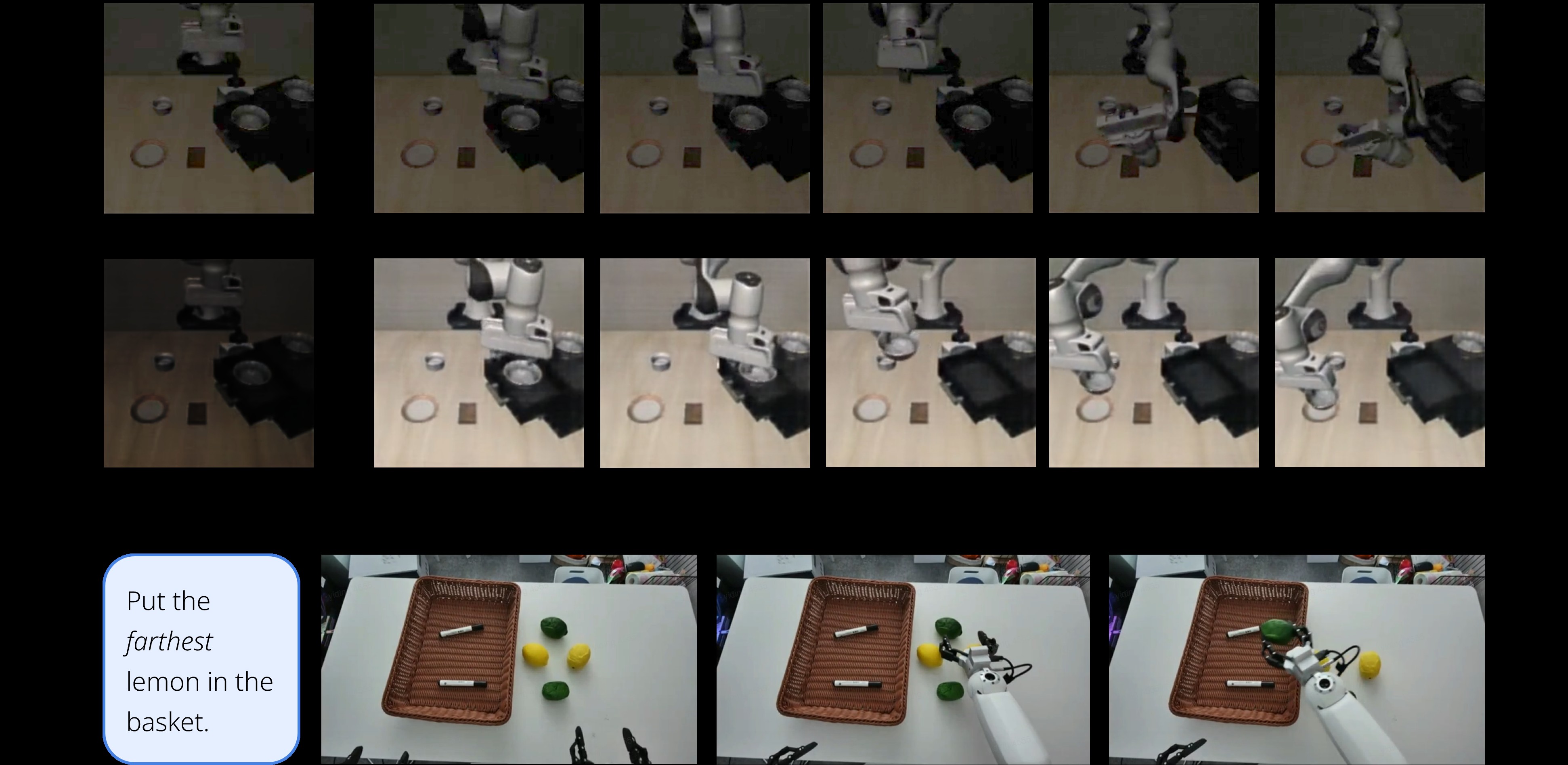
Dark LIBERO, then an Astribot S1
On a disturbed LIBERO split (lighting, noise, sloppy language, camera/body offsets):
| Model | Vision | Affordance | Embodiment | Avg. |
|---|---|---|---|---|
| OpenVLA | 20% | 10% | 7% | 12% |
| π0 | 65% | 15% | 10% | 30% |
| π0-FAST | 60% | 12% | 45% | 39% |
| ART-FAST | 81% | 62% | 82% | 75% |
On a real Astribot S1 humanoid (16 DoF, trained first on 16k pick-and-place traces, 80 objects, 10 containers):
| Model | Avg. |
|---|---|
| OpenVLA | 6.7% |
| π0 | 37% |
| π0-FAST | 43% |
| ART-FAST | 62% |
Same-compute post-training of FAST without tools lands 71 / 61 / 65% on the three LIBERO axes. ART is 81 / 62 / 82%. Against reason-only ECoT on affordance, ART holds 72% with vision corruption versus ECoT’s 12%.
The abstract’s “20% higher success” is the headline gap versus those mainstream baselines.
A Human’s Take
Calling a denoise module is less romantic than a 70B VLA, and that is why I like it. Keep the action head you already paid to train. Spend the LoRA budget on “it’s dark, turn on the lamp.” The S1 numbers are still one company’s robot and one 30k synthetic set. If the tool list is the new hyperparameter, someone will overfit that next.