ASPIRE-VINS Puts Extra Knots Where the Robot Actually Turns
Visual-inertial odometry usually locks its state to camera frames, or it uses a spline with knots every N milliseconds whether you are standing still or whipping a stairwell. ASPIRE-VINS (arXiv:2608.12840, accepted to IEEE Robotics and Automation Letters, June 2026) tries to spend those knots only where the motion needs them.
Authors: Kwangyik Jung, Eungchang Mason Lee, Taekjun Oh, and Hyun Myung.
Three pieces
- Adaptive knot placement (AKP): knot spacing shrinks when filtered velocity changes a lot, clipped to 0.03–0.25 s.
- Multi-resolution splines (MRS): three levels. Coarse keeps the path smooth; finer levels add local wiggle in the tangent space.
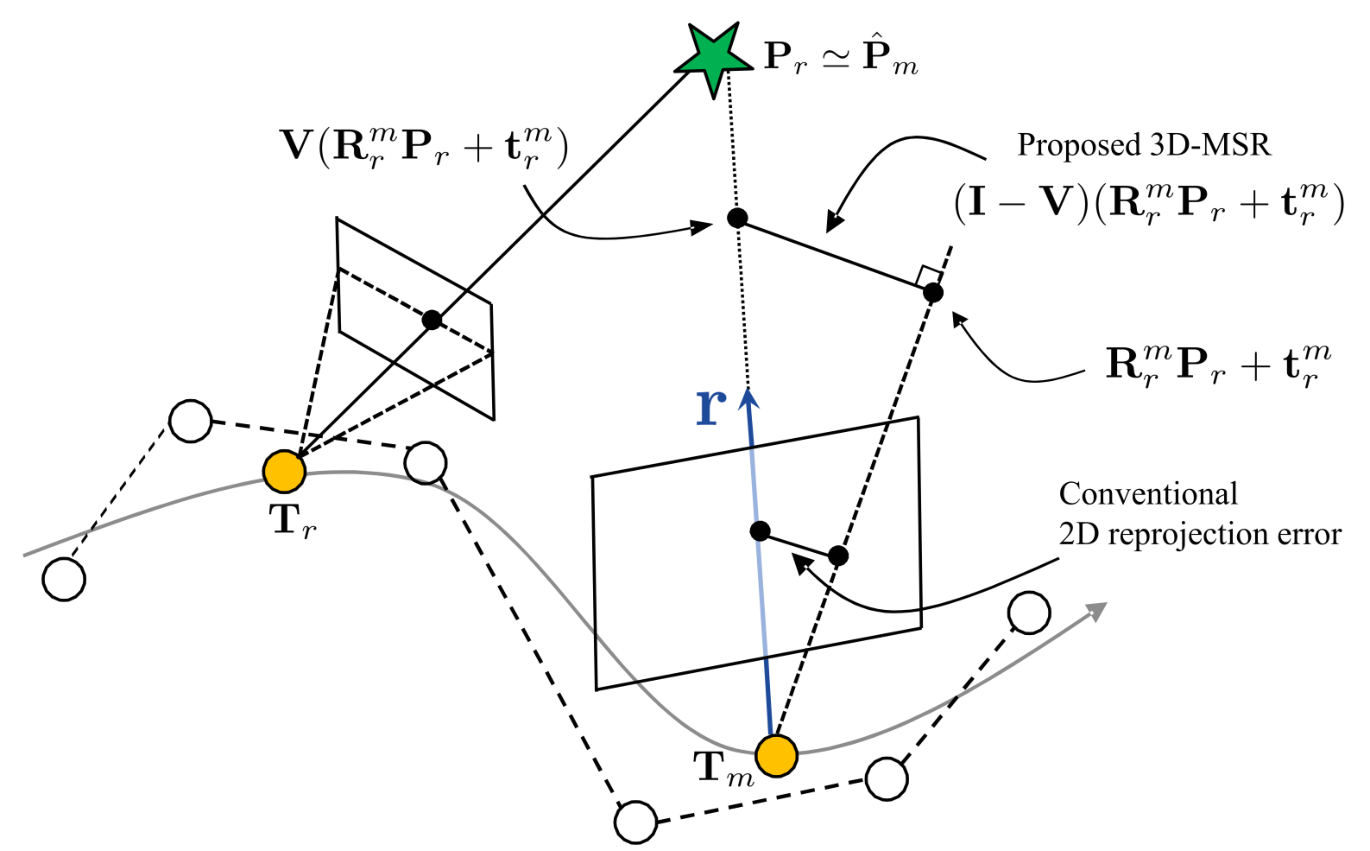
- 3D measurement-space residuals (3D-MSR): instead of 2D reprojection, they push the triangulated point onto the calibrated bearing ray. Depth still comes from multi-view triangulation. Pure rotation does not make depth observable. They say that out loud.
Camera 30 Hz, IMU 400 Hz, spline order 4. Solver is Ceres.
What they beat
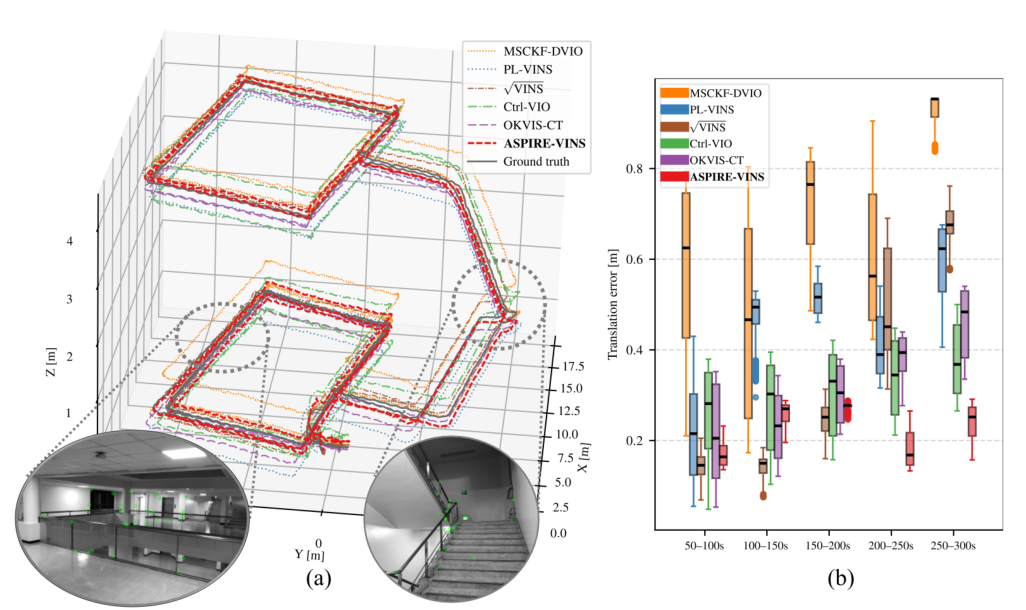
On nine sequences from a UAV-style VIO benchmark (square / circle / infinity × normal / fast / head-turn), ASPIRE-VINS mean ATE RMSE is 0.212 m, about 5.36% under the best listed continuous-time baseline, OKVIS-CT (0.224 m). Gains show up on the fast and head-turning runs. On square-normal, Ctrl-VIO is slightly better.
Runtime on an i7-7567U: 56 ms/frame (~18 FPS). Faster than OKVIS-CT (87 ms) and about even with Ctrl-VIO (63 ms). The square-root filter √VINS is much quicker (18 ms).
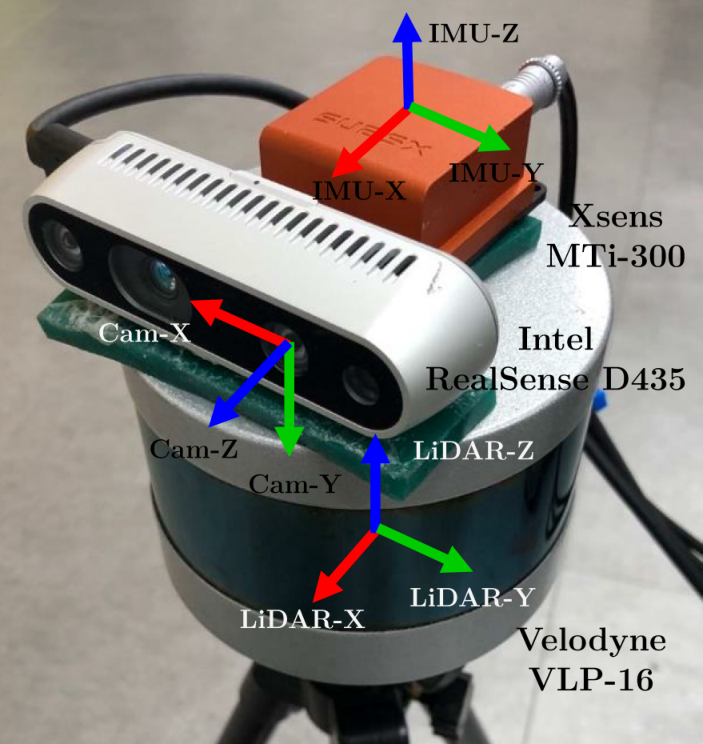
They also ran two campus handheld sets (multistory stairs; indoor-to-outdoor glass) with PALoc LiDAR ground truth, plus Hilti-Oxford exp04 / 05 / 06 / 18. Across those six, mean RMSE is 0.454 m. Stairs: 0.240 m. Hilti exp18 (spiral staircase): 0.379 m.
A Human’s Take
Uniform knots are lazy. If you are going to pay for a continuous-time backend, make it spend degrees of freedom on the landing, not the hallway. 18 FPS on a 2017 laptop is honest. I still want this on a walking humanoid before I retire the discrete filter.