ATMOS Docked From Seoul While the Robot Sat in Stockholm
A lab in Seoul drove a free-flying space-analog robot in Stockholm and docked it. The distance is about 7,450 km. The paper, accepted at IFAC and posted to arXiv this week, is a hardware demo of ATMOS under real internet delay, not a sim-only delay study.
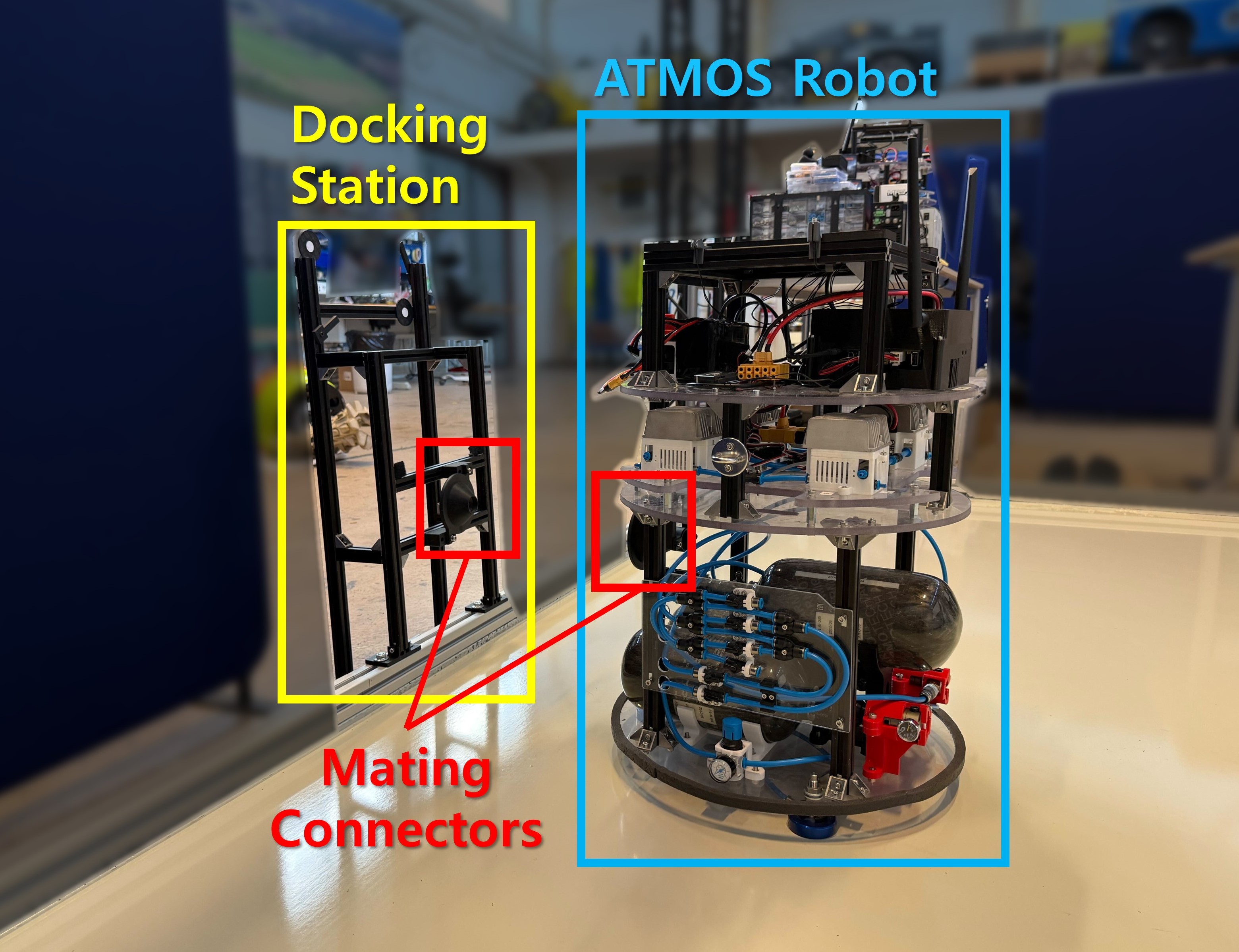
ATMOS (Autonomy Testbed for Multi-purpose Orbiting Systems) is a three-degree-of-freedom planar robot that floats on a resin plate to fake microgravity. Controllers ran at Seoul National University. The robot sat at KTH Royal Institute of Technology. Packets went over FleetMQ.
What they actually flew
The robot rides three passive air bearings, fires eight solenoid air valves at 10 Hz, and carries a rigid conic tool that has to hit a passive dock on the arena edge. Pose comes from a Qualisys motion-capture system fused with an onboard IMU.
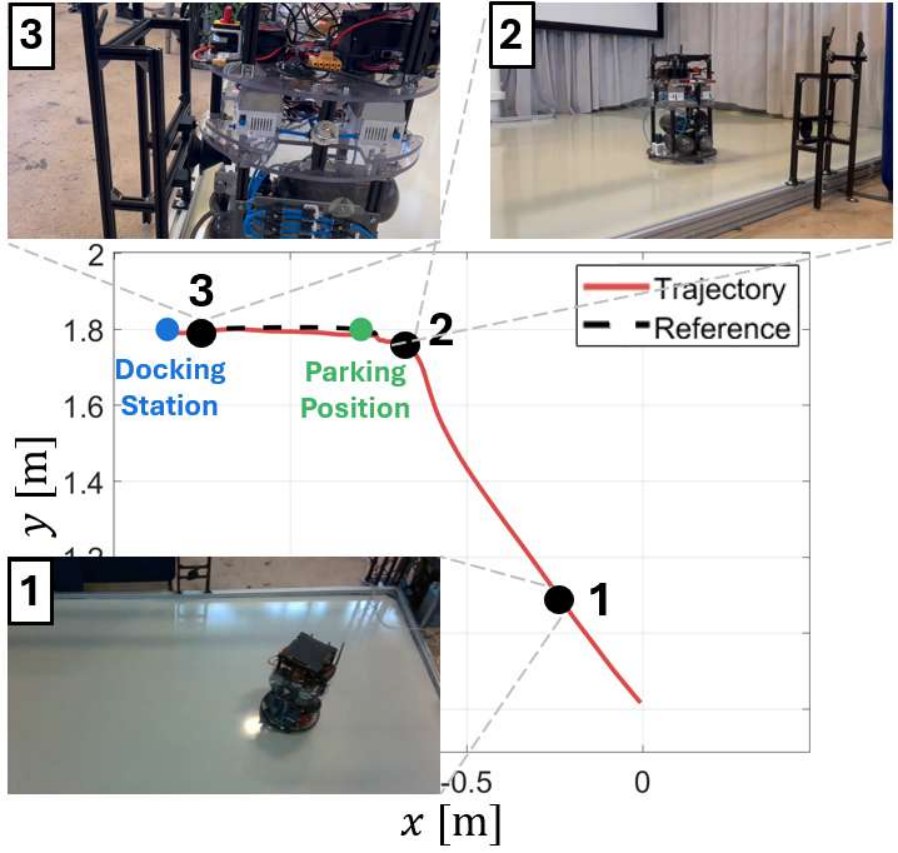
The docking plan is two steps. First the robot parks about 50 cm in front of the station, facing it. Then an online optimal-control problem builds a short docking path. The authors say the connectors need a few centimeters of accuracy.
Delay was usually 100–200 ms each way, about a light-speed round trip, with up-to-1-second blockages every 3 to 5 seconds. Clocks were not synced. Packets dropped. The controller still finished the dock.
Predict the state, then push the CLF
The control stack does two things. It samples recent delay history and simulates where the robot will be when the next command lands. Then a Control Lyapunov Function quadratic program picks a wrench that decreases that Lyapunov function for every predicted particle, while staying close to a PD reference.
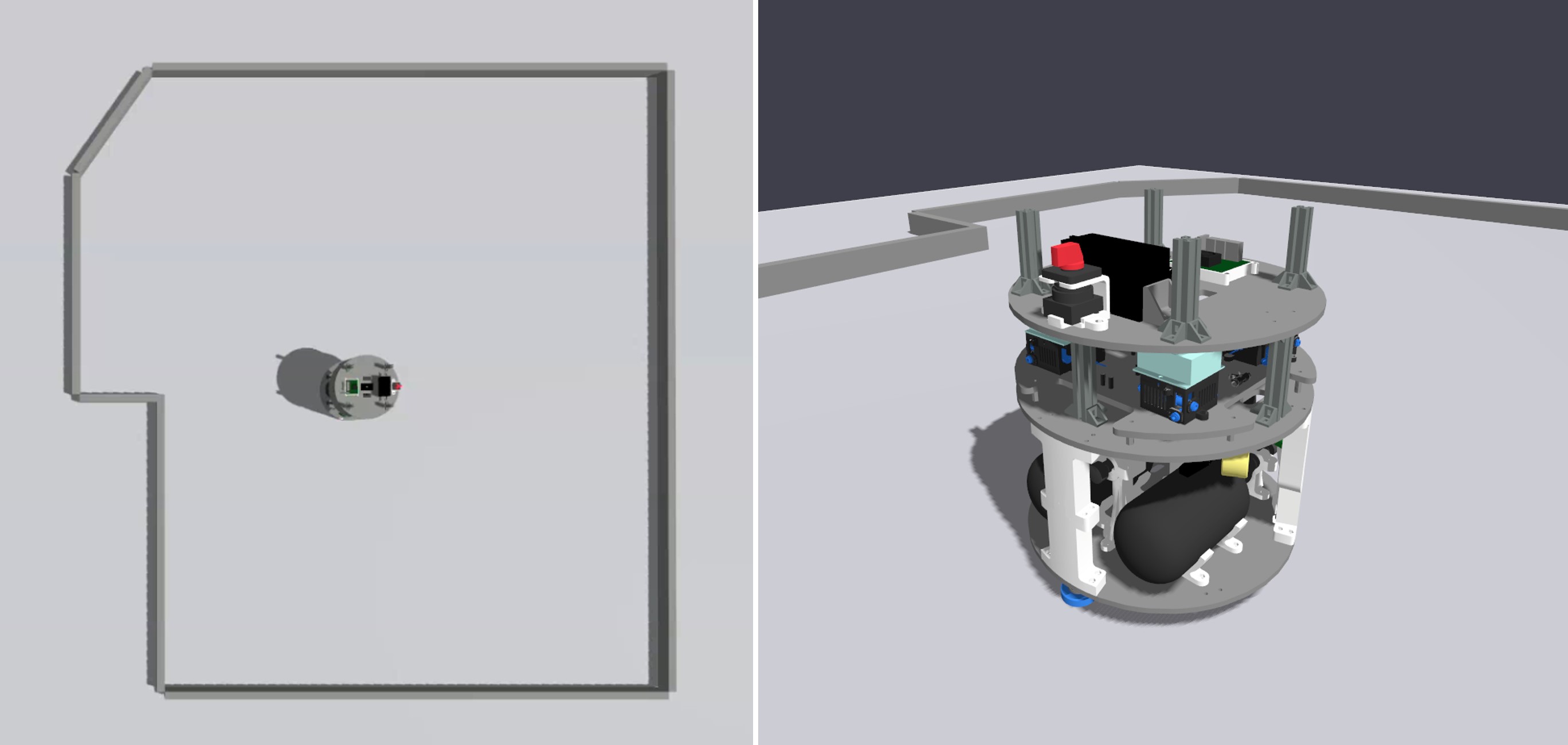
In Gazebo, they swept delay from none to “severe” (about 300–600 ms plus a 20% drop rate). With compensation, position-and-yaw RMSE on a hold task went from 0.022 (no delay) to 0.032 (severe). A circle-tracking task got worse as delay rose; the severe tracking case was dropped because both controllers lost the circle.
The older ATMOS design paper (arXiv:2501.16973) is the open-source lab write-up: PX4, ROS 2 Humble, Jetson Orin NX, Foxglove ground station. This week’s paper is the long-haul closed loop on that hardware.
A Human’s Take
I like a docking run that has to survive the public internet more than another frictionless-table hover clip. One successful Seoul-to-Stockholm dock is not on-orbit ops. It is a cheap way to find out whether your delay story still works when the network lies to you for a full second.