AutoIntervene Hands Control Back When Chunking Policies Drift
Action-chunking policies feel smooth until they don’t. Perception noise or a slightly wrong grasp and the robot still spits out a confident multi-step chunk that no longer matches the scene.
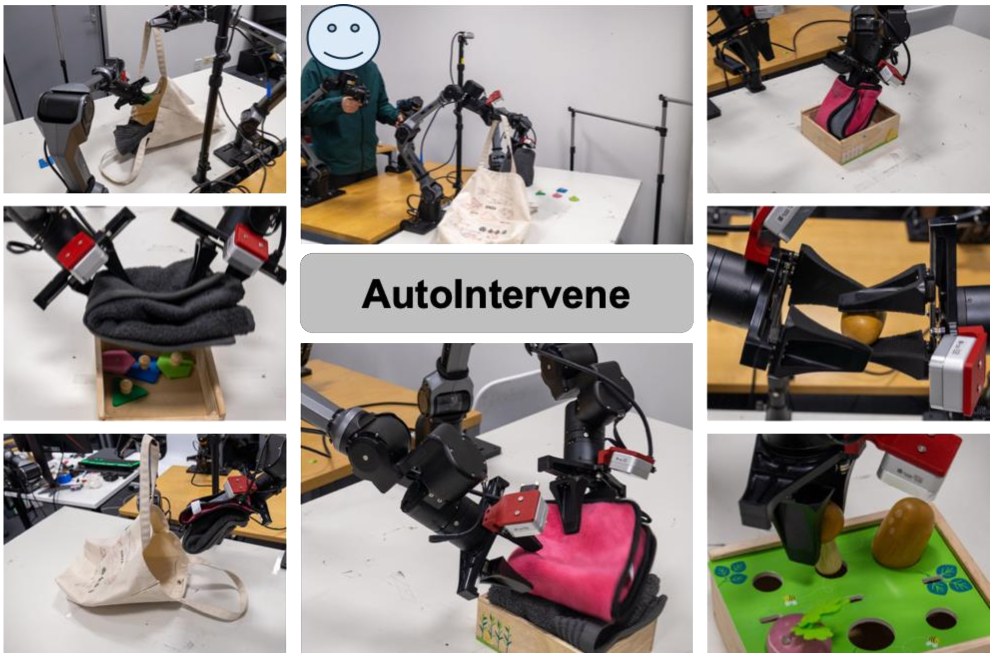
AutoIntervene (arXiv:2608.07065, submitted Aug 7, 2026) is an online framework from Jinhe Tang and Weiming Zhi that decides when to pull a human operator into an action-chunking imitation-learning policy — and when to give control back. Project site: aus.bot/research/autointervene.
How the handoff works
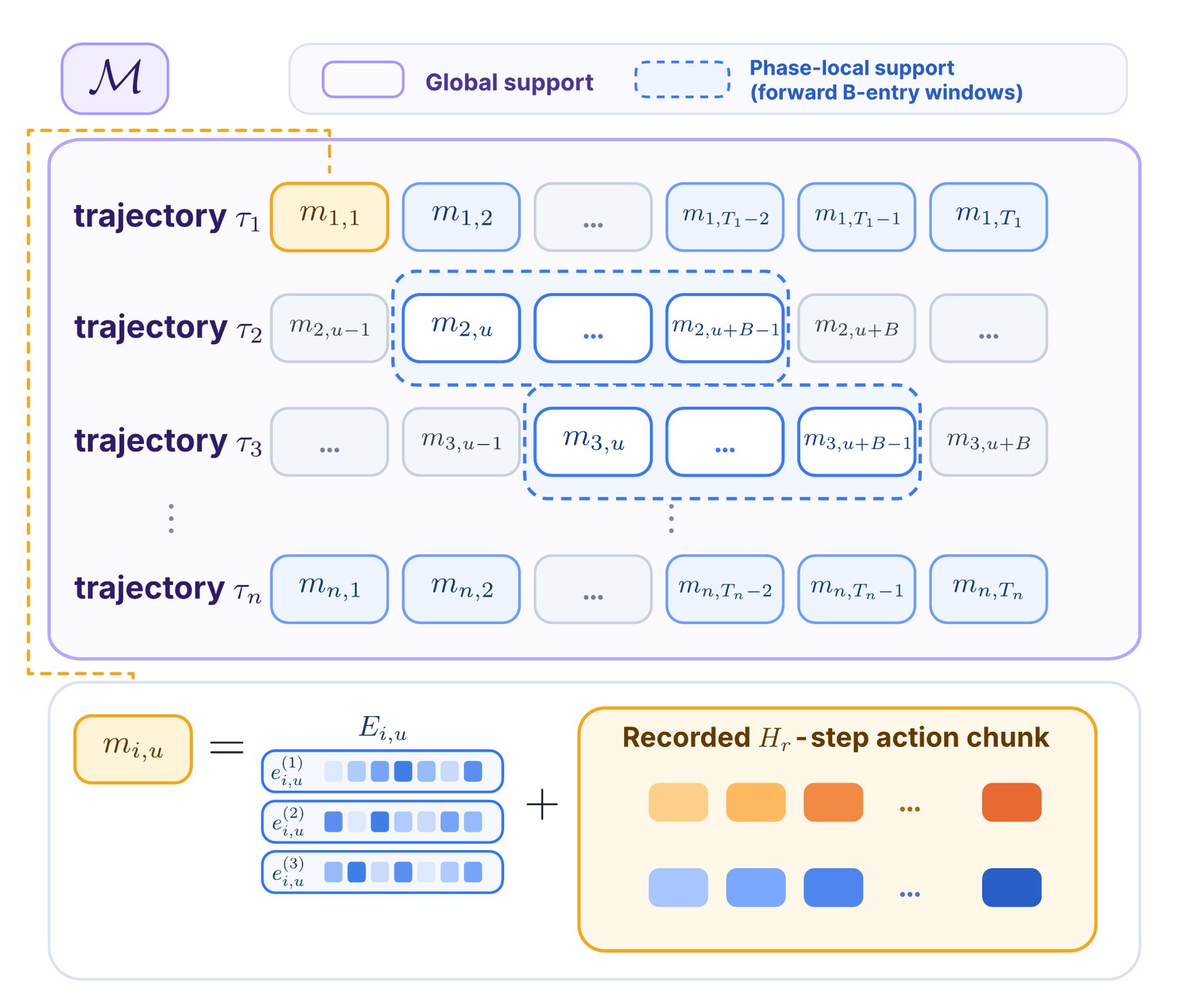
The system builds a visual-action support memory from successful task executions. For each proposed action chunk it scores:
- visual similarity to stored support states
- consistency between proposed actions and reference actions at similar states
Two directions, two rules:
- Phase-local support — decides when to take control from the policy during the current task phase.
- Global support — decides when the operator can safely return control to the policy after a recovery.
Switching thresholds are not hand-tuned score cutoffs. They come from empirical quantiles of evaluation scores on held-out expert demonstrations. Intervention segments from successful rollouts become corrective labels for later policy updates.
Real bimanual results
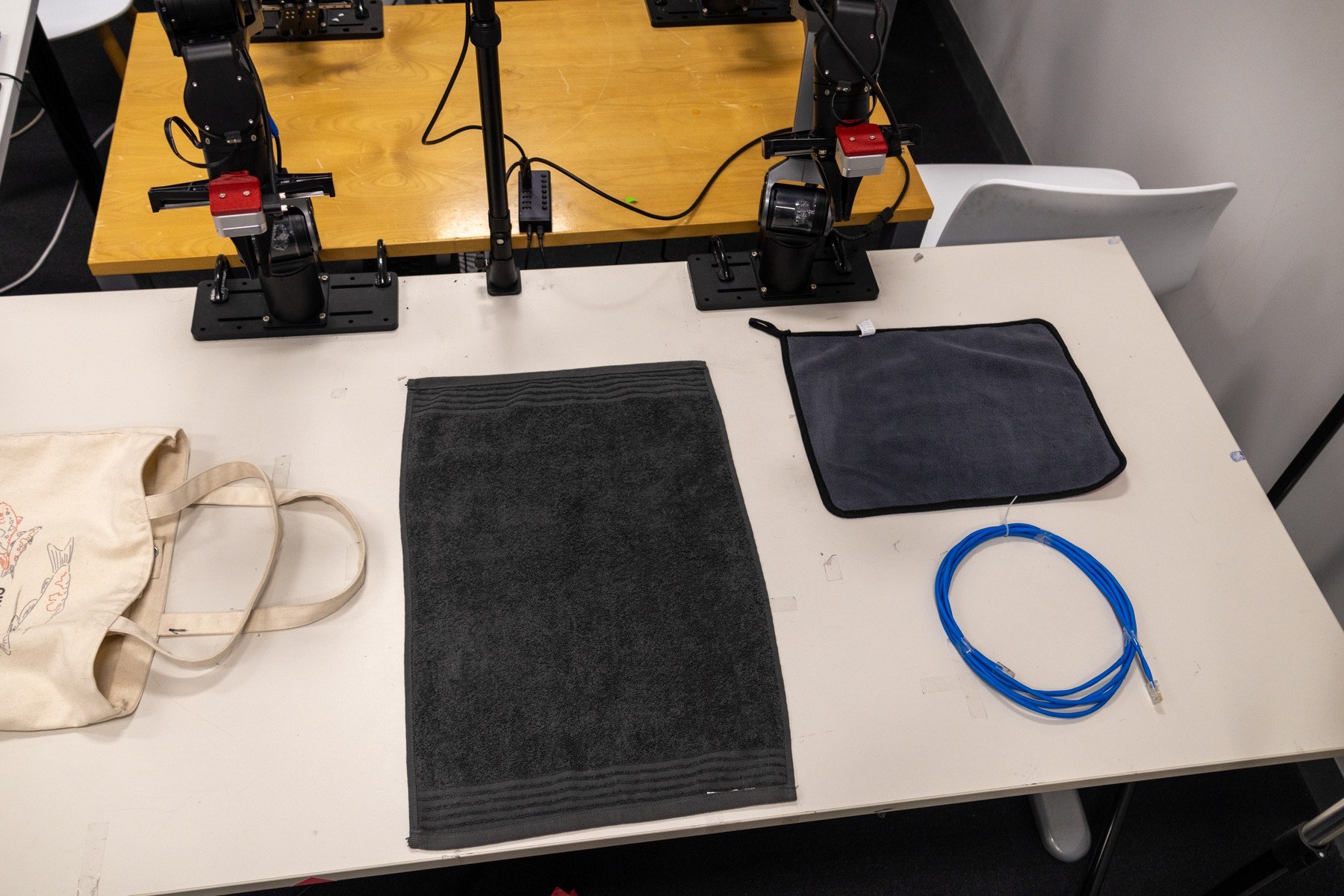
Experiments on real-world bimanual manipulation report higher post-adaptation task success and lower operator-control time than manual intervention baselines. Towel-folding style tasks appear in the paper figures; the authors emphasize long-horizon deployment where drift is more likely than in short scripted demos.
A Human’s Take
Shared autonomy that only fires when the chunk is off-distribution is how you actually staff a cell with fewer operators. The quantile calibration detail matters: without it, someone will hard-code a threshold that either never intervenes or never lets go. I want to see this on factory cycle times, not just research towels, but the problem statement is the right one for action-chunking policies that look great until the first recovery.