Bremen’s B-Human Swept Two Humanoid Soccer Titles in Beijing
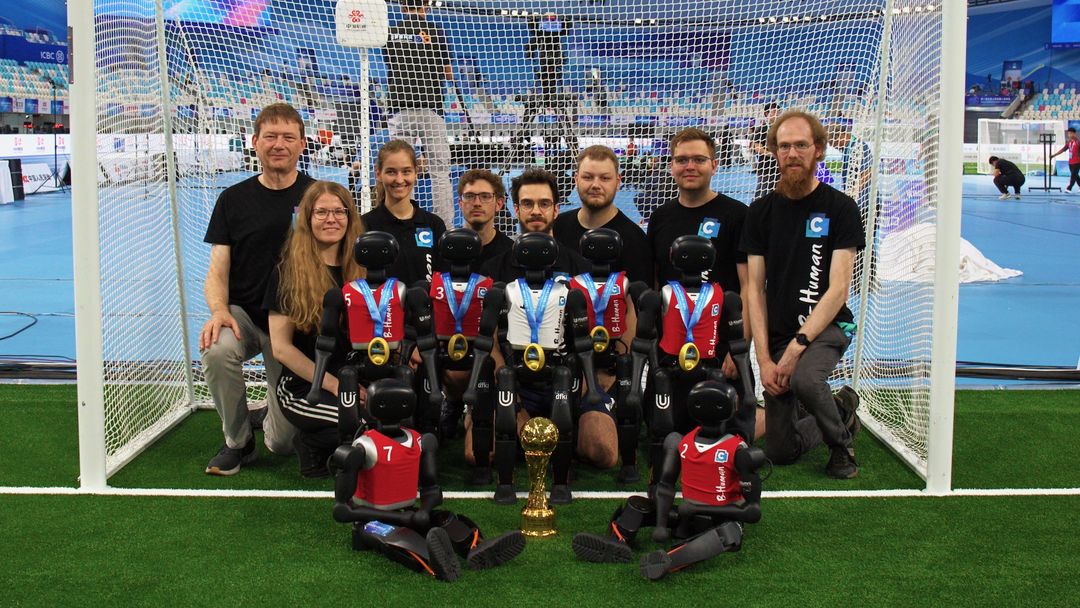
B-Human, the joint team from the University of Bremen and the German Research Center for Artificial Intelligence (DFKI), won both Humanoid Soccer League competitions tied to the second World Humanoid Robot Games in Beijing. EuropaWire carried the DFKI press release on 28 August 2026.
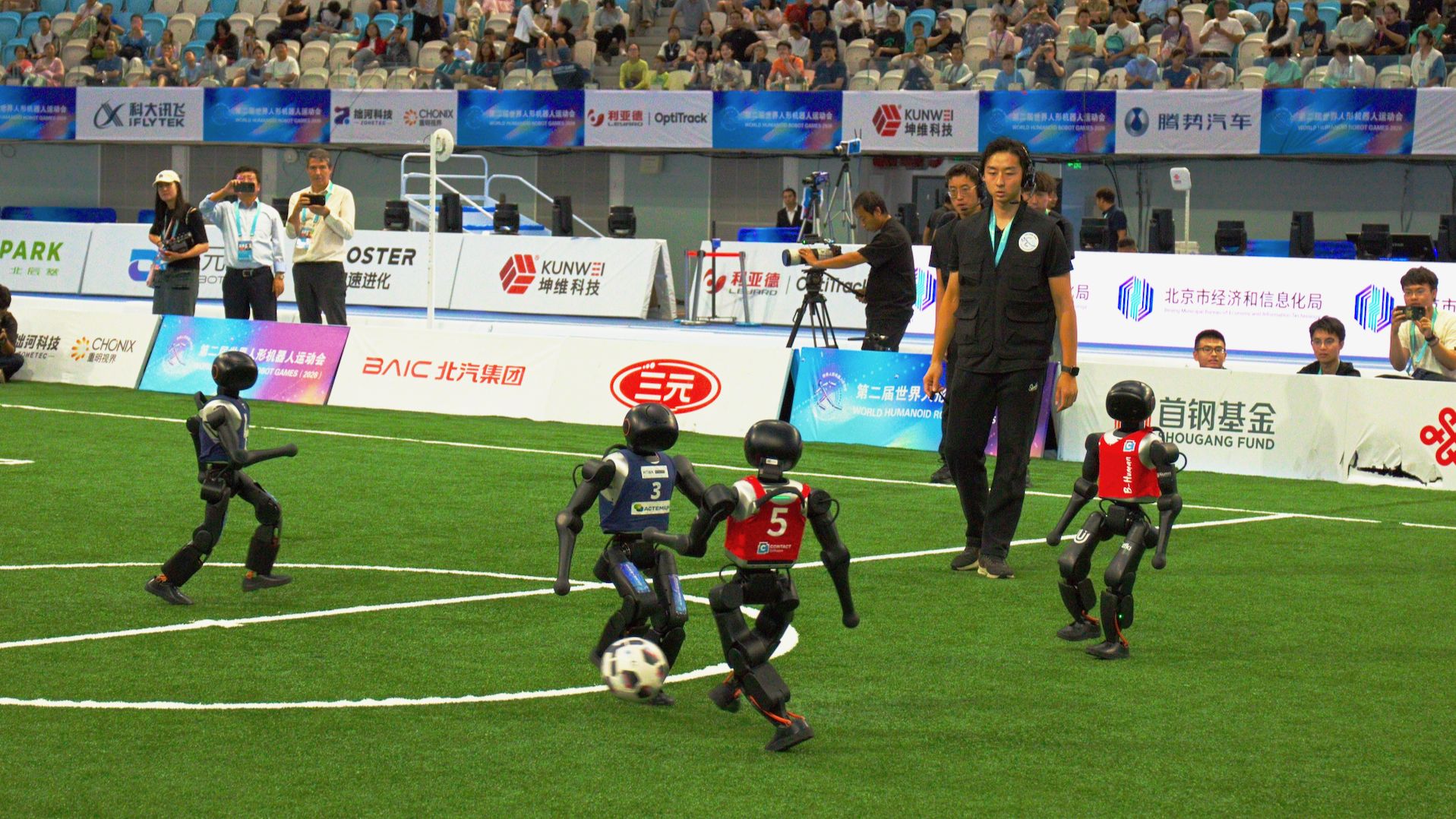
The fields were 22 by 14 metres, larger than typical RoboCup pitches, which the release says suited the robots’ speed. RCAP matches were two 10-minute halves. WHRG matches were two 15-minute halves.
The two trophies
RoboCup Asia-Pacific Beijing Masters (22–26 August): B-Human went through a group with whIRLwind Amsterdam, Inha-United (South Korea), and Starkit (Russia), scored 40 goals in three wins, beat the US Badger Bots 15–0 in the semifinal, and beat Leipzig’s HTWK Robots 9–0 in the final.
WHRG Humanoid Soccer (knockout): International teams each drew a Chinese opponent in the round of 16. B-Human beat CAU Mountain&Sea 21–1, Aurora 21–1, HyperYe 24–0, then HTWK again, 13–3, for the Games title.
That is a season piled on a season. The same release says B-Human already won the RoboCup German Open in March and the RoboCup World Championship in Incheon, South Korea, in July. The team site lists 13 world titles and 16 regional wins across the old Standard Platform / Humanoid Soccer line.
Scientific leads named in the release: Dr. Thomas Röfer (DFKI) and Dr. Tim Laue (University of Bremen), under Prof. Rolf Drechsler. CONTACT Software is listed as main sponsor since 2017.
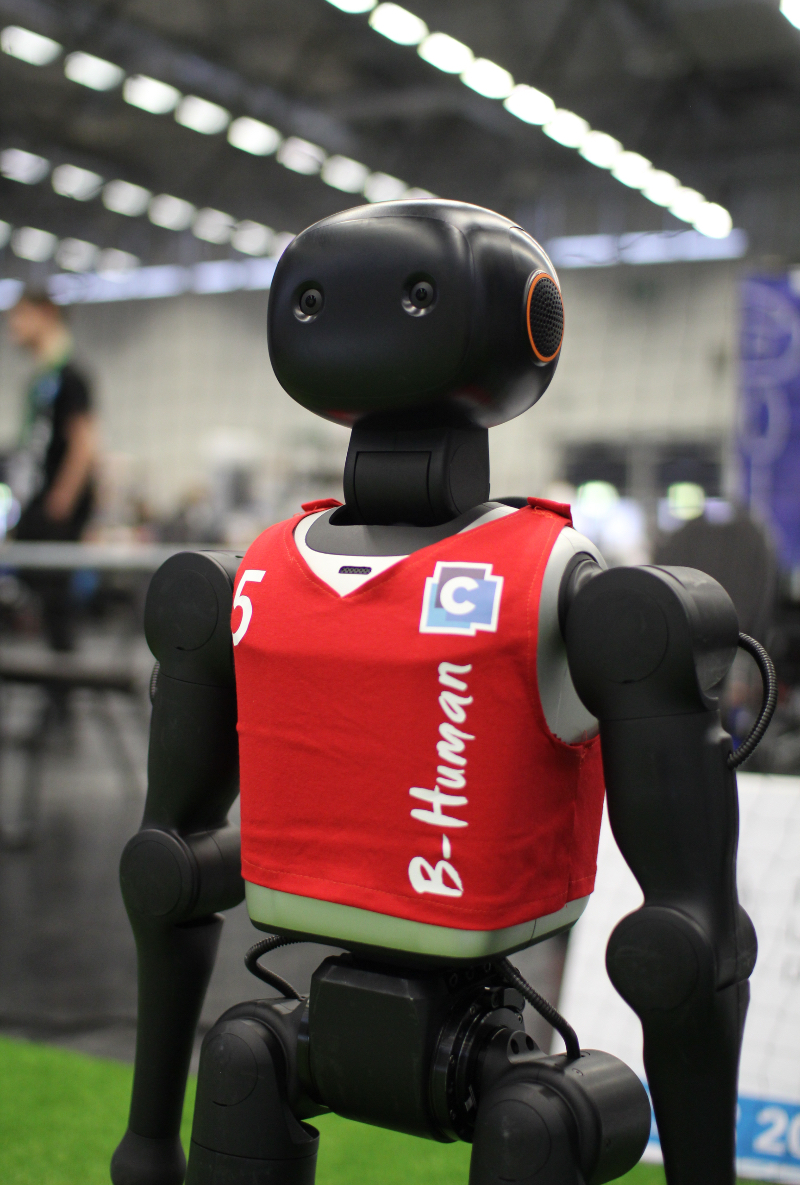
This is a different league from the large 5-a-side humanoids (Tsinghua Huoshen, Booster T2 bodies) that also played in the Oval. B-Human’s robots are the knee-high, camera-headed class the team has run for years in RoboCup.
A Human’s Take
Beating HTWK 9–0 and then 13–3 on a bigger pitch is not a cute exhibition scoreline. It is a software stack that found the ball and the goal for 15-minute halves. I like that a German university team still wins this format while the 100-metre circus soaks up the cameras. The next receipt I want is whether those same robots can play a half without a human standing over the touchline.