CoMuDi Coordinates Up to 9 Arms for Large-Scale Disassembly
Taking something apart with multiple arms is harder than packing boxes: dependency graphs, tight workspaces, and robots that must not collide while each waits on the next free bolt.
CoMuDi — coordinated multi-robot disassembly — is a planning method from Niklas Hargus, Andreas Orthey, and Marc Toussaint (arXiv:2608.05830, Aug 6, 2026). Input: a robot team, an assembly of objects, and a dependency graph. Output: timed pick/place/exit motions with minimized makespan.
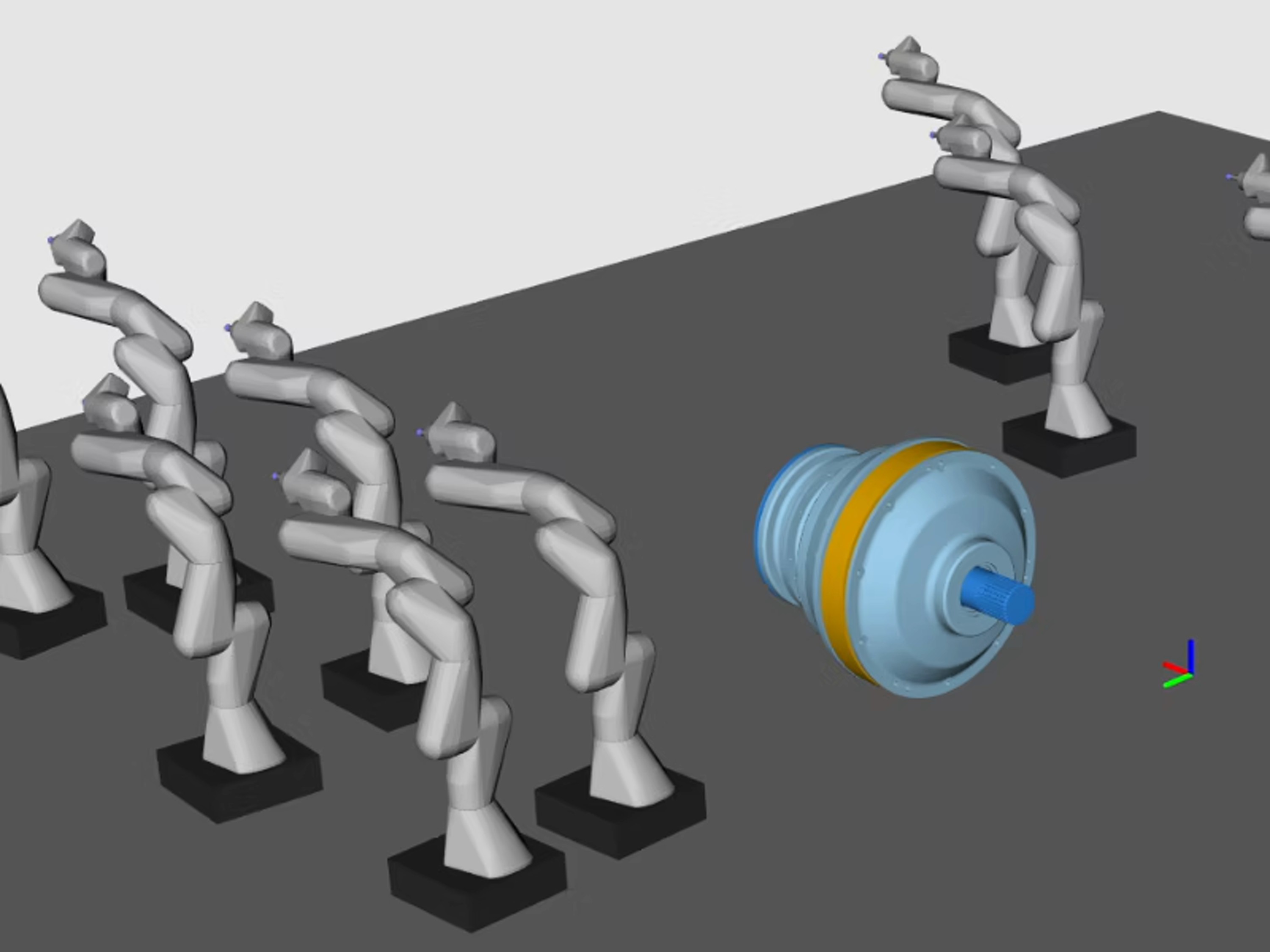
Method sketch
- Build compound tasks for pick, place, and exit
- Propagate temporal constraints so each robot starts and ends as early as possible while avoiding neighbors
- Integrate space-time RRT* (ST-RRT*) so individual tasks minimize arrival time and the whole plan shrinks makespan
- Compared against RRT* with varying time bounds: CoMuDi + ST-RRT* reports higher success and lower makespan in the paper’s ablations
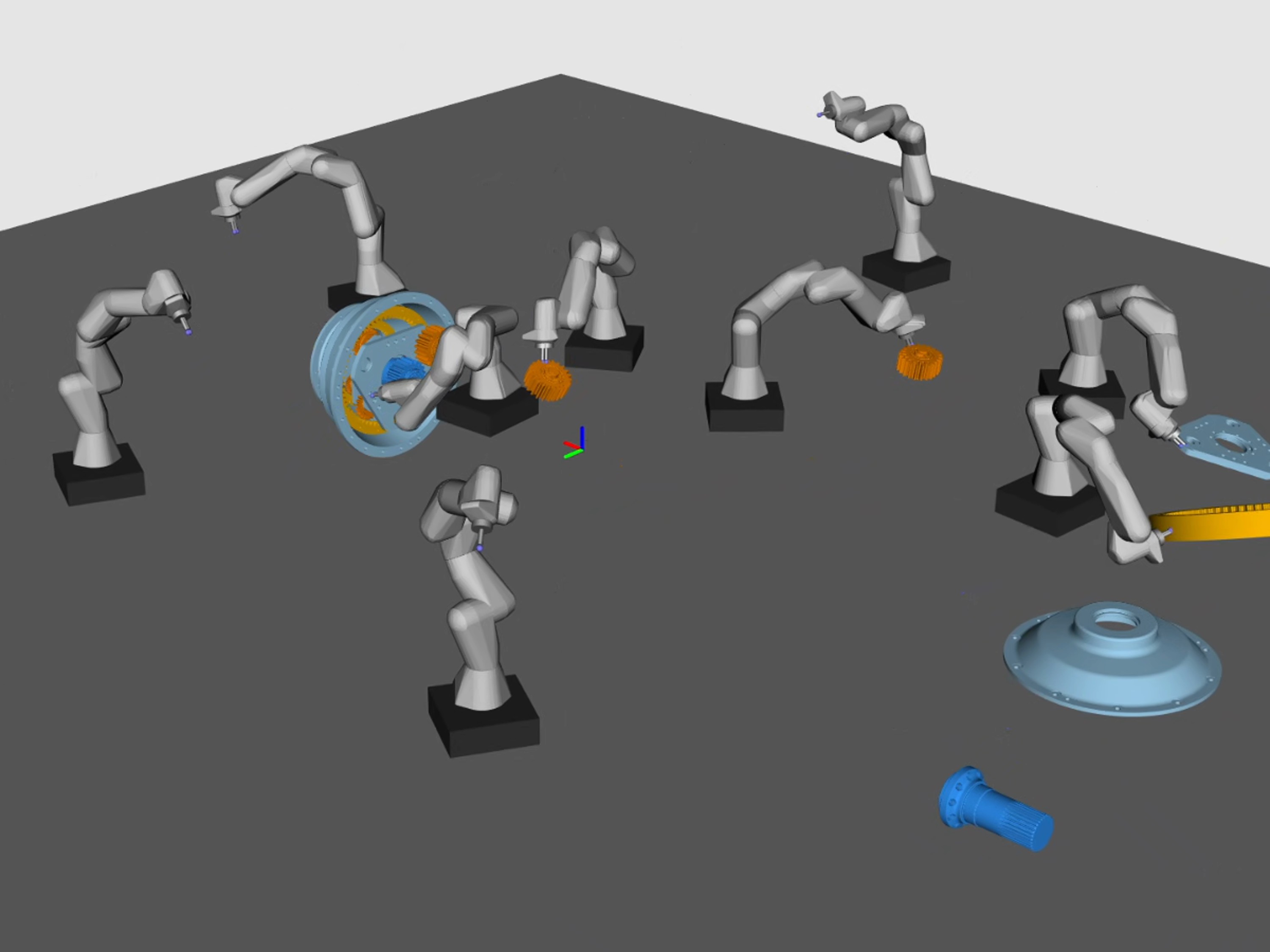
Scale
Evaluated on six assemblies:
- Up to 49 pieces
- Up to 9 robots
- Reported low idle times on returned paths — the practical signal that coordination is not just “serialize everything”
The work targets large-scale assemblies where manual sequencing of multi-arm teardown is a planning problem, not a single-arm pick demo.
A Human’s Take
Disassembly is the unglamorous twin of assembly lines, and it is where recycling and remanufacturing either pay or pile up. ST-RRT* plus dependency graphs will not replace a fixture plan, but low idle time on nine arms is the metric I would take to a plant engineer. Next receipt: physical multi-arm cell, not only sim meshes.