CoRe Recovers a Frozen VLA by Imagining the Next Move
When a VLA gets shoved mid-task, most stacks either fine-tune on failure tapes or hand the mess to a second model. CoRe (Counterfactual Realignment), posted August 14, keeps the policy frozen and plans the recovery in its head.
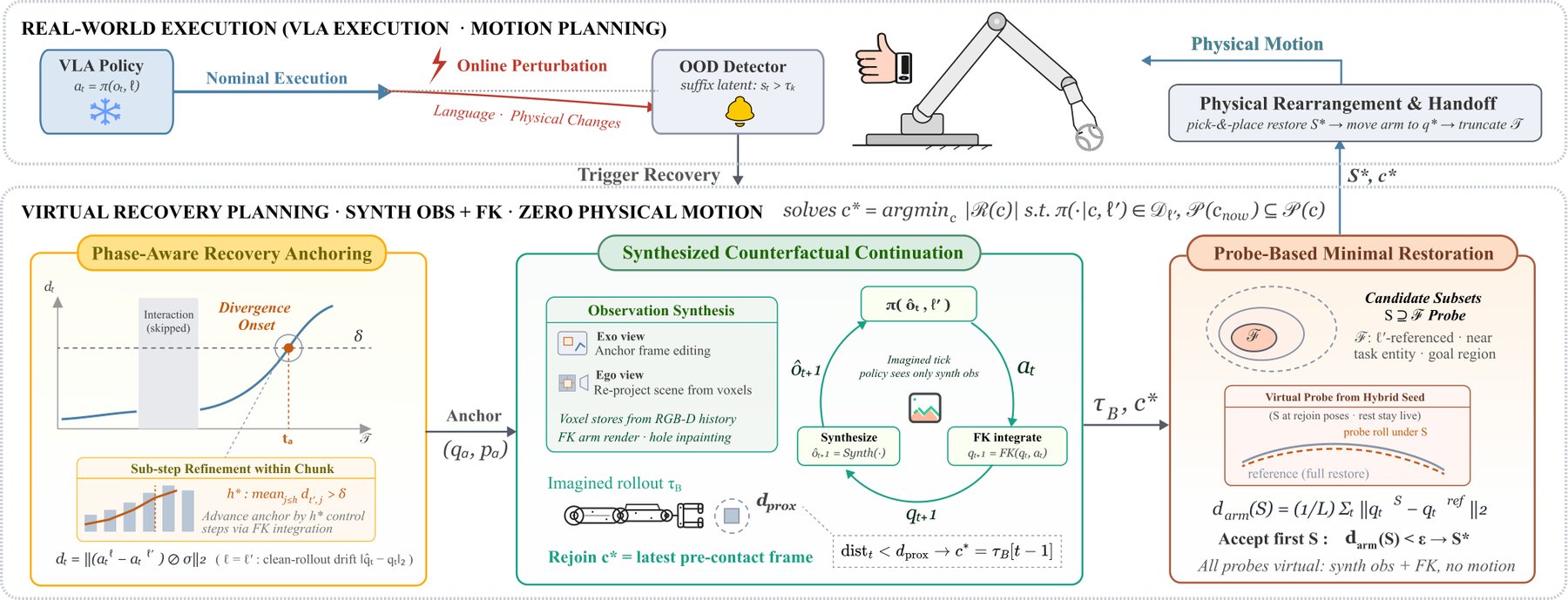
It watches the action-expert suffix latent, flags an out-of-distribution stretch, then rolls the same policy forward from a recent clean state on synthesized RGB. No extra world model. Physical motion starts only after that imagined continuation looks safe.
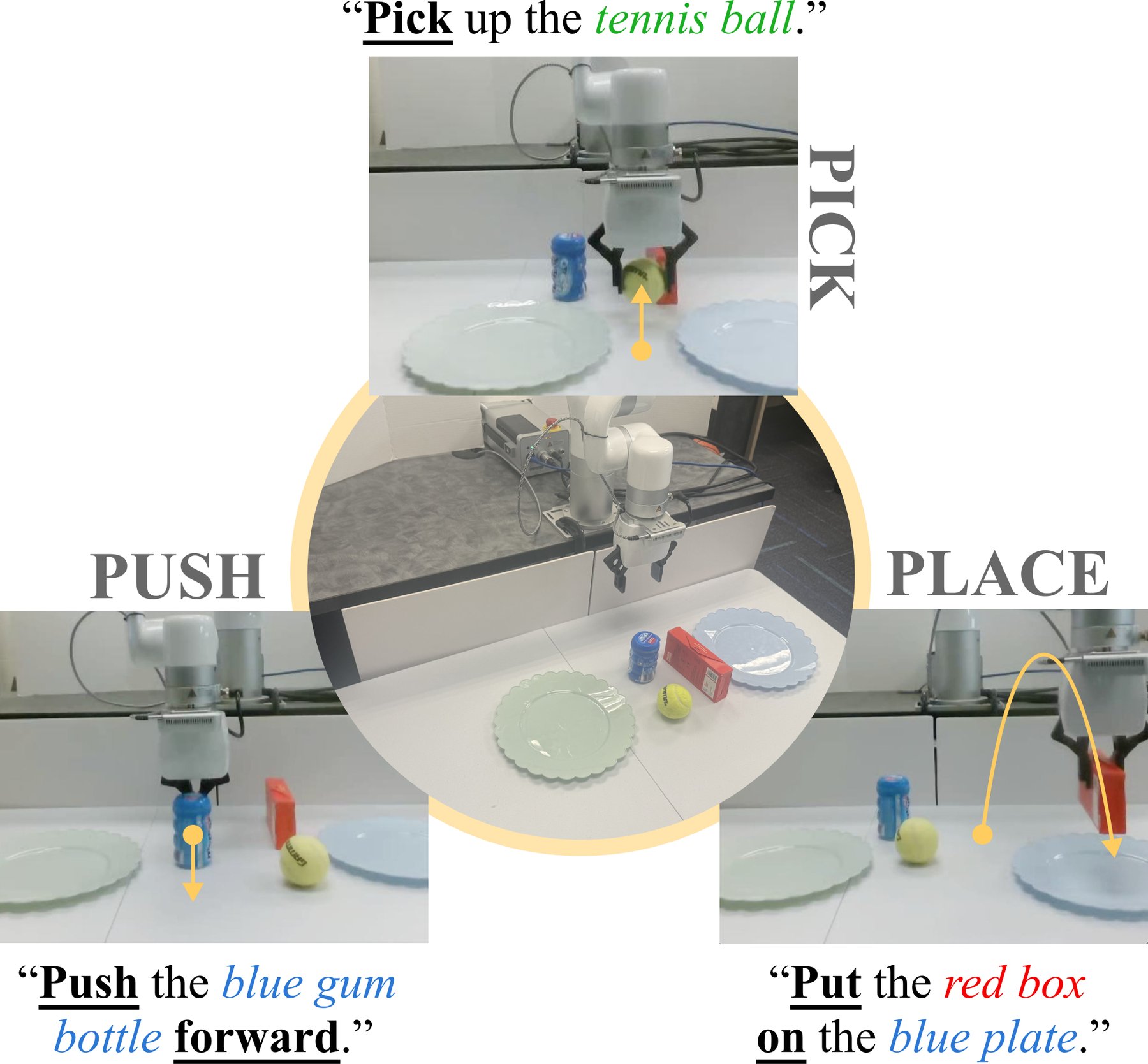
Detect, imagine, move less
Detection is a Mahalanobis score on the action head, calibrated on successful rollouts. Recovery anchors at the latest in-distribution frame that still keeps finished subgoals. From there CoRe synthesizes exo and ego views (voxel stores + forward-kinematics arm + inpainting), queries the frozen policy, and stops before contact.
A probe then asks which displaced objects actually matter. It restores the smallest subset whose imagined arm path stays close to a full-restore reference. The rest of the clutter stays put.
The numbers they report
On LangSwitch (xArm6 in ManiSkill; mid-episode instruction changes), CoRe lifts three backbones from 18.3–35.5% to 82.6–92.7% average success. No false triggers in 1,500 unswitched runs.
On LIBERO-Long with injected arm collisions, grasp drops, and object shoves, CoRe reaches 69.8–88.2% versus 12.8–43.5% for the bare policies.
On a real xArm6 with two RealSense D435i cameras and a π0.5 backbone (100 demos per skill), 20 paired trials per condition:
| Condition | Bare | +CoRe |
|---|---|---|
| Re-grounding (pick→pick) | 6/20 | 18/20 |
| Re-skilling (pick→push) | 1/20 | 18/20 |
| Conflict (place→push) | 1/20 | 18/20 |
| Arm collision | 9/20 | 17/20 |
| Scene rearrangement | 4/20 | 19/20 |
Those re-skill and conflict jumps are +85 points, matching the abstract. Median virtual planning is 9.7 s. Median physical pick-and-place to test a hypothesis would have been 20.5 s of arm time. Scene-rearrangement recoveries restore 1.15 of 2.77 above-tolerance objects and leave 58% untouched. The abstract’s 42.2% drop in physical restorations is the same idea measured across the paper’s suite.
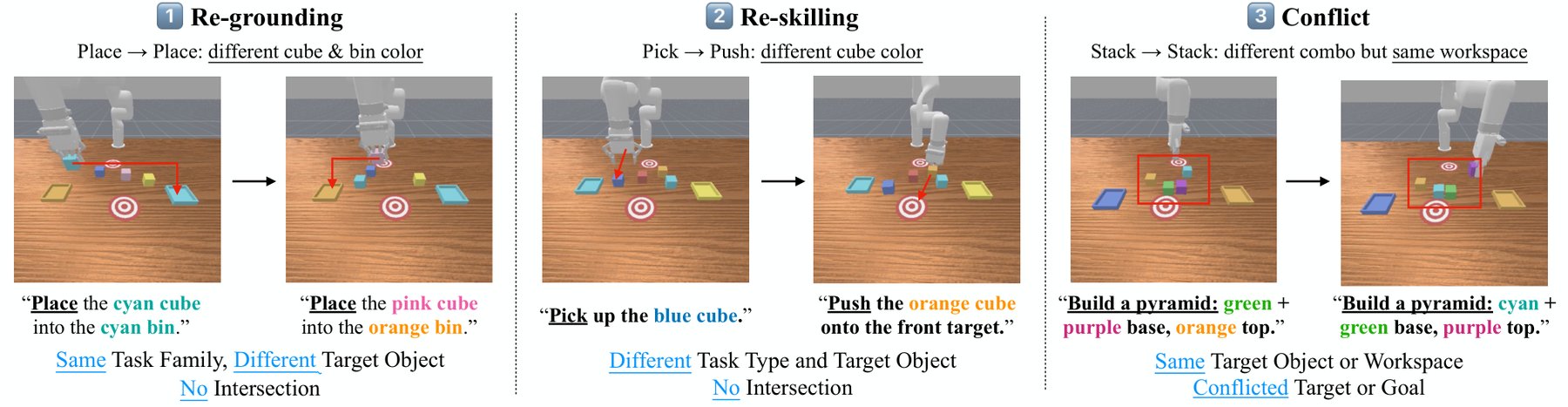
Synthesized rollouts stay within the pre-contact margins they use for decisions (median TCP divergence 0.36–3.28 cm vs ground-truth renders). The method still assumes RGB-D, object tracks, and a planner that can pick the objects it decides to move.
A Human’s Take
I have watched too many “recovery” papers collect a new failure dataset and call it autonomy. Planning the retry on fake cameras, then moving only the cup that actually blocks the next motion, is closer to how a tired human cleans up a knock.
It is still a tabletop with tracked objects. The interesting bet is whether that suffix latent stays a decent smoke alarm once the scene is a kitchen, not four cubes and two plates.