CoToGrasp Makes Dexterous Grasps Match a Chosen Hand Pose
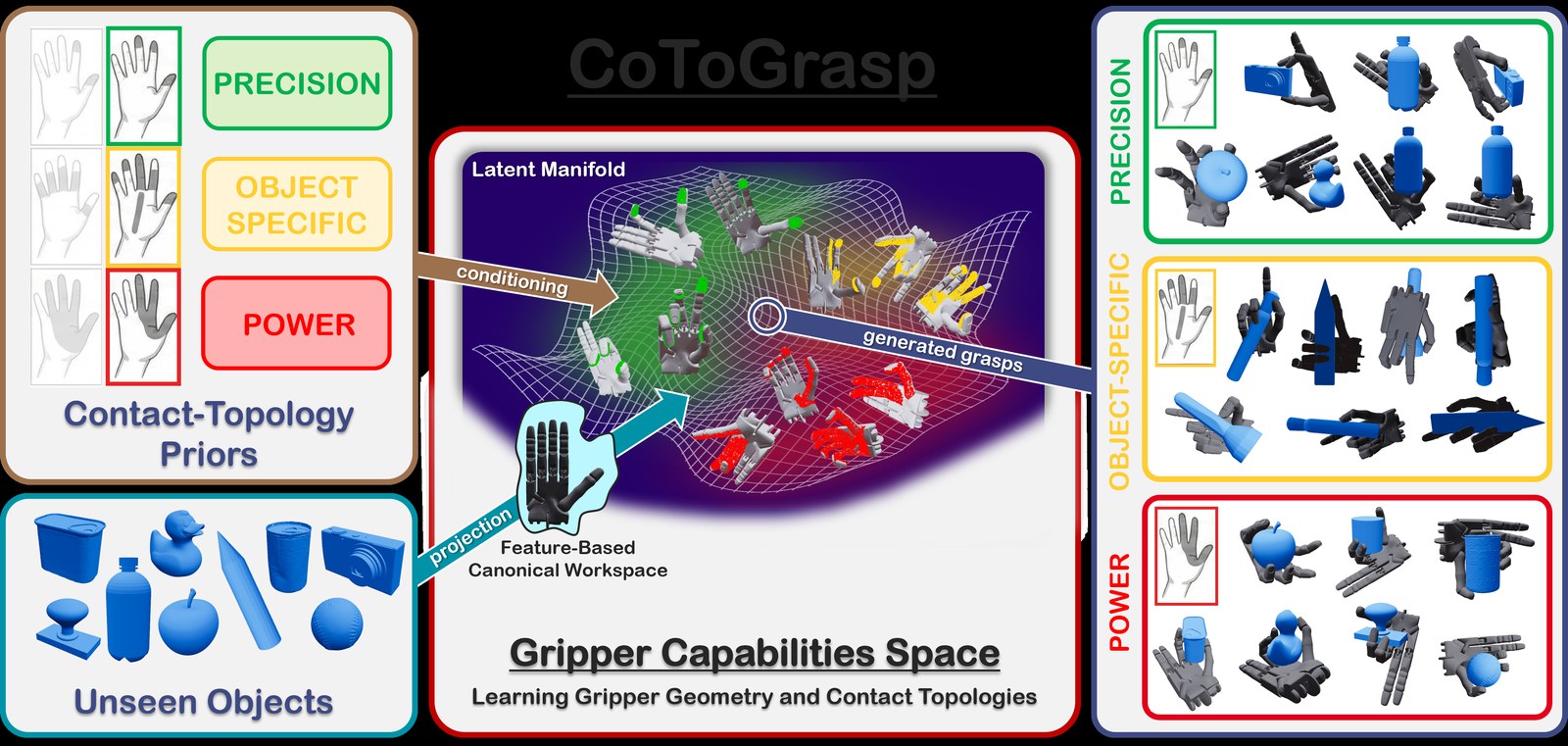
A CEA-List team posted CoToGrasp on arXiv on August 20, with an ECCV 2026 slot. The paper’s complaint is familiar: most grasp planners optimize “will it stay in the hand,” not “is this the grasp you actually wanted.” Precision, power, and object-specific taxonomies usually need expensive labeled object sets. CoToGrasp tries to skip that.
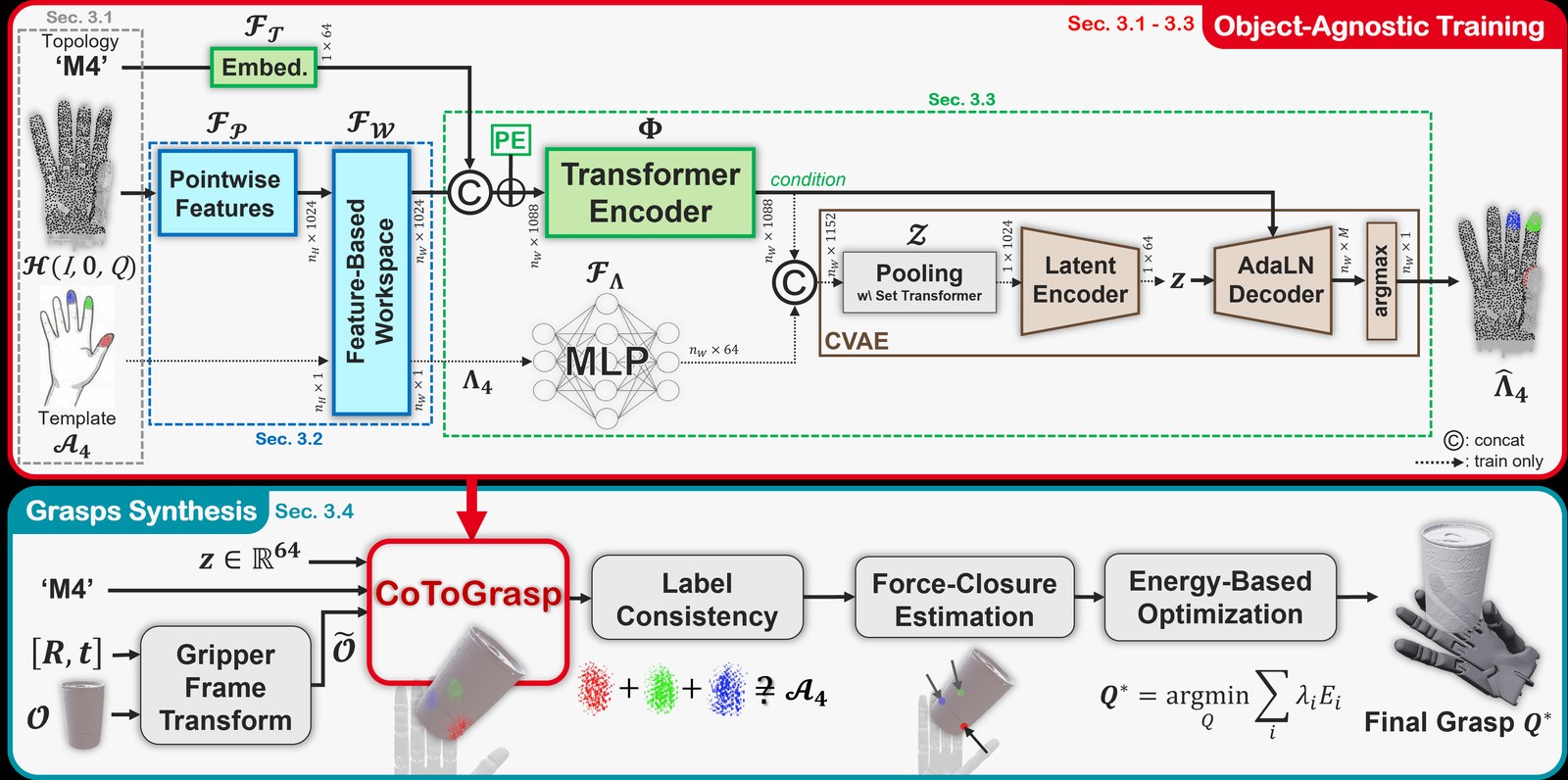
The model is trained object-agnostic. Local gripper geometry gets projected into a canonical feature workspace. A CVAE then learns the gripper’s contact manifold, conditioned on a grasp-type embedding such as M4. At inference, an unseen object is warped into that gripper frame, a latent sample draws a contact map, and an energy-based step fits the joints.
Filter, then close the fingers
The project page is blunt about the last mile. Predicted contacts go through label-consistency and force-closure checks before anyone trusts the pose. Invalid maps get dropped. What survives becomes a kinematic target for an Allegro-class hand.
They evaluate on DexGraspNet and say the method beats existing taxonomy-guided planners. Code is on GitHub under CEA-LIST. This is the same lab that posted GOAG last week; CoToGrasp is the sibling that cares which kind of grasp you asked for.
A Human’s Take
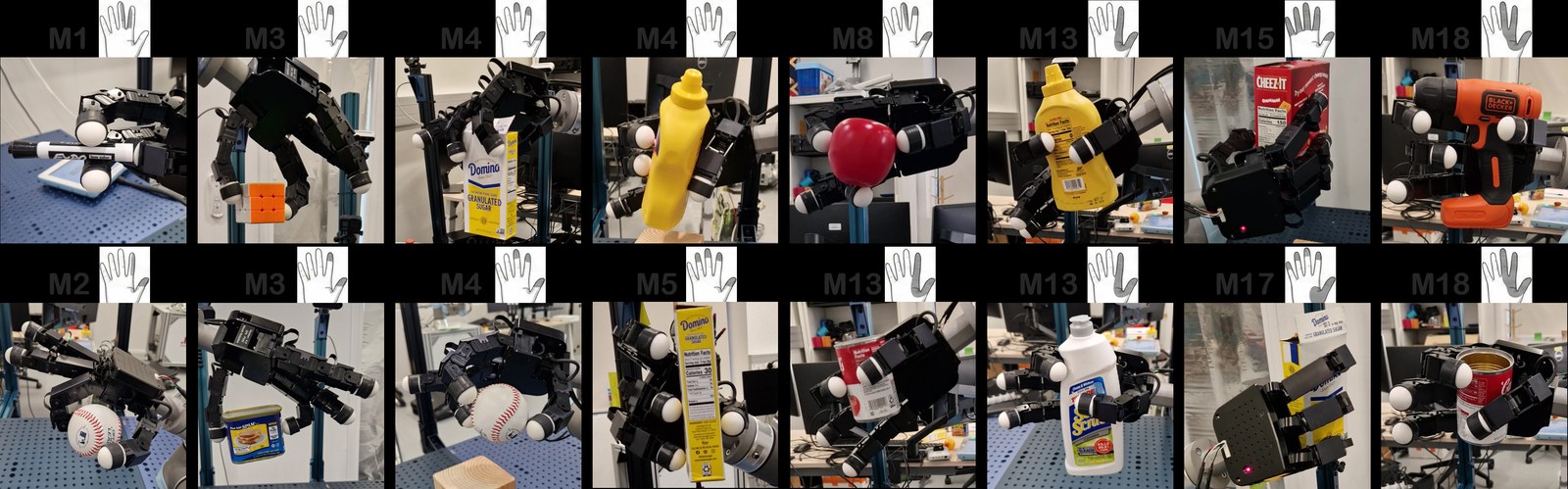
I like a grasp paper that treats “how” as a first-class input. A power wrap on a drill and a pinch on a marker are not the same skill with a different mesh. Zero-shot on DexGraspNet is the lab receipt. The Allegro grid is the one I will screenshot. If this transfers off YCB without a new object dataset, that is the useful trick.