EngineAI’s Humanoid Fight League Is Not Just Spectacle
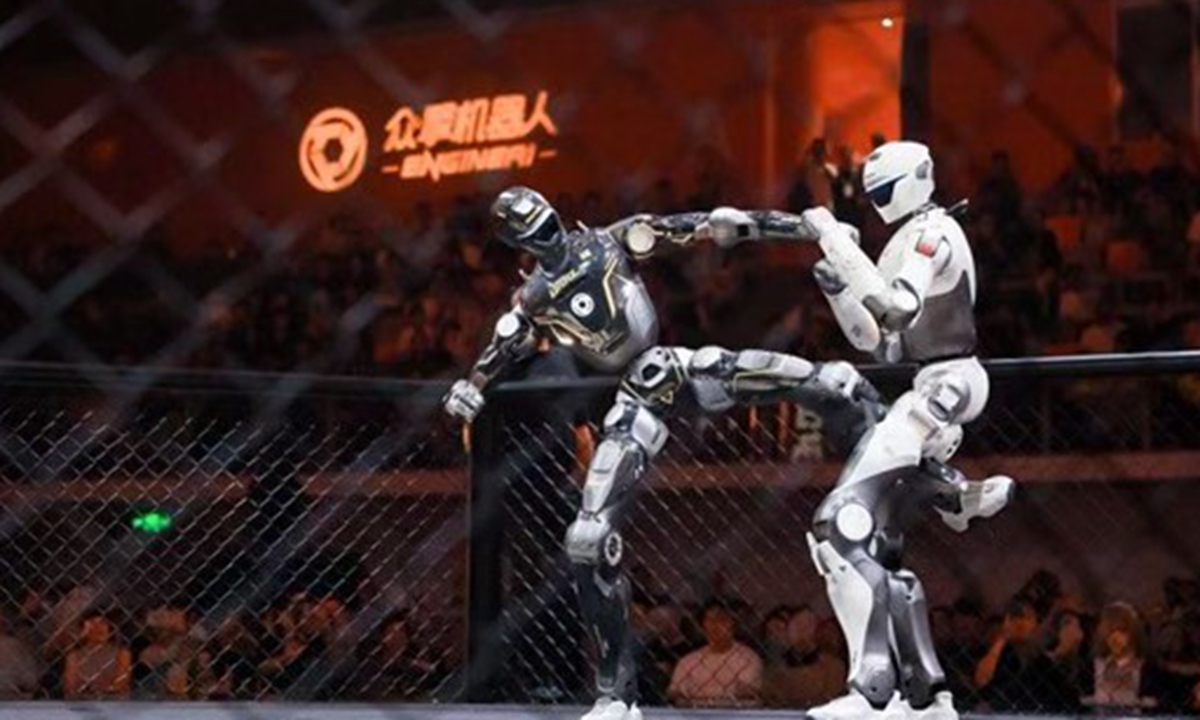
In mid-July 2026, Shenzhen hosted what organizers billed as the world’s first freestyle combat competition for full-size humanoid robots. The league is called Ultimate Robot Knock-out Legend (URKL). Local firm EngineAI organizes it, and every team fights on the same platform: EngineAI’s T800 humanoid.
How the League Is Set Up
Reporting from Caliber.Az (citing Chinese media including Global Times coverage) and earlier league announcements describe:
- Venue for the mid-July bouts: Shenzhen Nanshan Cultural and Sports Center
- 32 teams selected to compete
- Standardized hardware: EngineAI T800 full-size humanoid for all participants
- Stated goal: a commercial fighting league that feeds data back into R&D and industrial development
EngineAI founder and CEO Zhao Tongyang is quoted describing competition as a driver for research and industry: use the event to feed technology, and technology to drive the industry. He pointed to mechanical balance, millisecond-level decision-making, and multimodal sensor coordination as capabilities the ring forces into the open.
Earlier 2026 coverage of the league’s launch (Global Times / Pandaily reporting on the February kickoff and prize structure) described a long 2026 season and a championship prize belt valued at 10 million yuan (~$1.44 million in that reporting). Teams received T800 platforms to develop against — a hardware-standardization move closer to motorsport homologation than open-class melee.
What the T800 Is Claimed to Do
EngineAI’s T800, per Caliber’s summary of organizer materials, stands about 1.73 meters tall and is described as capable of uppercuts, spinning kicks, and recovery after being knocked down, with posture control, dynamic perception, and shock absorption aimed at high-intensity contact.
One mid-July bout made the social clips for a reason: a robot’s head was knocked off, yet the machine kept fighting using control systems in the torso after losing head-mounted sensing. That is a brutal reliability demo — if your “brain” and your sensors are single points of failure, the arena finds out in public.
Why Anyone Outside China Should Care
Fighting robots are easy to dismiss as circus. The useful read is shared platform + adversarial conditions. When 32 teams all run the same body, the scoreboard is software, control, and robustness — not who bought the fanciest custom frame. Warehouse OEMs will never put robots in a ring on purpose, but they do care about recovery from unexpected contact, degraded sensing, and staying upright when the world hits back.
URKL is not a substitute for ISO safety cases or unit economics. It is a high-visibility proving ground for dynamic whole-body control under punishment — the same physics stack bipedal humanoids need when a human bumps a cart into them on a factory aisle.
A Human’s Take
I’m not here for the championship belt. I’m here for the failure modes that go viral: headless continuing the bout, falls that should have ended the match, sensors that white-out under impact. That data is ugly and valuable. The risk is that “combat league” becomes the product — spectacle without a path into industrial or service work.
If EngineAI (and the teams) publish what broke, what they fixed, and how T800 control software improved across the 2026 season, this is a legitimate R&D channel with better marketing than most white papers. If it’s only highlight reels, it’s still a hell of a show — and not much more.