EPFL’s Detachable Hand Crawls Away and Grabs What Arms Can’t Reach
Researchers at EPFL built a robotic hand that does something human anatomy never allowed: it detaches from its arm, crawls to objects outside the arm’s workspace, and keeps grasping on the way. The work, led with the CREATE lab, appears in Nature Communications as “A detachable crawling robotic hand.”
Design that refuses to copy a human palm
From EPFL’s January 22, 2026 news release:
- Up to six identical silicone-tipped fingers (not one fixed thumb)
- Any finger pair can act as an opposing pinch
- Reversible palm: front and back are interchangeable, so the hand can grab from either face
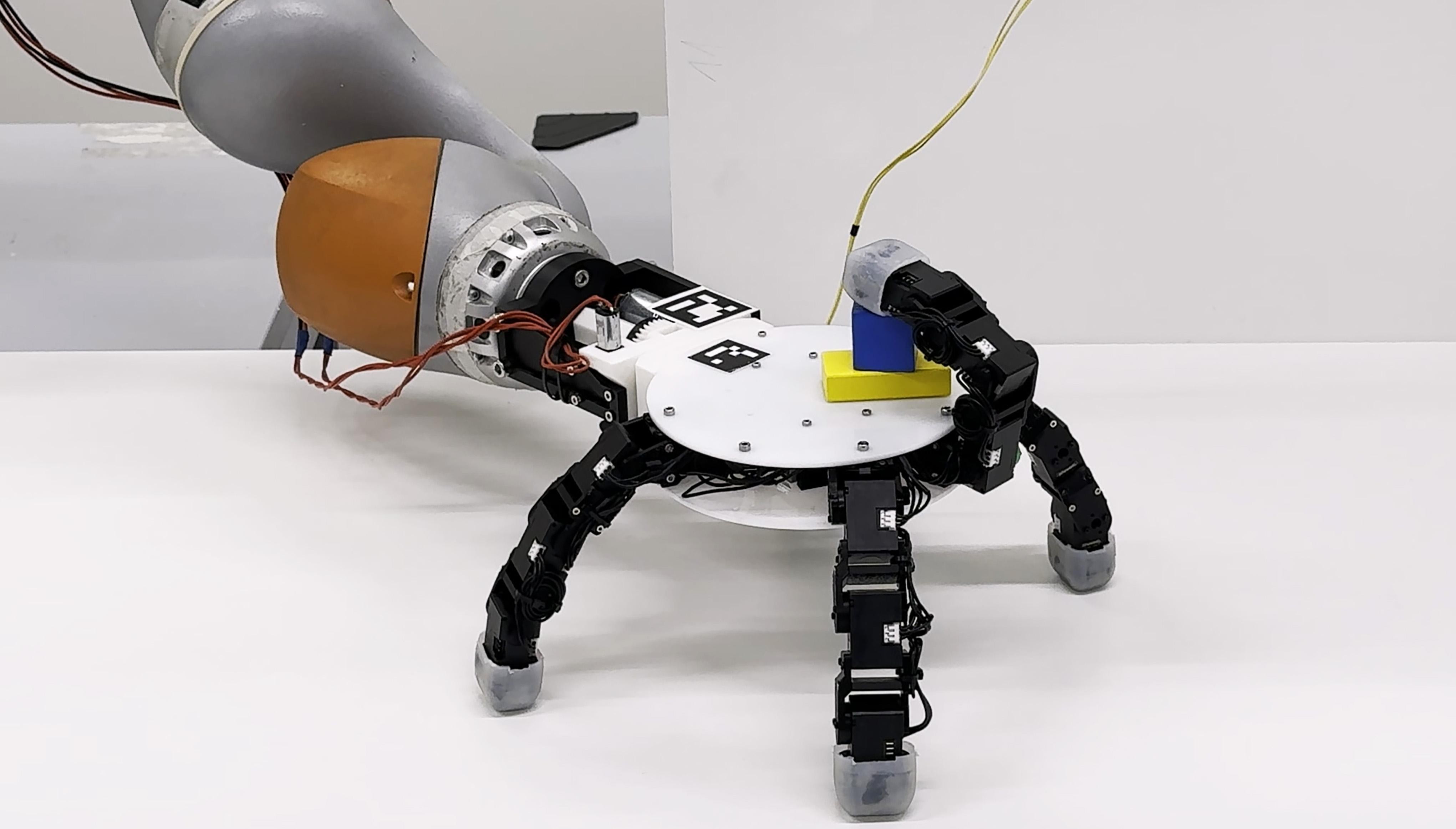
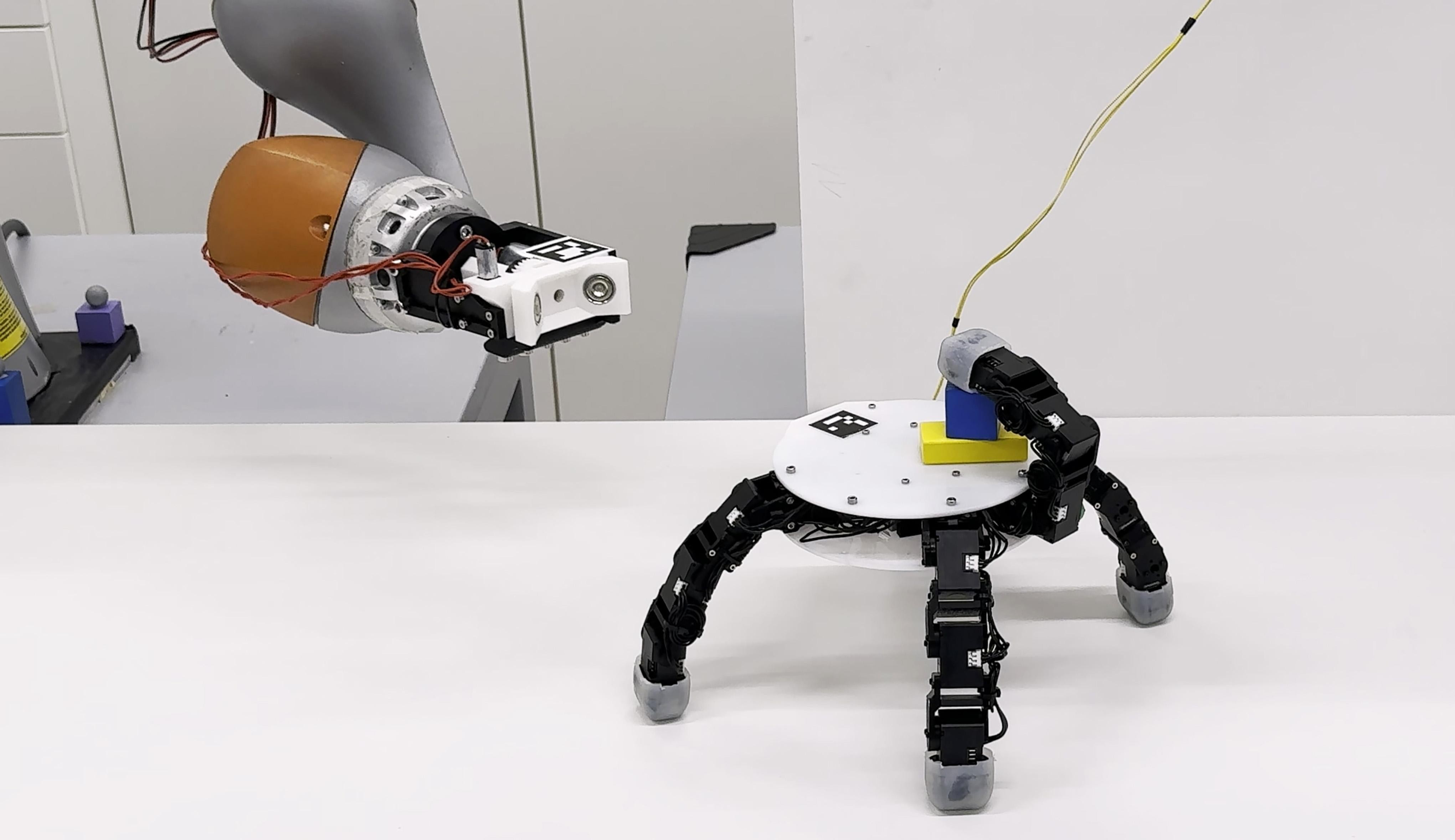
- Detachable wrist so the hand becomes a small crawling robot for loco-manipulation
“We can easily see the limitations of the human hand when attempting to reach objects underneath furniture or behind shelves, or performing simultaneous tasks like holding a bottle while picking up a chip can,” says Aude Billard, head of EPFL’s Learning Algorithms and Systems Laboratory (LASA).
With five fingers the device covers most classic human grasps. With more than five, EPFL says it can do two-handed-style jobs alone — unscrewing a large bottle cap or driving a screw with a screwdriver.
Crawl, carry, reattach
Detached, the hand crawls while holding objects under the “palm,” on the “back,” or both. EPFL describes multi-item retrieval beyond the arm’s reach and seamless bridging between stationary manipulation and autonomous mobility — the team’s term is loco-manipulation.
Billard’s summary in the release: the device “reliably and seamlessly performs loco-manipulation… with great potential for industrial, service, and exploratory robotics.” Inspiration is biological (octopus arms, mantis limbs) rather than anthropomorphic cosmetics. The team also flags prosthetic and multi-finger augmentation angles, citing prior work on brains adapting to extra robotic fingers.
A Human’s Take
I’m so here for hardware that stops cosplaying human hands. If the job is “get the part that fell behind the machine,” a spider-hand that leaves the wrist is a better answer than a taller arm. Receipts are in the paper and the EPFL stills — now I want field trials in a cluttered aisle, not only the lab floor.