FetchMan Walks a G1 to a Bowl With Zero Real Training Data
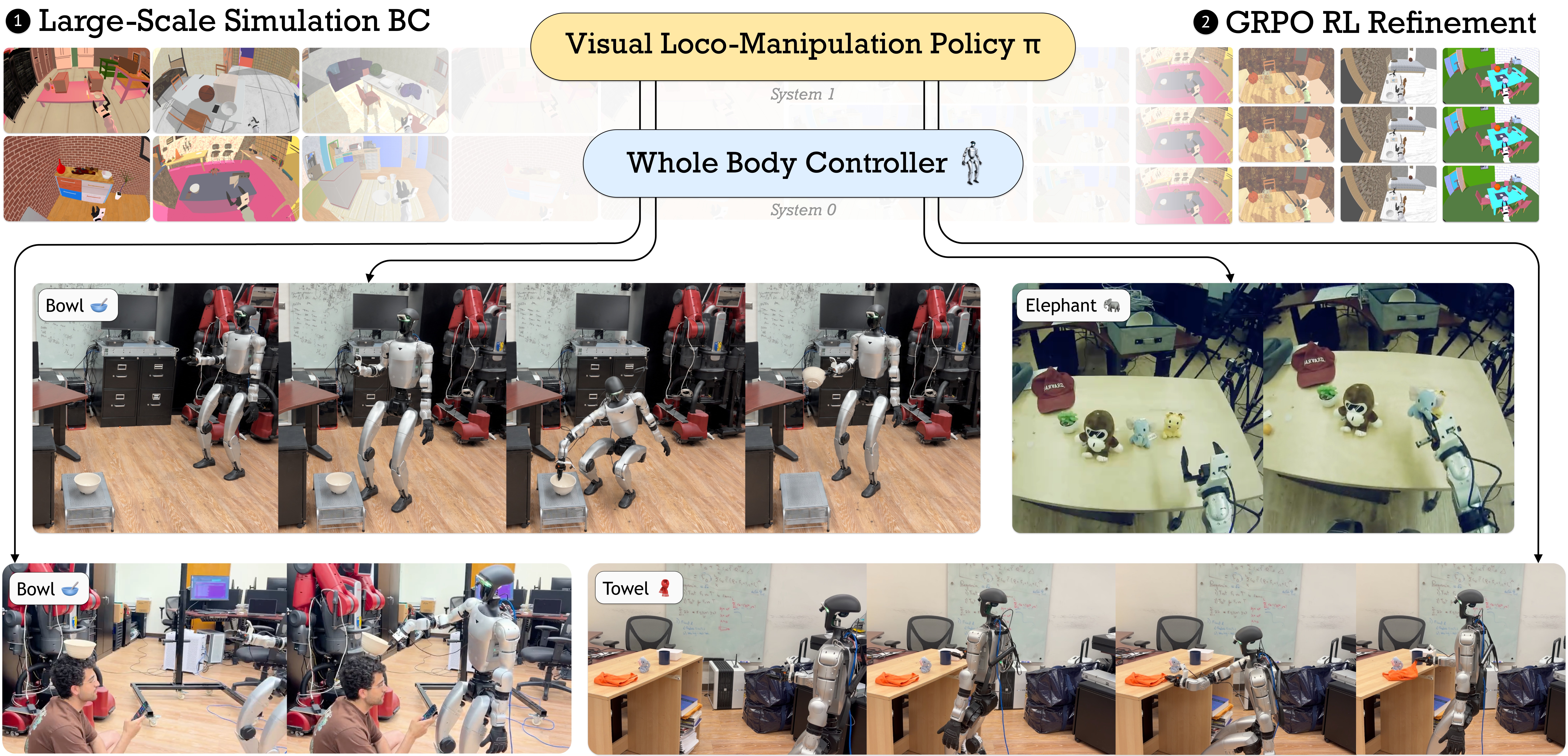
Omar Rayyan and colleagues at UCLA (with Ai2 and the University of Washington) trained a visual humanoid policy entirely in simulation and put it on a real Unitree G1 with no real-world fine-tuning.
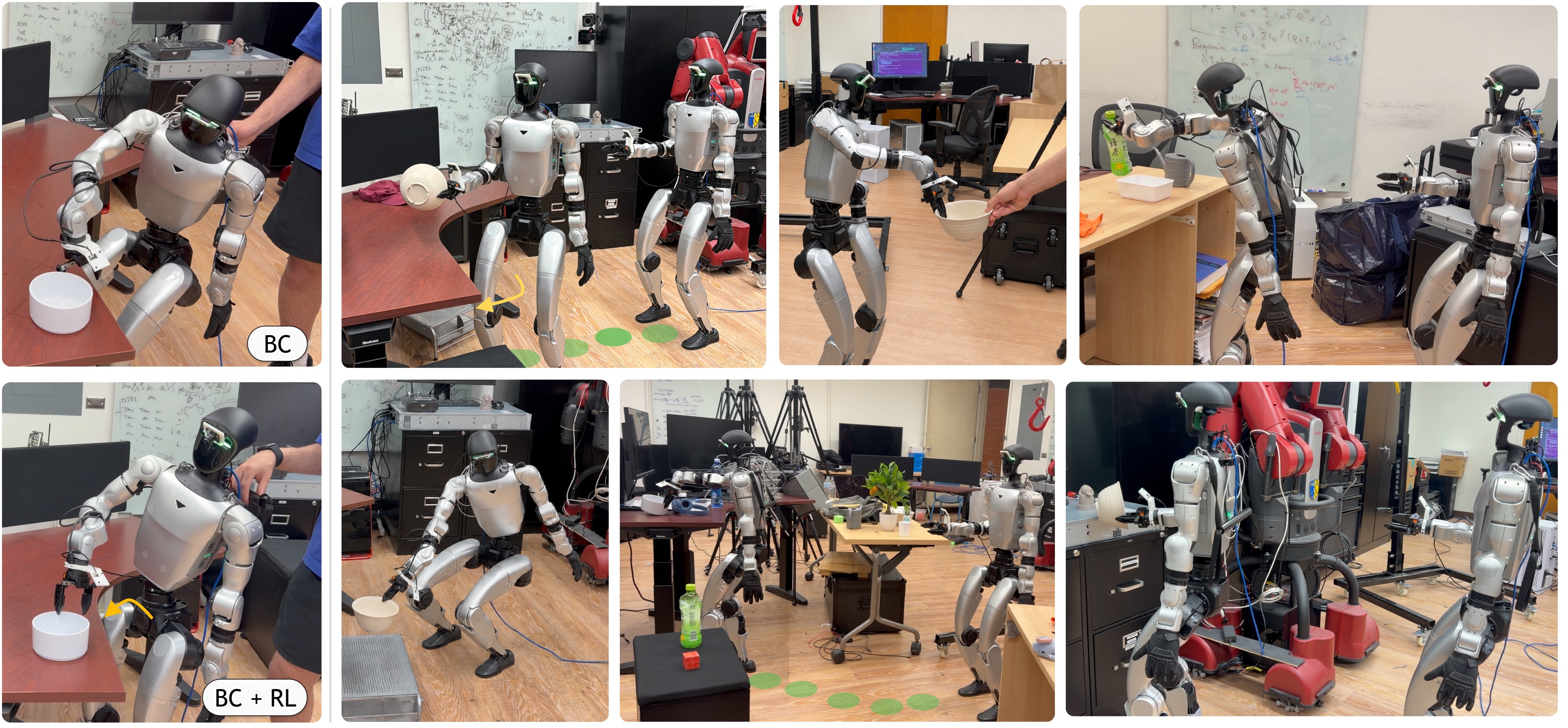
The single-object reach-and-pick policy walks to a target and grasps it across unseen scenes at 73.3% success (22/30 loco-manipulation trials). Behavior cloning alone sat at 56.7% on hardware. They call the stack FetchMan. The paper landed on arXiv dated Aug. 17.
Cloning hits a wall. RL walks through it.
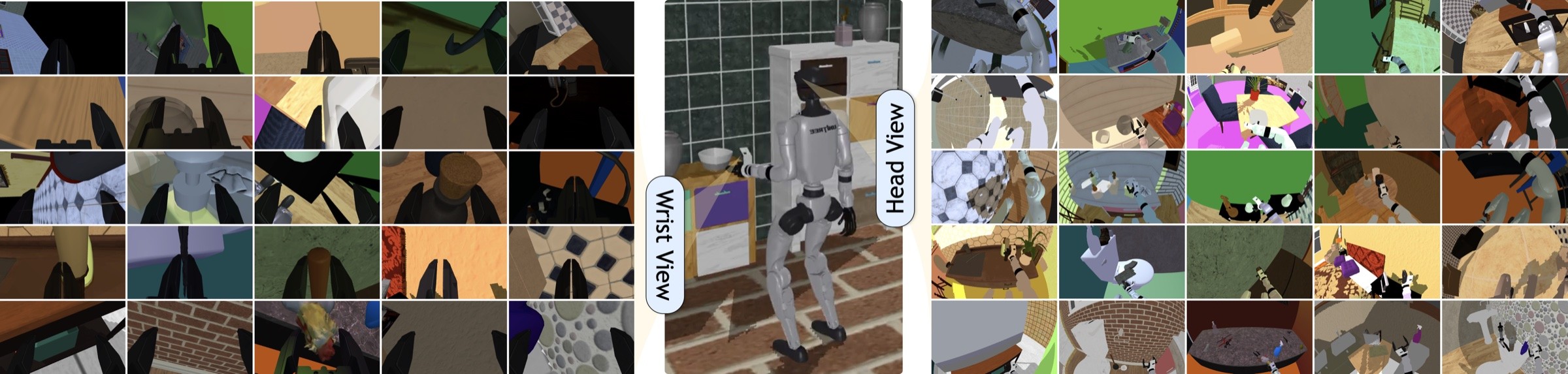
They script a privileged controller in MolmoSpaces houses, collect about 150,000 bowl-pick demonstrations (~650 hours of robot experience, ~40 GPU-hours on one L40S), then clone a flow-matching policy that sees head fisheye, wrist RGB, and a small proprioceptive vector.
Scaling demonstrations from 5k to 50k lifts simulated loco-manipulation from 40% to 67%. Going to 150k does nothing. The scripted expert advances through hidden phases the policy cannot see, so more of the same data cannot teach the handoff.
Flow-GRPO on a single sparse reward (1 for a successful fetch, 0 otherwise) pushes simulated loco-manipulation from 67% to 83%. Manipulation-only barely moves. The gain is in walking up and then grasping, not in the grasp itself.
Two choices carry the transfer. A frozen DINOv3 encoder beats SigLIP; SigLIP drops to 0% loco-manipulation on hardware. Delta-action targets beat absolute joints, which also go to 0% on the full task. The G1 command is 15-D: base velocity and height through a pretrained SONIC lower-body controller, plus waist, right arm, and gripper.
A text-conditioned multi-object variant, trained on 350k demonstrations, reaches 40% after cloning and 62% after GRPO in simulation. Real G1 runs are qualitative and less robust than the bowl specialist.
What they are not claiming
The policy is stateless: one frame, no history. The legs stay on SONIC. The task is fetch, not a general household agent. They release FetchMan-Bench so other methods can use the same held-out scenes.
A Human’s Take
This is the locomotion recipe applied to “walk over and pick that up,” and the ablation is the story: more synthetic demos stop helping, a sparse RL pass on the handoff does help, and the wrong vision encoder zeros the real robot.
73% on a G1 with no real data is a strong zero-shot number for this task. It is still a bowl in a lab, with a frozen gait and a right arm. I will get excited when the multi-object model stops being the weaker cousin.