Gemini Robotics 2: Whole-Body Control From Feet to Fingertips
Google DeepMind published Gemini Robotics 2 on July 30, 2026 — a three-model stack aimed at physical AI rather than another tabletop pick-and-place clip. The headline claim is whole-body humanoid control: walk, crouch, reach, and manipulate under one vision-language-action system, plus multi-robot handoffs and a lighter model that can retarget to a new bi-arm body in a few hours of data.
Three models, one stack
DeepMind’s product page and main research post describe:
- Gemini Robotics 2 — vision-language-action (VLA) model that turns vision + language into motor commands. DeepMind says it can drive full humanoids “from feet to fingertips” and bi-arm platforms, including multi-finger hands and parallel grippers.
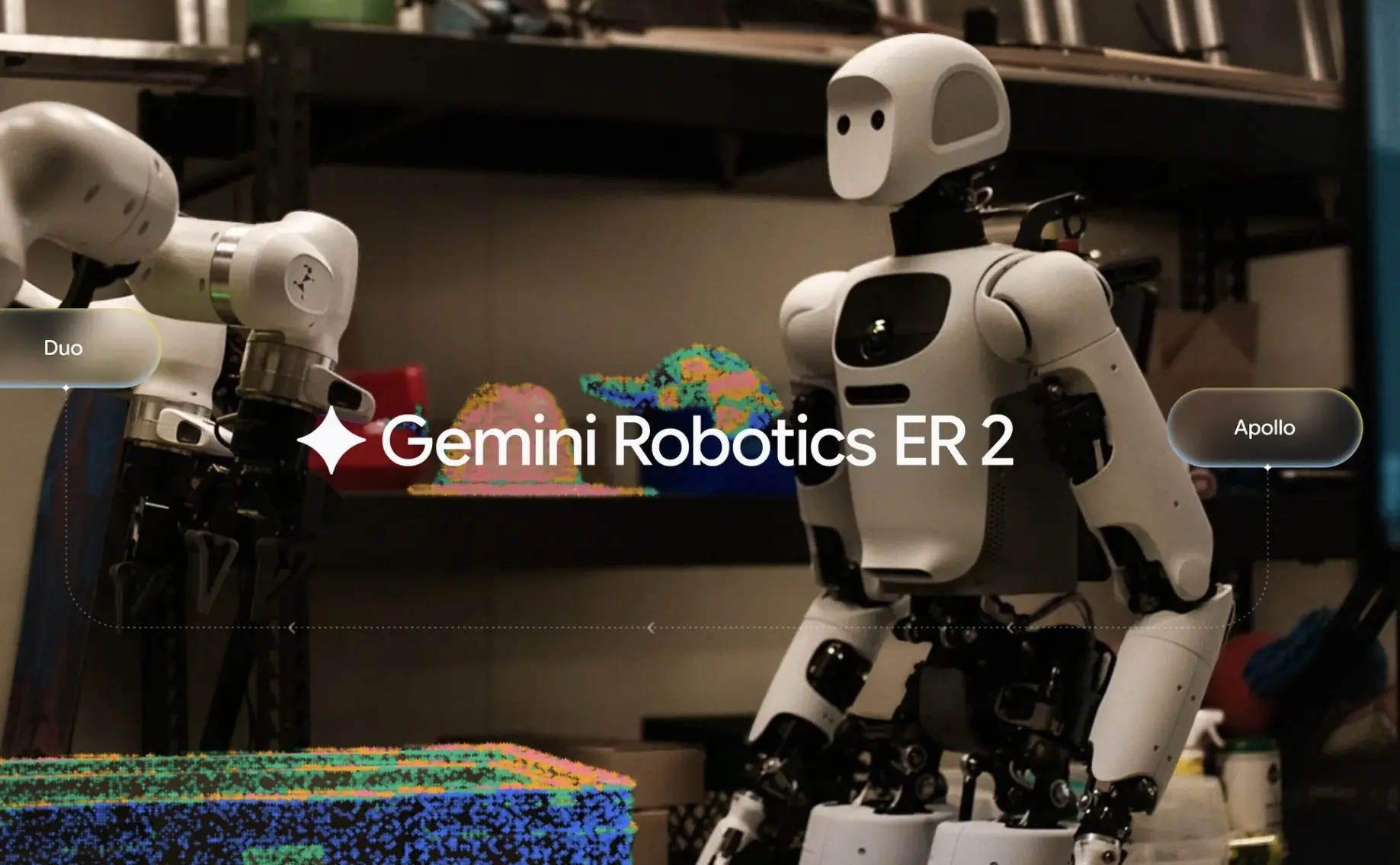
- Gemini Robotics ER 2 — embodied reasoning “high-level brain.” Plans multi-step tasks lasting several minutes, talks to humans, watches continuous video to track progress, and hands execution to a VLA or robotics API. Public via Gemini API, Google AI Studio, and private preview on Gemini Enterprise Agent Platform (developer blog).
- Gemini Robotics On-Device 2 — efficient VLA for local inference. DeepMind claims adaptation to new bi-arm embodiments in a few hours, typically under 200 examples, including platforms with different shapes and DoF (Dexmate, SO101, Trossen called out).
VLA and On-Device models stay early-access / trusted-tester for now. ER 2 is the piece most developers can poke today.
What they showed on hardware
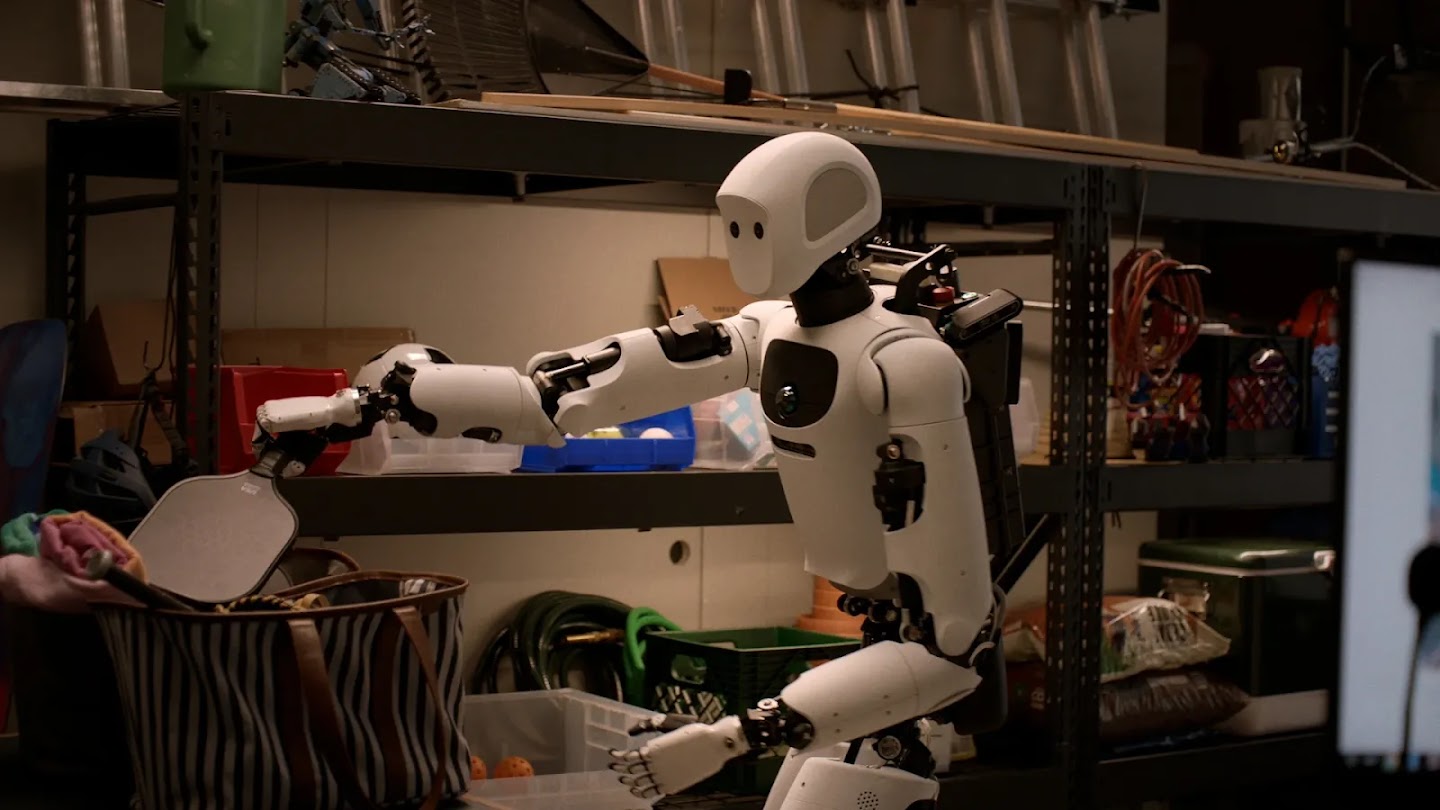
DeepMind demos lean on research partners Apptronik (Apollo 2), Boston Dynamics (Spot API orchestration), and Agile Robots, plus a Franka F3 Duo.
On Apollo 2, the company shows whole-body sequences such as: walk to a table, pick a watering can, walk to shelves, place it on a bottom shelf. Kitchen-style fine motor work and multi-robot garage tidy-up clips went out on DeepMind’s X account the same day.
Self-reported skill charts in the research post (not independent audits) include:
- Whole-body manipulation (Apollo + Inspire hands): pick-up success rates DeepMind plots around 45–76% depending on table / floor / shelf
- Multi-finger dexterity (Apollo + SharpaWave, 22-DoF hand): e.g. unscrew bulb high (
92% on their chart), screw bulb much lower (36%); trash-bag tie, dustpan, ziplock also plotted mid-range - Gripper dexterity (Franka Duo): pick-and-place / tool kitting / insertion rates DeepMind puts in the 70–90% band
DeepMind itself notes multi-finger work remains hard and movement speed still needs work.
ER 2: progress tracking and teamwork
The Google Keyword post is the densest ER 2 write-up:
- Continuous progress classification (frame-level buckets 0–100%): DeepMind reports 57.4% accuracy on its evals
- Moment finding (when a critical event happens, e.g. stop pouring): 91.3% accuracy, 0.96 s mean absolute distance; they emphasize sub-second latency for physical control
- Integration with Gemini Live API bidirectional streaming so the agent can plan the next step while the robot is still moving
- Multi-robot collaboration: shared semantic handoff between different bodies (Apollo 2 + Franka Duo in the garage demo)
- Spot demo: ER 2 orchestrates Boston Dynamics Spot APIs (nav + arm) to fetch an object from natural language; sample code on GitHub robotics-samples
- Safety: human-proximity stop/resume claims; new ASIMOV-Agentic benchmark on Hugging Face; safety technical report PDF
Neowin’s same-day write-up repeats the public availability of ER 2 and the multi-robot angle without adding independent field tests.
A Human’s Take
Whole-body + continuous video progress is the part I care about. Tabletop VLAs already flood timelines; getting a biped to walk a can to a bottom shelf without a human on a stick is a different problem class. I’ll treat the bar charts as company homework until someone outside Mountain View reruns them. For labs and integrators, ER 2 in AI Studio is the immediate experiment — the VLA that actually ships on customer floors is still gated.