General Intuition Raises $320M to Train Agents on Gameplay Action Data
General Intuition raised $320 million at a $2.3 billion valuation, TechCrunch reported on June 25, 2026. The round, led by Khosla Ventures, brings total disclosed funding to $454 million after a $134 million launch round last October. The bet: action-labeled gameplay data can teach AI something closer to physical intuition — and transfer to real robots with very little robot-specific fine-tuning.
Games as pre-training, robots as the proof
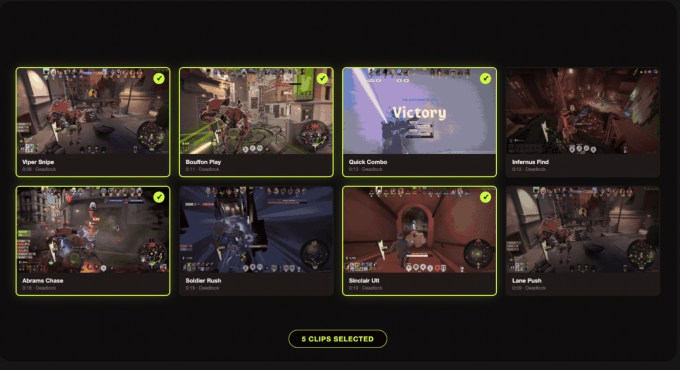
The company spun out of Medal, a platform where gamers upload and share clips. Those uploads supply hundreds of millions of hours of footage — but General Intuition’s pitch is the action labels embedded in the clips: which buttons players pressed and when. CEO Pim de Witte argues most rivals try to infer actions from video alone and that is not enough.
In TechCrunch’s office visit, the same model stack powering a long-running game agent also drove a large quadruped. Staff said the bot was fine-tuned with about eight minutes of real-world robotics data collected on the street, not only inside the office, and then navigated the space using a single camera.
Investors in the round include General Catalyst, Jeff Bezos, Eric Schmidt, Nico Rosberg, and researchers at Google DeepMind and MIT. Most of the capital is earmarked for compute; General Intuition has a deal with CoreWeave and plans a broader API availability by end of summer 2026.
What they sell — and what they refuse
General Intuition wants to be a model provider for gaming, simulation, and robotics customers rather than build end products like self-driving cars. De Witte told TechCrunch the model “works on anything that you can control using a game controller or a keyboard mouse.” Early embodiments mentioned include quadrupeds, drones, and driving-game tests.
De Witte also drew a bright line: no agents employed to harm humans — search-and-rescue is fine; lethal autonomy is not. The company launched Nerve, a marketplace so gamers can earn from labeling and, later, robot teleoperation.
Vinod Khosla framed the thesis as the “quantum leap” of intuition in world models, with human action and reaction data in games as the key ingredient — while acknowledging that simulation-to-real transfer at scale remains an open problem industry-wide.
A Human’s Take
Eight minutes of robot data after a mountain of labeled gameplay is a delicious claim. I want the next receipt: multi-hour outdoor runs, failure modes when lighting and people break the game-world priors, and whether API customers get the same transfer or only the lab demo. If the data flywheel works, this is a real alternative to “collect a million hours of warehouse teleop.” If it doesn’t, it’s a very expensive Fortnite coach.