GOAG Learns the Hand First, Then Looks at the Object
Most dexterous grasp networks memorize objects. GOAG, from Université Paris-Saclay / CEA-List and École Centrale de Lyon, does the opposite: it trains only on the gripper, then meets the object at inference.
The paper landed on arXiv on 20 August 2026 for IROS 2026. The hook is geometric and a little smug: at a contact patch, the gripper surface and the object surface are the same shape. If you learn the gripper’s feasible contact manifold, you can drop an unseen object into that manifold later.
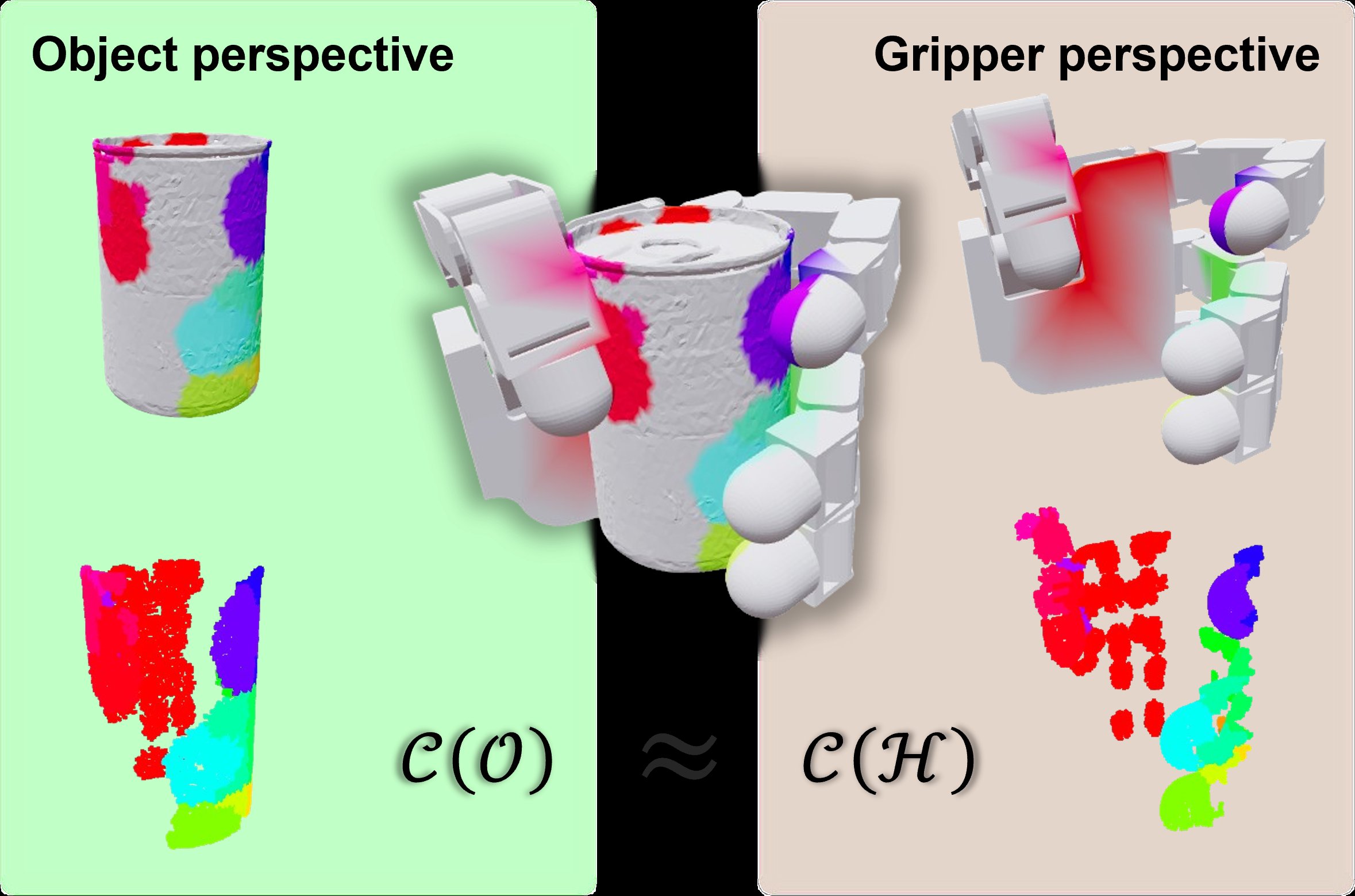
Train the fingers, not the mug
The team samples 10,000 valid joint configurations, maps them to six common grasp types from a human taxonomy (the types that cover most shop-floor and household time in the cited studies), and samples contacts only inside those pads. That yields 3 million labeled gripper clouds.
Generation took about 1 GPU-hour on an RTX 4090. They contrast that with 1,400 GPU-hours reported for an object-grasp database in prior work.
A CVAE learns the contact distribution in a gripper-centric Basis Point Set. A PointNet++ “links mapper” tags which phalanx should hit which point. At test time the object is warped into the gripper frame, contacts are sampled from the latent prior, a force-closure check can reject a bad draw (up to 20 resamples), and an optimizer solves joints with penetration penalties.
MultiDex and a real Allegro
On MultiDex, with Barrett, Allegro, and Shadow Hand, GOAG’s average success is 86.93%. Per hand, with force-closure in the loop: 87.40% Barrett, 93.20% Allegro, 77.90% Shadow Hand. Those beat object-trained baselines in the paper’s table even though GOAG never saw those objects in training.
Across five datasets and 3,438 objects with a Shadow Hand trained once, GOAG averages 53.97%. DGA, retrained per dataset, sits at 58.48%. GOAG is second overall on that protocol.
On the bench, an Allegro Left on a 7-DoF arm grasped 11 YCB objects. The photos match cans, a bowl, and the usual kitchen clutter.
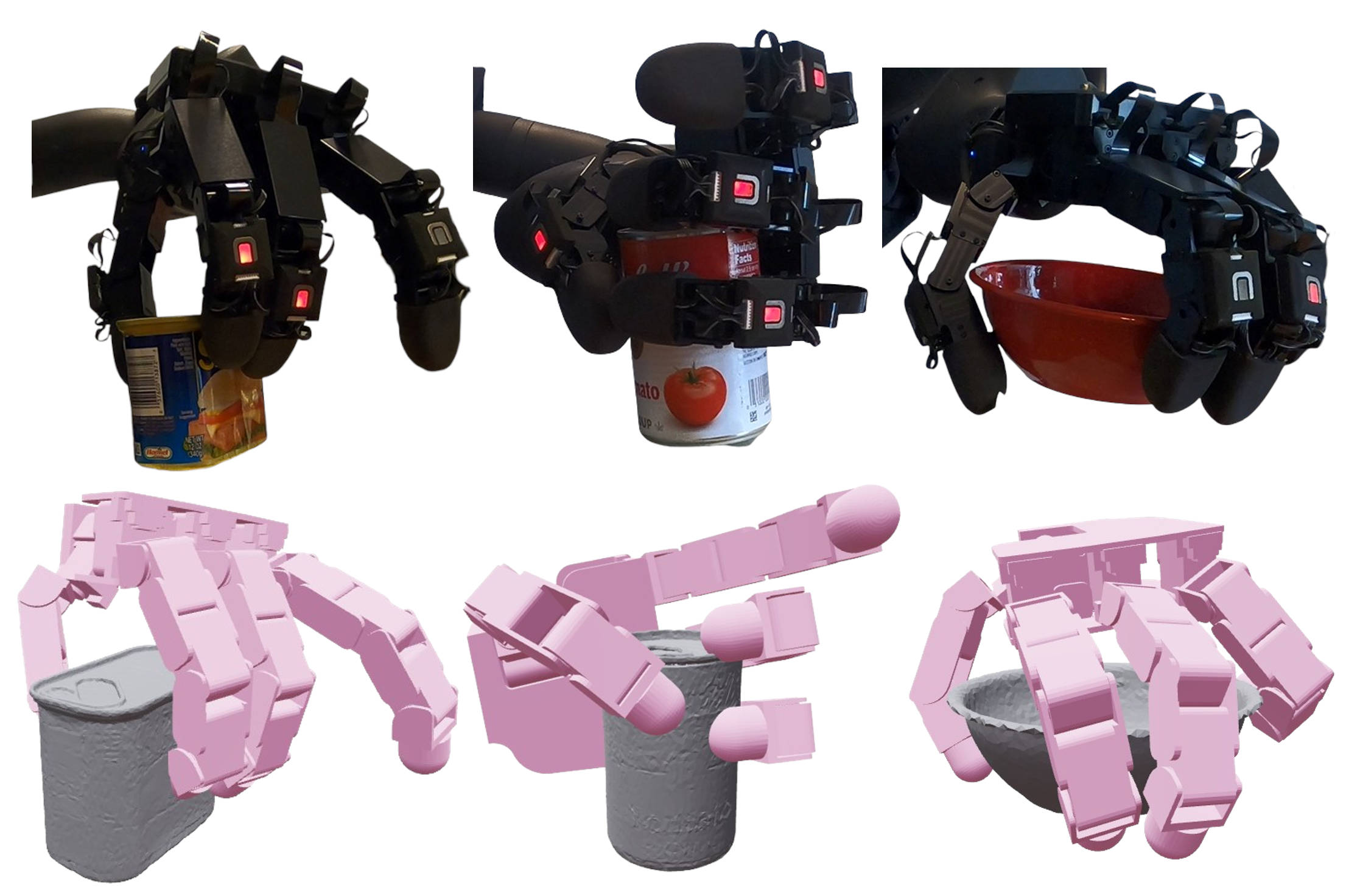
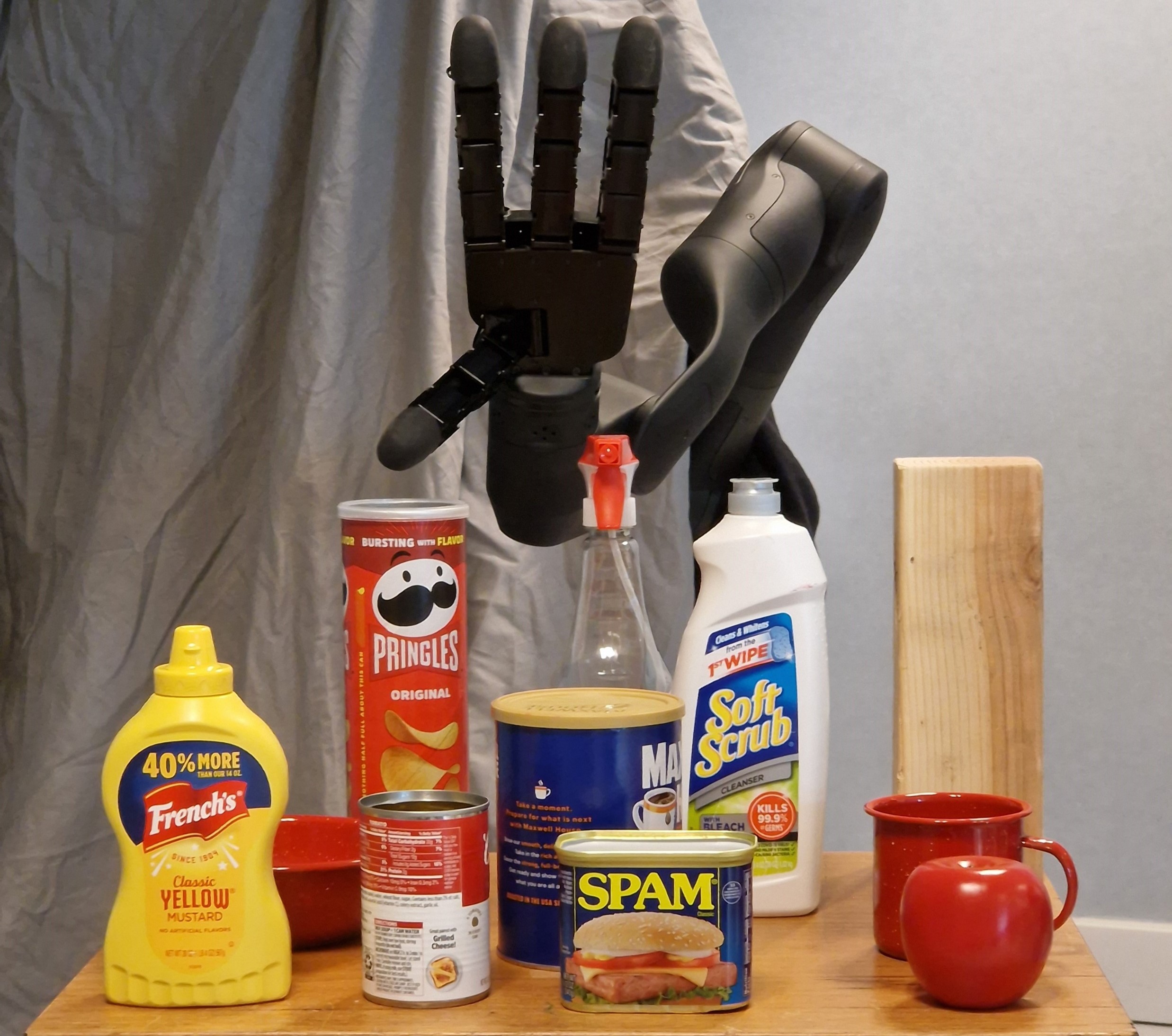
Code is on GitHub under CEA-LIST/GOAG. Videos live on the project site.
A Human’s Take
I am here for a planner that does not need a new object dataset every time you change the SKU. The Allegro photos are the receipt. The remaining bet is whether “sample a pose on the convex hull” still works when the part is bigger than the hand’s workspace.