Gritt Exits Stealth With $32M to Put AI on Construction Sites
Not every robotics story needs a bipedal mascot. Gritt, founded by Carnegie Mellon–trained roboticists Puneet Puri (CEO) and Vishal Dugar (CTO), came out of stealth on July 21, 2026 with a focused bet: make outdoor construction sites less dependent on scarce labor — starting with solar farms.
What the System Does
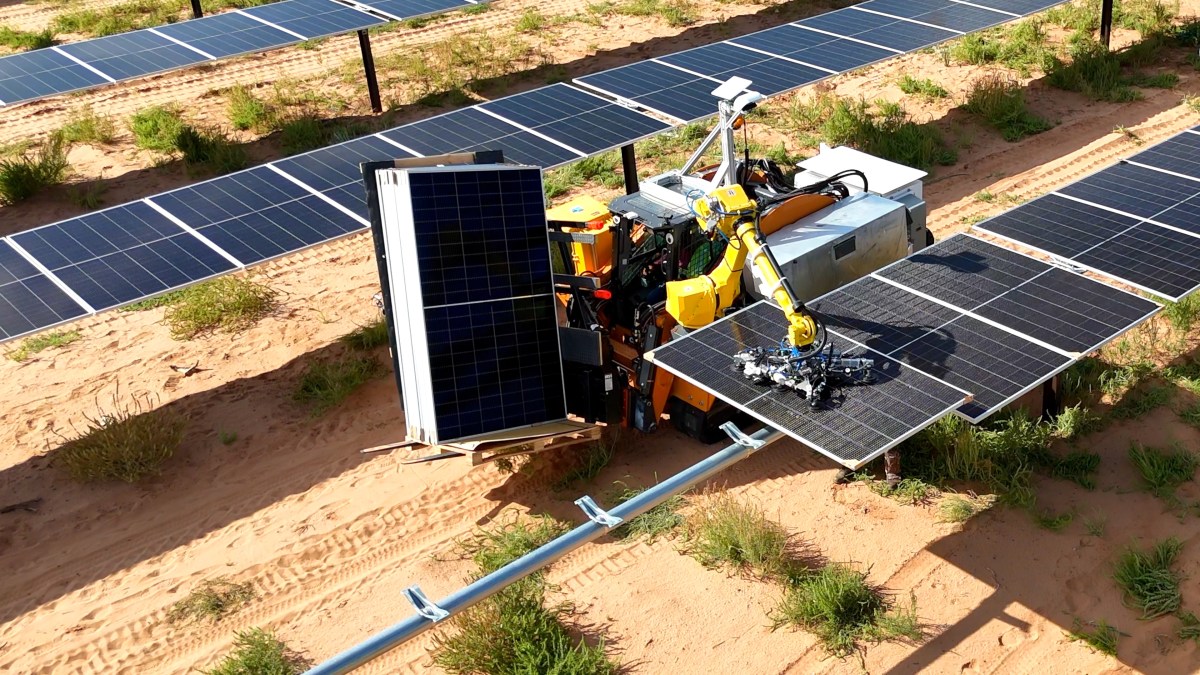
Gritt does not build a full humanoid from scratch. It uses off-the-shelf hardware — rented skidders and robotic arms (TechCrunch names suppliers like Kawasaki) — controlled by Gritt’s AI.
First job: unload large glass solar panels, carry them to metal frames, and place them with sub-millimeter accuracy so crews can fasten them. Puri told TechCrunch a typical eight-person crew installs about 800 panels a day; with Gritt systems, the same crew can install 3,000 to 4,000.
Other numbers from the same report:
- Two systems currently deployed in the field, feeding training data
- Contracted to help install 2.8 gigawatts of solar over the next 18 months
- Customers include three of the top 10 U.S. power construction companies (unnamed)
- Goal: 48 systems operating within six months
An anonymous customer told TechCrunch the kit should help remote sites where hiring is hard, and reduce injuries from repeatedly lifting ~100-pound panels overhead.
Why It Matters Beyond Solar
Gritt wants the same stack to fasten panels, drill posts, build racks, then move into tasks like tying rebar. Puri’s example of transfer: training stack-cinder-blocks took weeks; a rebar-tying demo later took about a day on the same software pipeline — a claim about generalizable physical AI, not a finished product catalog.
Competitors like Luminous Robotics, Cosmic, and China’s Trinabot build more of their own hardware. Gritt’s leaner “intelligence on rented iron” approach could scale faster — or hit a ceiling when every site needs custom integration.
A Human’s Take
This is the kind of robotics story that doesn’t make stadium demos but might actually move the needle: dirty outdoor work, measurable throughput, rented machines, and founders who talk about construction constraints instead of sci-fi homes.
I’m watching whether those 2.8 GW of contracted work turn into paid, repeatable deployments — and whether the “generalizable” training story holds when the weather, mud, and inventory chaos get worse than a pilot site. If it does, humanoids aren’t the only path to physical AI that matters.