Hand2Bot Teaches a UR5e to Wait Until You Mean the Handover
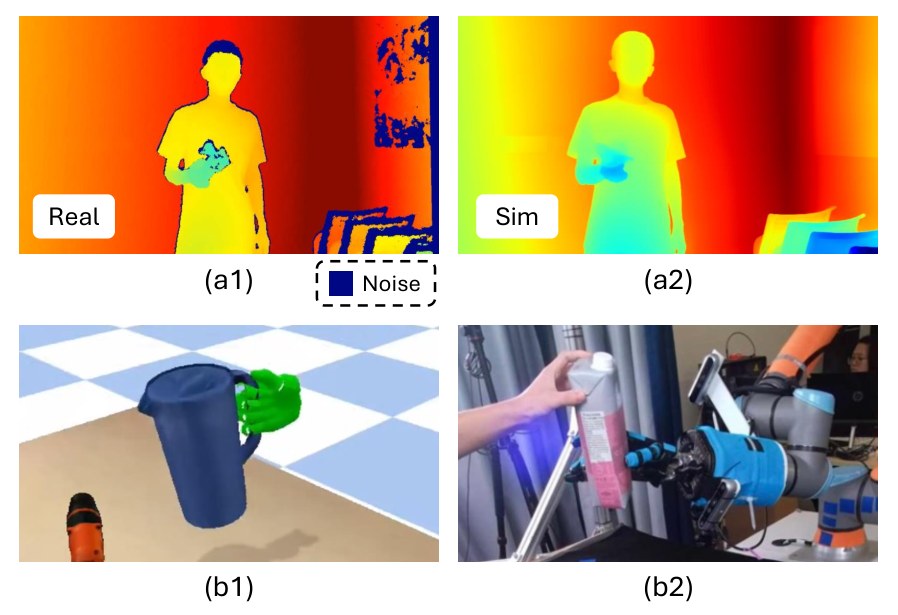
Nanyang Technological University, Zhejiang University, and Alibaba posted Hand2Bot and PassGen on August 13. The problem they name: most handover datasets are either clean synthetic depth or a tight crop of a hand. A robot that only watches the fingers will grab when you are just waving a cup.
Authors: Tianyu Sun, Zhoujie Fu, Zihui Gao, Bang Zhang, Guosheng Lin.
A dataset with faces in the frame
Hand2Bot is 5,000 RGB-D pairs: 2,125 real, 2,875 generated. Real capture uses an Intel RealSense L515 in 7 indoor scenes with 33 household objects. About 20% of clips are negatives: the person moves the object but is not offering it.
They timestamp the “presentation period,” run GraspNet for 6-DoF parallel-gripper poses, and filter for near-vertical approaches that miss the human hand.
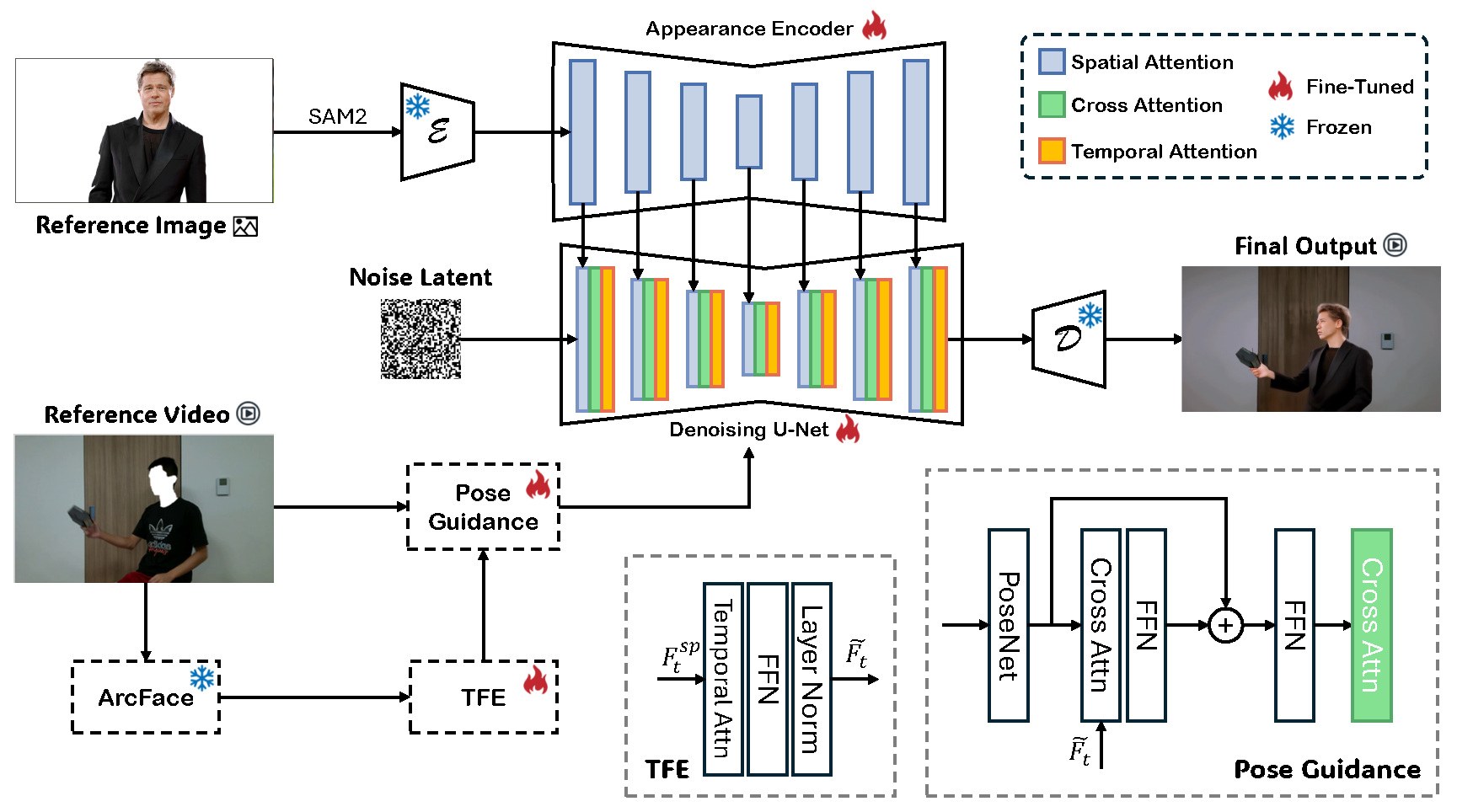
PassGen is the generator. Stable Video Diffusion plus a Temporal Face Encoder (ArcFace embeddings through temporal attention) keeps gaze and micro-expressions. A morphology pass then chews holes into the depth so it looks like an L515, not a perfect mesh.
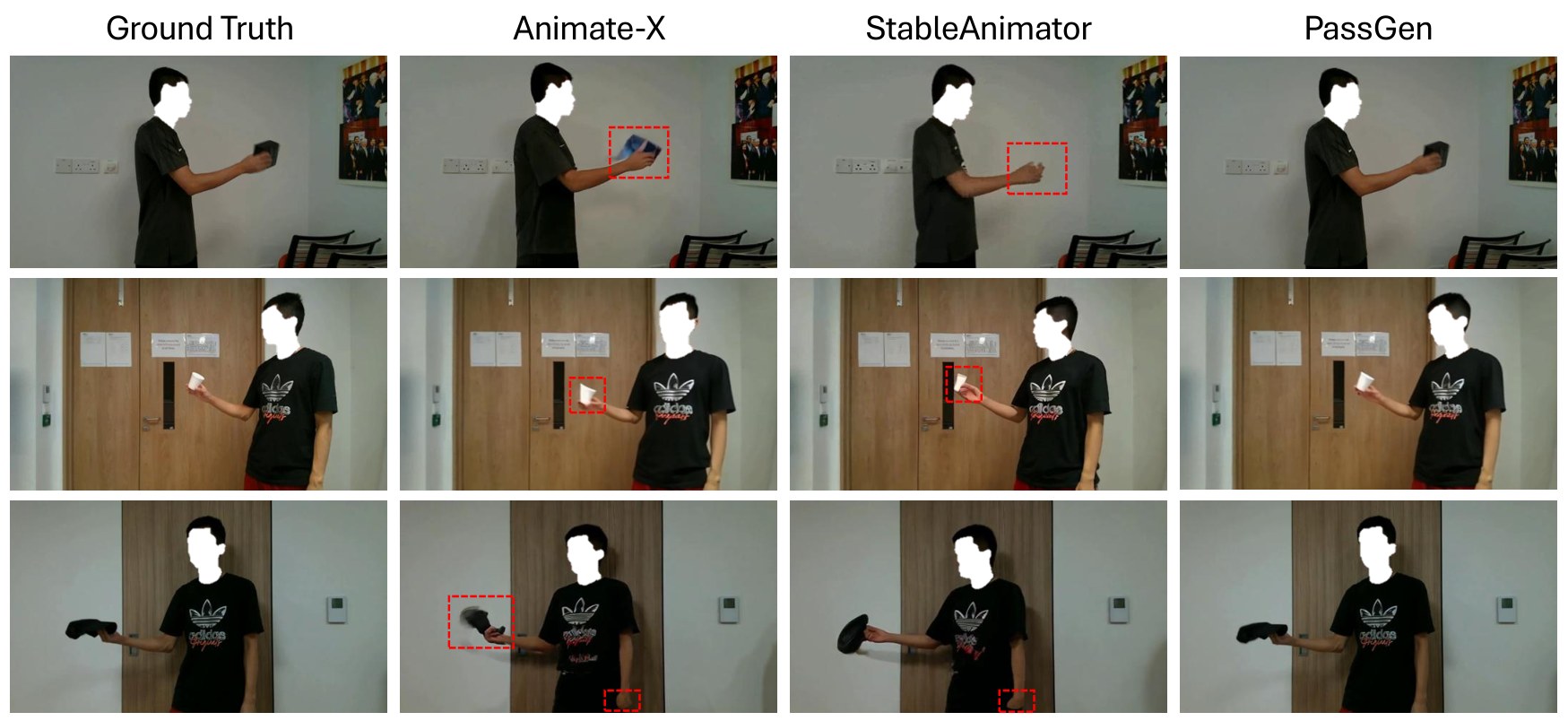
On 250 real test clips, PassGen’s tabled image/video scores are 25.12 / 0.909, above StableAnimator (23.17 / 0.867).
The gate on a UR5e
Intention gating fuses gaze confidence and object approach speed, then latches (monotone). Threshold τ = 0.80. Full module: 90.0% mean accuracy, 13.6% false-positive rate. No gaze, no object term: 72.7% acc, 95.5% FPR.
On the arm, camera on the UR5e base, 1.5–2.2 m out, tilted up. 10 objects (5 seen, 5 unseen). Intention success 54 / 60 with the gate. False triggers 2 / 30 with the gate, 25 / 30 without. ISR here means “the robot started the reach during presentation,” not that every grasp completed.
Adding the 2,875 synthetic clips to real-only training moved mean acc 87.5% → 90.0% and FPR 22.8% → 13.6%. Unseen-object ISR went 6/10 → 7/10. The authors treat that as variance reduction, not a big generalization win.
A Human’s Take
The result I will remember is 25/30 false grabs without the gate. Gaze is doing real work there. I am less sold on generated faces as training fuel until someone shows the robot still waits when the lighting is ugly and the person is talking to someone else. The L515 hole pattern is the right kind of ugly to keep.