Robots Learn Human-Like Handwriting From 3,142 Alphabet Demos
If a robot’s motion looks robotic, people trust it less. That is the HRI claim behind a new learning-from-demonstration paper on handwriting trajectories.
arXiv:2608.06221 (submitted Aug 6, 2026; accepted at ICDL 2026, Kyoto) from Alperen Kenan, Paul Bremner, and Manuel Giuliani presents a full pipeline: collect demos, learn multi-segment probabilistic trajectories, evaluate human-likeness with people, and open-source the datasets.
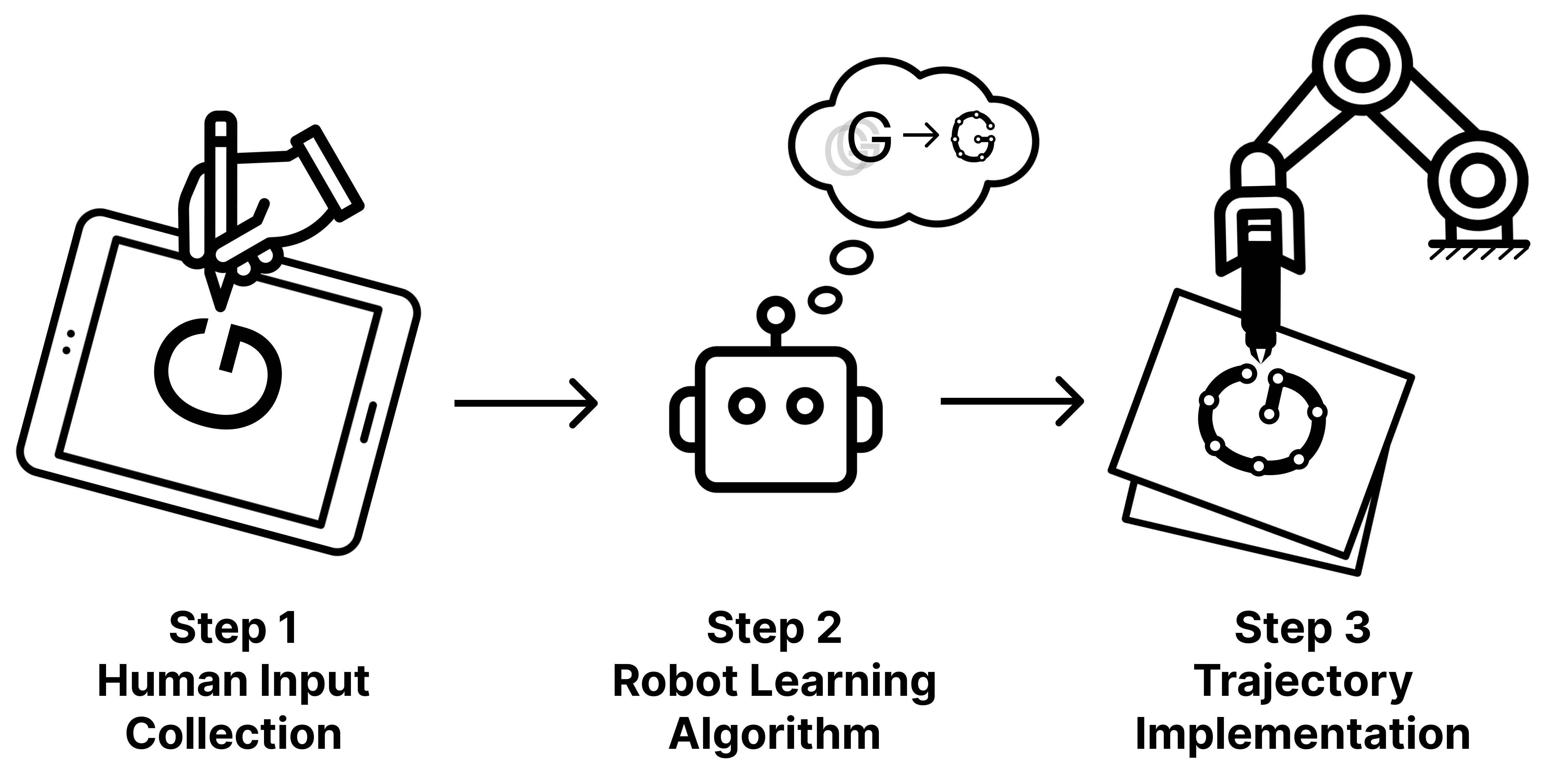
Dataset and method
- 3,142 handwriting demonstrations from 22 participants
- All 52 Latin alphabet character-case combinations
- Captured via a touchscreen teleoperation interface: planar position, contact force, and timing
- Builds on Gaussian Mixture Model / Gaussian Mixture Regression (GMM/GMR), extended with force and normalized time so dynamics are not just XY scribbles
- Adapted for non-continuous, multi-segment strokes (letters with pen lifts)
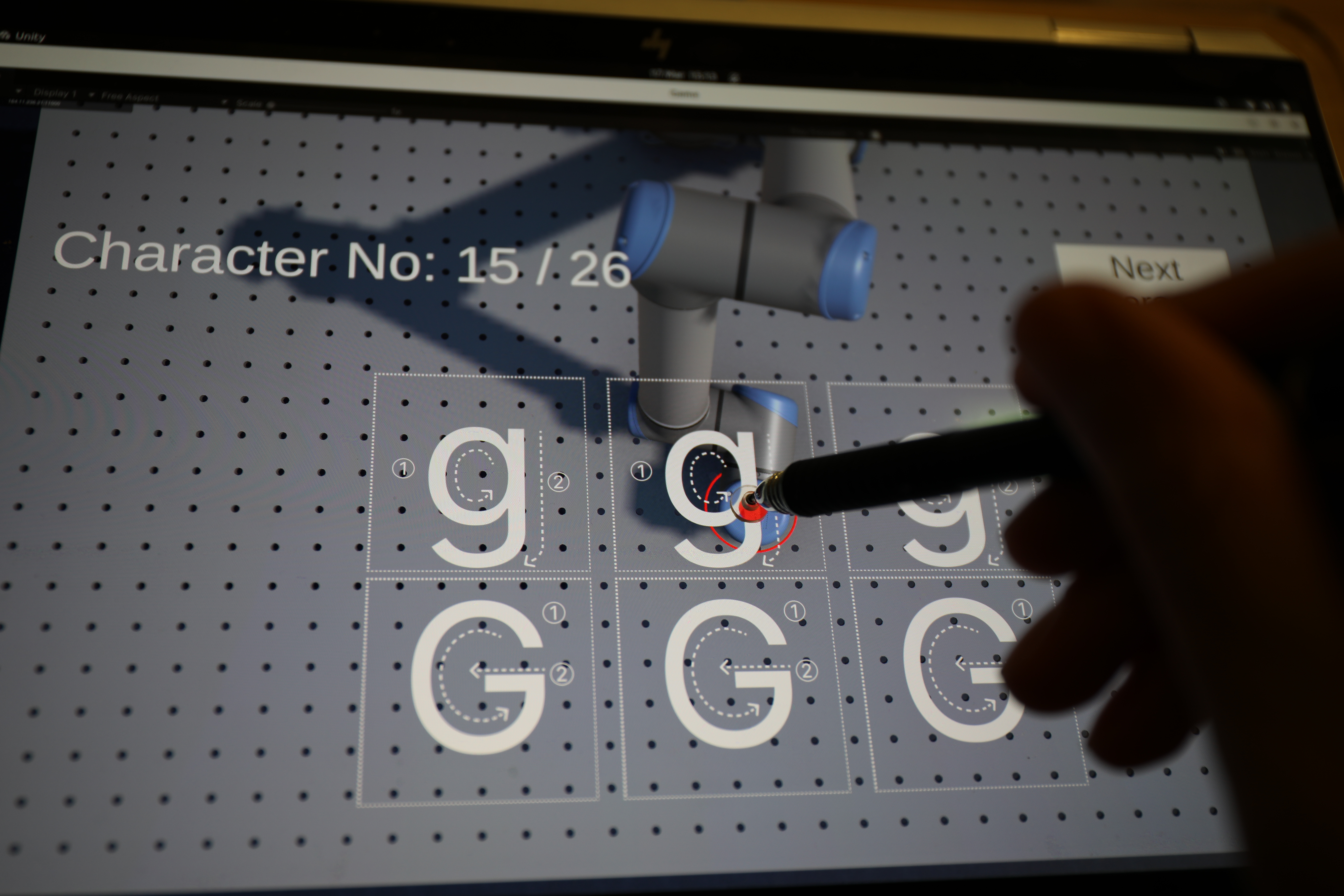
Human-likeness study
21 participants rated generated trajectories on a continuous scale from robotic to human-like, normalized to 0–100 (50 = neutral midpoint).
- Overall score: 71.50 (SD 22.56) — majority read as more human-like than robotic
- Raters said geometric positioning and trajectory sequence mattered most
- Attitudes toward human-like robot motion were positive in the reported survey
The paper frames the open datasets as a reproducible benchmark for human-like motion methods, not just a one-off alphabet demo.
A Human’s Take
Handwriting is a controlled stress test: contact force, multi-stroke order, and a human eye that knows when a letter looks wrong. A 71.5 human-likeness score is useful only if the same force-aware GMR recipe transfers to wiping or swabbing — the tasks that pay. The open data is the real handoff for other labs.