Humanoid’s KinetIQ Ascend Pushes Real-World RL Past Demo Manipulation
London-based Humanoid published results for KinetIQ Ascend, a real-world reinforcement learning stack that fine-tunes vision-language-action policies on production bimanual hardware. The company says the method raised throughput and cut failures on three industrial tasks after only days of robot time.
What the numbers say
Humanoid’s technical blog frames the industrial bar as 99.9% task success at human or superhuman speed. Behavior cloning alone, the company argues, inherits demonstrator speed and never learns the cost of failure. Ascend adds trial-and-error learning on top of its KinetIQ four-layer AI framework.
On three Alpha-system tasks:
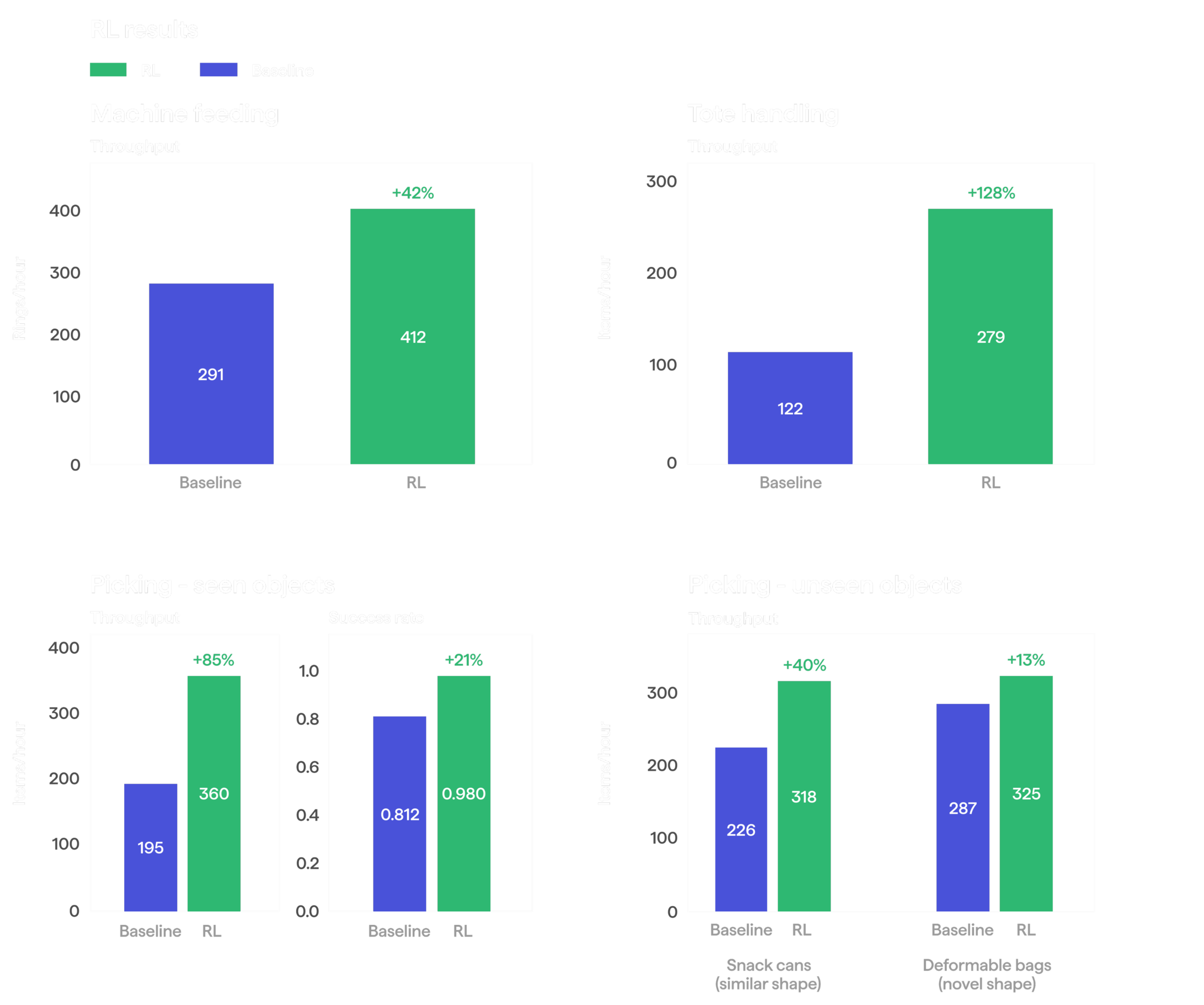
- Machine feeding (pick steel bearing rings from a bin onto a conveyor): throughput rose 42%, from about 291 to 412 rings per hour, with cycle time down from 27.2s to 19.5s after a speed curriculum to 1.5× demo FPS.
- Item pick-and-handover (cluttered tote to a person): throughput up 85%; success from 80% to 98% after roughly three days of robot time, practicing only on water bottles.
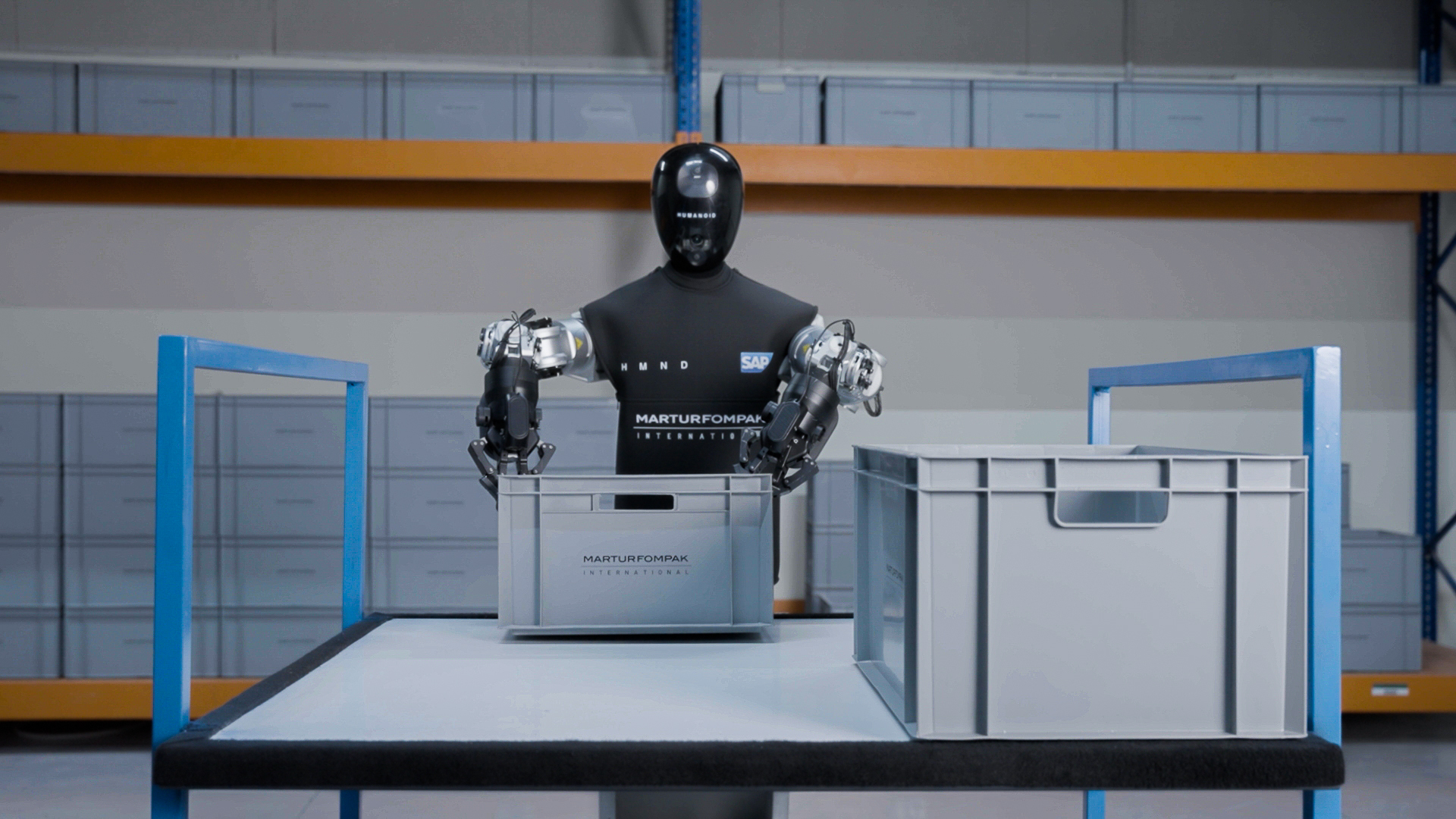
- Bimanual tote handling: throughput more than doubled (122 → 279 totes/hour); success from 77.6% to 98.9% after about four days.
How Ascend is built
Humanoid runs PPO on conditional flow-matching VLAs, with edge rollouts on NVIDIA Jetson Thor and trainer updates in the cloud. A prefix-CFM loss keeps action-chunk transitions stable under RL. Safety uses active compliance plus wrist force-torque auto-termination. Rewards stay sparse (success plus recoverable-error penalties). Gains are measured against a concurrent frozen baseline (online A/B), not a stale start point.
Two practical findings matter for deployment:
- RL on the hard stage alone (picking) still lifted whole-task throughput.
- Training on one object still improved picking on unseen cans and bags.
The Robot Report covered the same release, quoting CTO Jarad Cannon on a “capability factory” that starts from a basic behavior and refines it into something industry can rely on.
A Human’s Take
I’m not impressed by another “99.9%” slide until someone logs shift hours with intervention rates. What does move the needle is the honesty about sampler-trainer gaps, force reflexes, and A/B baselines on drifting factory lighting. If fleets really keep learning after ship—and interventions become rewards—this is the kind of boring, operational RL that beats another teleop montage. Watch for customer-site numbers, not just lab robot-days.