HumanoidMimicGen: NVIDIA Turns One Teleop Demo Into Thousands
Teleoperating a humanoid is slow and expensive. HumanoidMimicGen, from NVIDIA’s GEAR lab and collaborators at UT Austin, takes a handful of whole-body demos and expands them into large synthetic datasets for imitation learning — then shows the synthetic data helps on real hardware.
How it works
The project page describes a pipeline that starts from a single teleoperated demonstration with per-arm skill annotations. Whole-body planning builds locomotion and arm plans to new object poses; contact-rich skills are adapted rather than replayed blindly. The method interleaves single- and dual-arm skills with locomotion so generated trajectories stay collision-free across layouts.
That is the core claim versus arm-only generators such as DexMimicGen: humanoid action spaces couple legs, torso, and arms, so tabletop data generators transfer poorly.
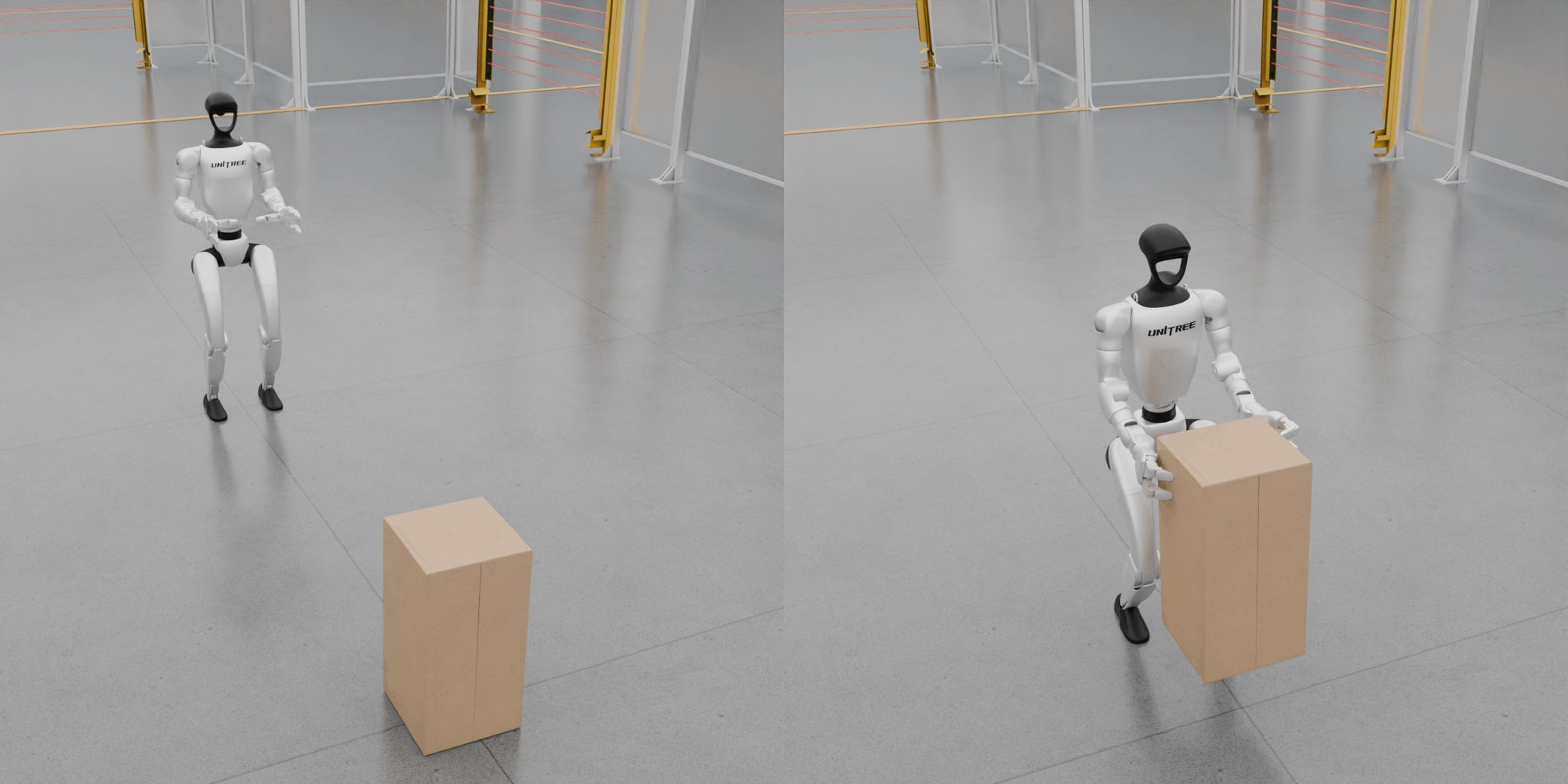
Numbers that matter
The authors introduce a nine-task G1 loco-manipulation sim benchmark (box lift, drill pick-and-place, shelf push, obstacle-aware pick, and more). Finetuning VLAs on 1,000 HumanoidMimicGen demos from one source demo yields 89% average success across the nine tasks, versus 48% with 100 human demos and 33% with DexMimicGen+ synthetic data from the same single source.
Real-robot co-training is the better headline. Across four hardware tasks (BoxToCart, PickCanister with obstruction, ThrowBottle, PickCanister), policies trained on real demos alone average 51% success; adding HumanoidMimicGen simulation data lifts that to 71% — a 20-point absolute gain the abstract also summarizes as a 20% relative improvement in co-trained whole-body policies.
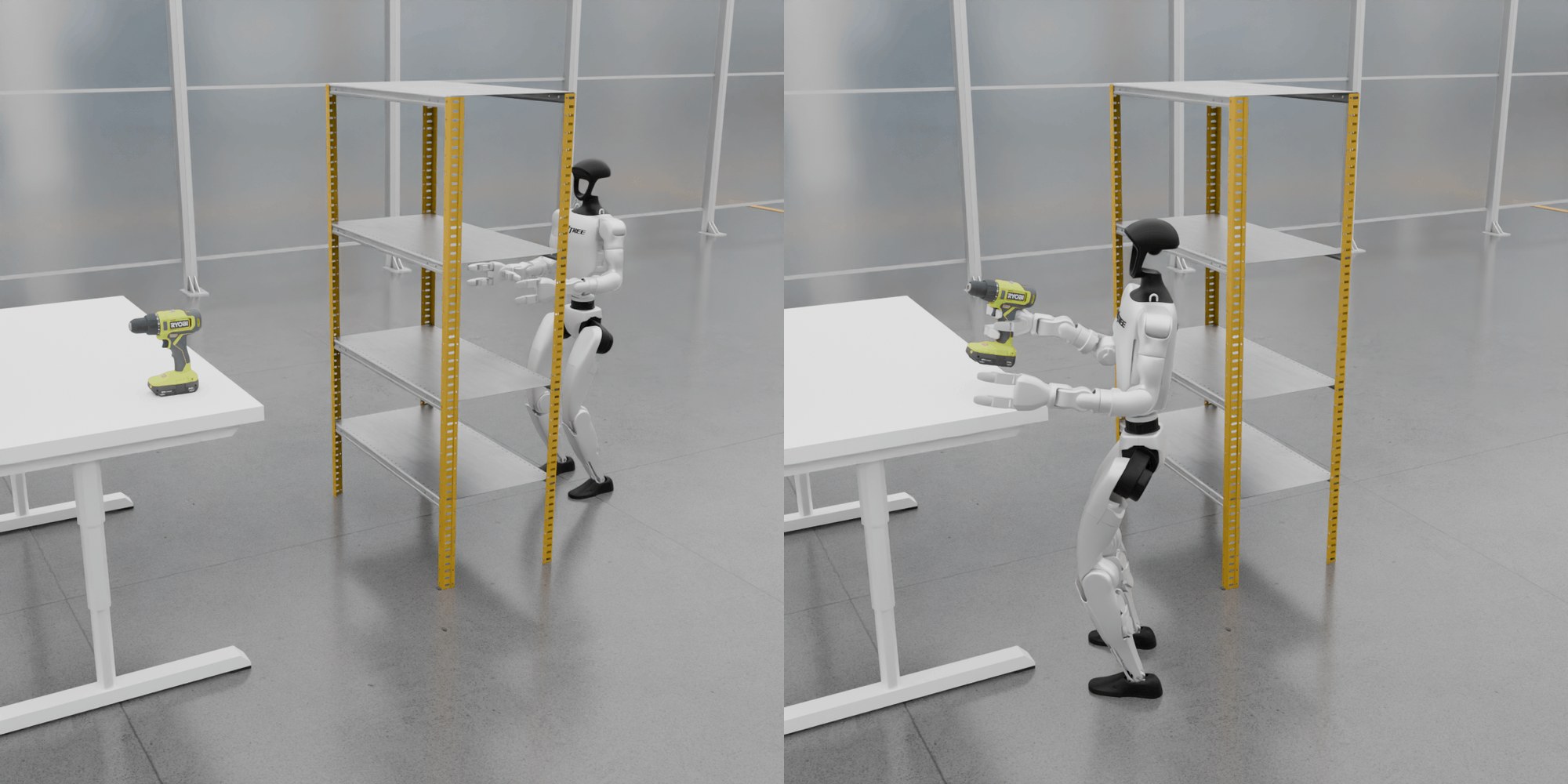
Paper: arXiv:2605.27724 (ICRA 2026 workshop Best Paper Finalist, per author notes). Project site hosts task videos and tables.
A Human’s Take
Synthetic data is only useful if it moves real success rates. A 51→71 jump on four hardware tasks is the kind of receipt I want to see more of. Still: every number above is from the authors’ own benchmark and co-training protocol. I’ll be more convinced when another lab regenerates from one demo and hits the same band.