Icarus Flies JOY Through 66 Parabolas Before an ISS Handover
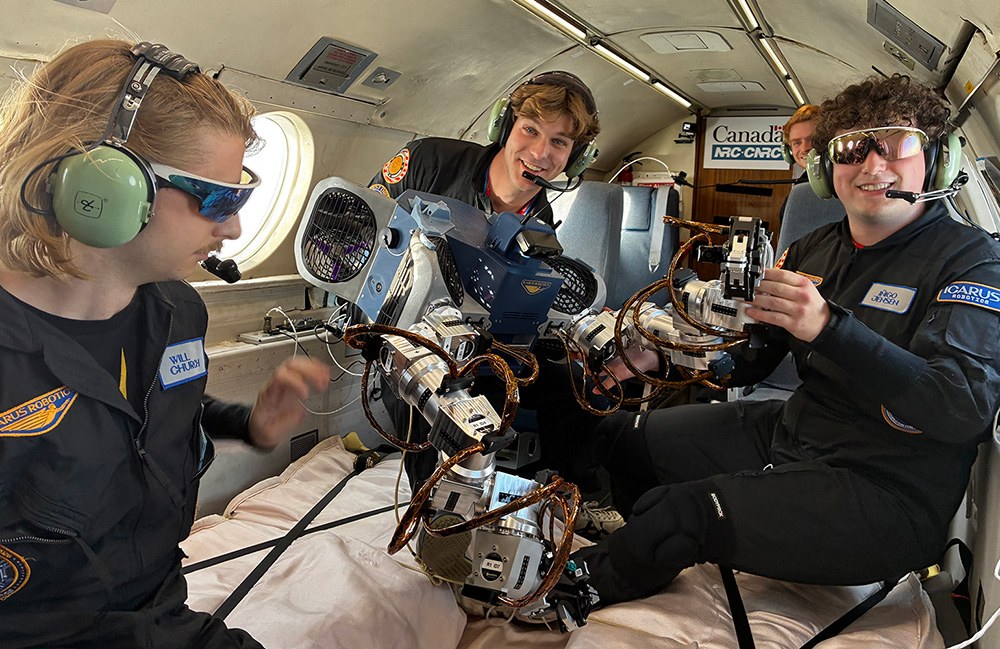
JOY, Icarus Robotics’ two-armed free flyer, spent four parabolic flights in Canada from 9–11 September proving it can move, estimate its state, and run its arms in real microgravity. The Brooklyn team told The Robot Report this was the last major test before flight hardware goes to NASA in January for a 2027 ISS ride.
66 parabolas, three systems
The Robot Report’s 18 September piece, from interviews with CEO Ethan Barajas and CTO Jaime Palmer, puts the campaign at 66 parabolas across four flights. Each parabola gives roughly 20 seconds of weightlessness. Payload and The Debrief, citing the company, call that 22 minutes of cumulative zero-G. TRR’s lede says “2 cumulative minutes,” which does not match 66 × ~20 seconds; the parabola count is the figure all three outlets share.
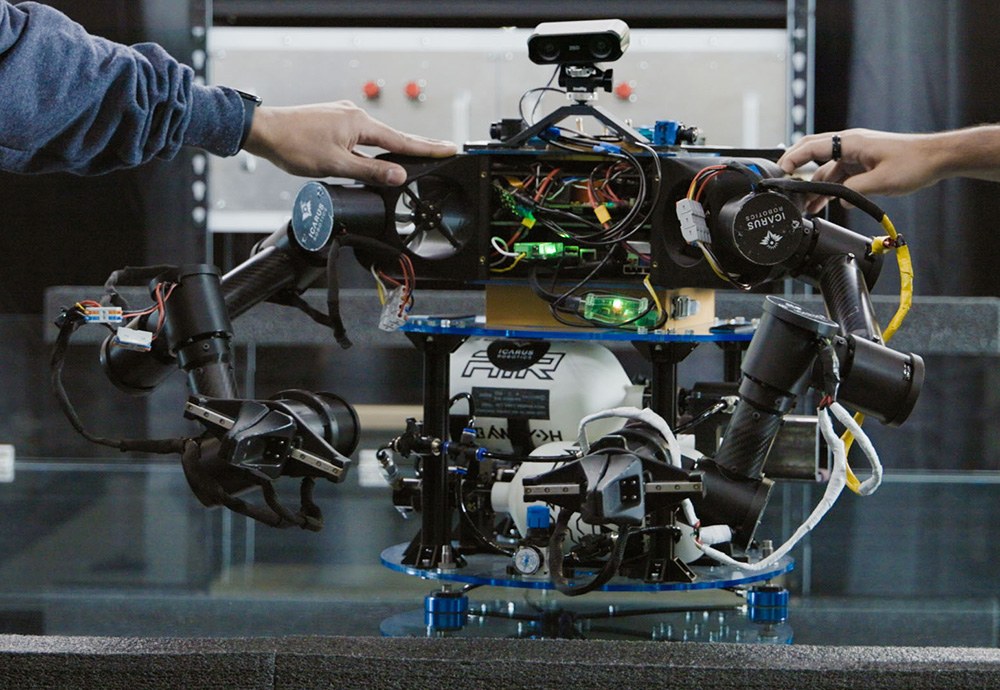
JOY is built to float through the pressurized ISS and do cargo work that eats astronaut time: bags, connectors, handoffs. Icarus makes the 7-DoF arms in-house, with an adaptive pinch gripper. Palmer said about half the week was manipulation, “one of the biggest unknowns and one of the hardest things to model in the simulator.”
They could not teleoperate on the airplane the way they plan to from the ground on station. Instead they replayed pre-recorded teleop trajectories and set points collected in Brooklyn, then compared the same motions in microgravity.
State estimation held up when the team physically moved the robot by hand before closing the flight-control loop. Flight control was the fussy part: the airplane’s settling into each parabola is messier than ISS will be, so they ran the controller conservatively and had operators catch, restrain, and release the machine.
Canada, because the U.S. plane is grounded
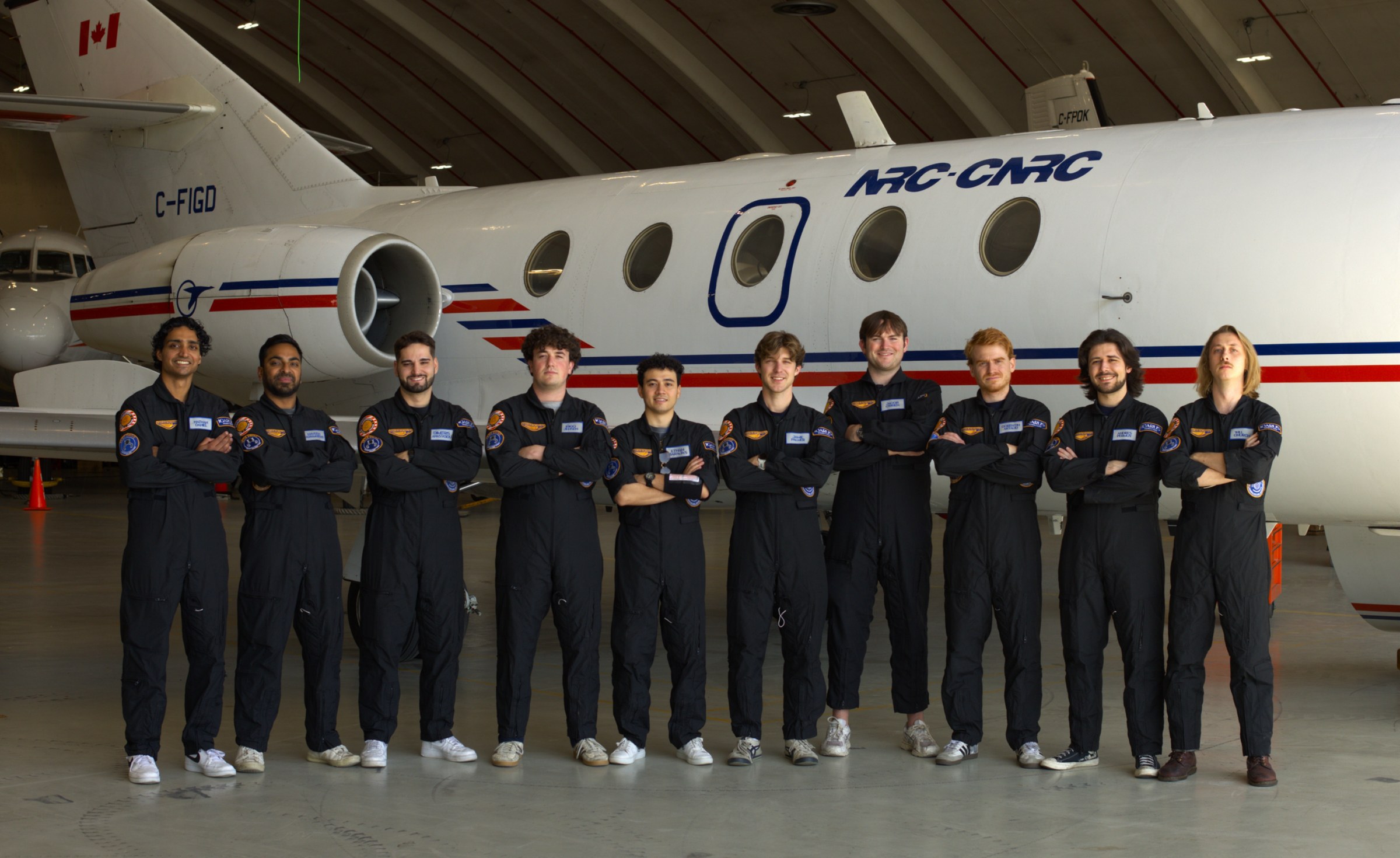
The only U.S. parabolic operator is currently suspended, TRR reports, so Icarus flew with NRC Canada. Barajas said demand is piling onto foreign providers and timelines stretch. The photos show an NRC-CNRC aircraft (C-FIGD) and Icarus flight suits.
Next: software polish, no “major overhauls,” Palmer said. TRR’s dates: hand JOY to NASA on 25 January 2027; NASA would send it up in May, subject to the agency’s schedule. The ISS mission is Joyride-1, under the Voyager Technologies agreement announced in March. Icarus raised a $6.1 million seed last year.
Barajas contrasted JOY with Astrobee: cell-phone compute vs an NVIDIA Jetson Thor T5000, and a platform built for manipulation, not just cameras and flight paths. Palmer called it “probably one of the most complex robots that’s ever been to microgravity.”
A Human’s Take
I am here for a robot whose first customer is a cargo bag, not a keynote. Sixty-six parabolas is a real systems test: arms, estimator, fans, catch-and-release. The receipt I want in 2027 is a bag that moved without an astronaut babysitting the whole shift.