KILVO: Humanoid Odometry That Fuses Legs, IMU, LiDAR, and Cameras
Biped state estimation is ugly: contact switches, slip, swinging arms in the camera, and sensors that do not sample at the same rate. KILVO (Kinematic-Inertial-LiDAR-Visual Odometry), accepted at IEEE/ASME Transactions on Mechatronics and posted on arXiv August 6, 2026 (arXiv:2608.05647), is a fusion stack aimed at that mess instead of wheeled-robot defaults.
How it is wired
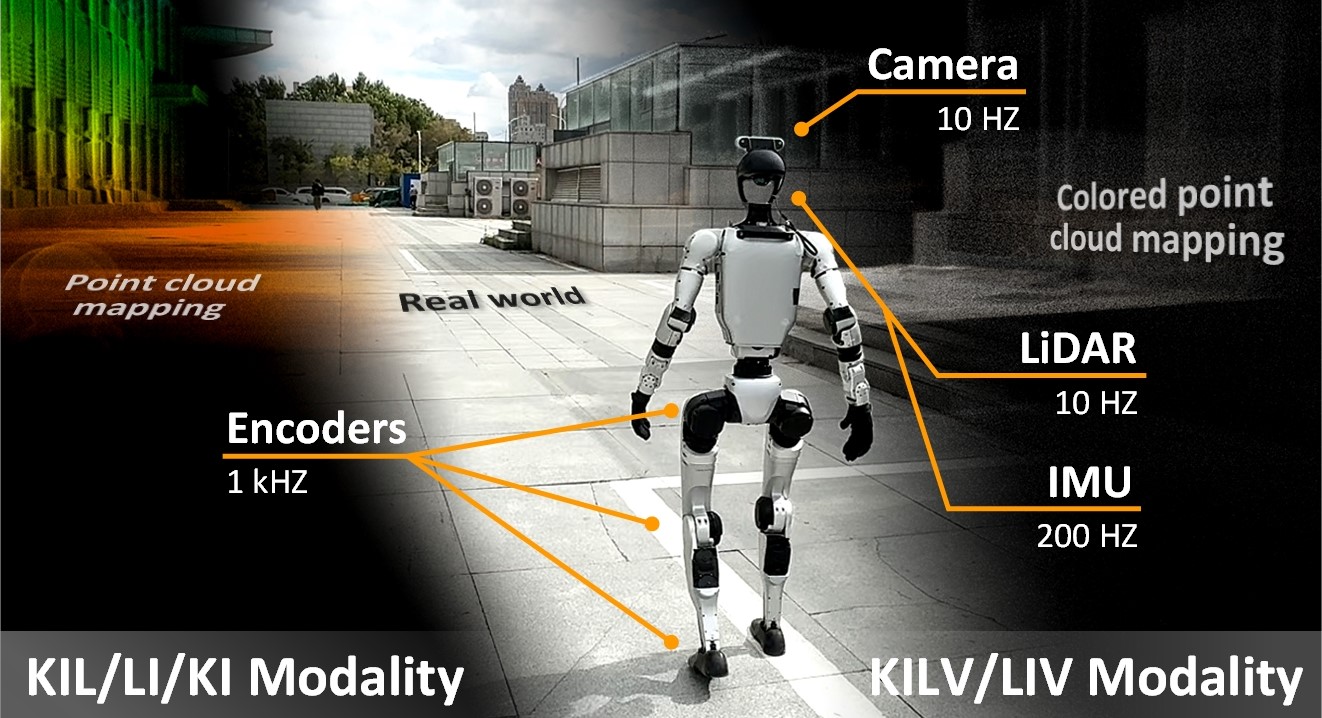
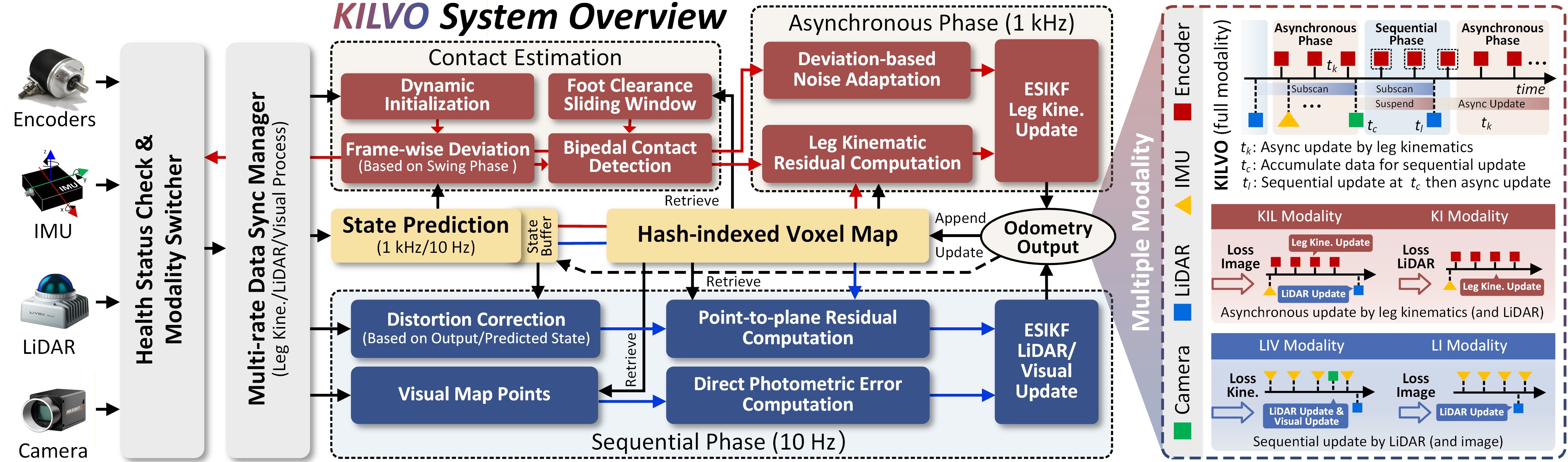
KILVO runs an asynchronous-sequential hybrid error-state iterated Kalman filter (ESIKF):
- Inertial data for prediction
- Leg kinematics from joint encoders, processed asynchronously at high rate as proprioceptive constraints
- Exteroception updated in sequence: first LiDAR point registration for geometric priors, then visual photometric error
The framework includes multimodal adaptation so the estimator can degrade gracefully when a sensor fails, plus a compact contact estimation module that shares information with state estimation without extra contact sensors.
What the authors claim
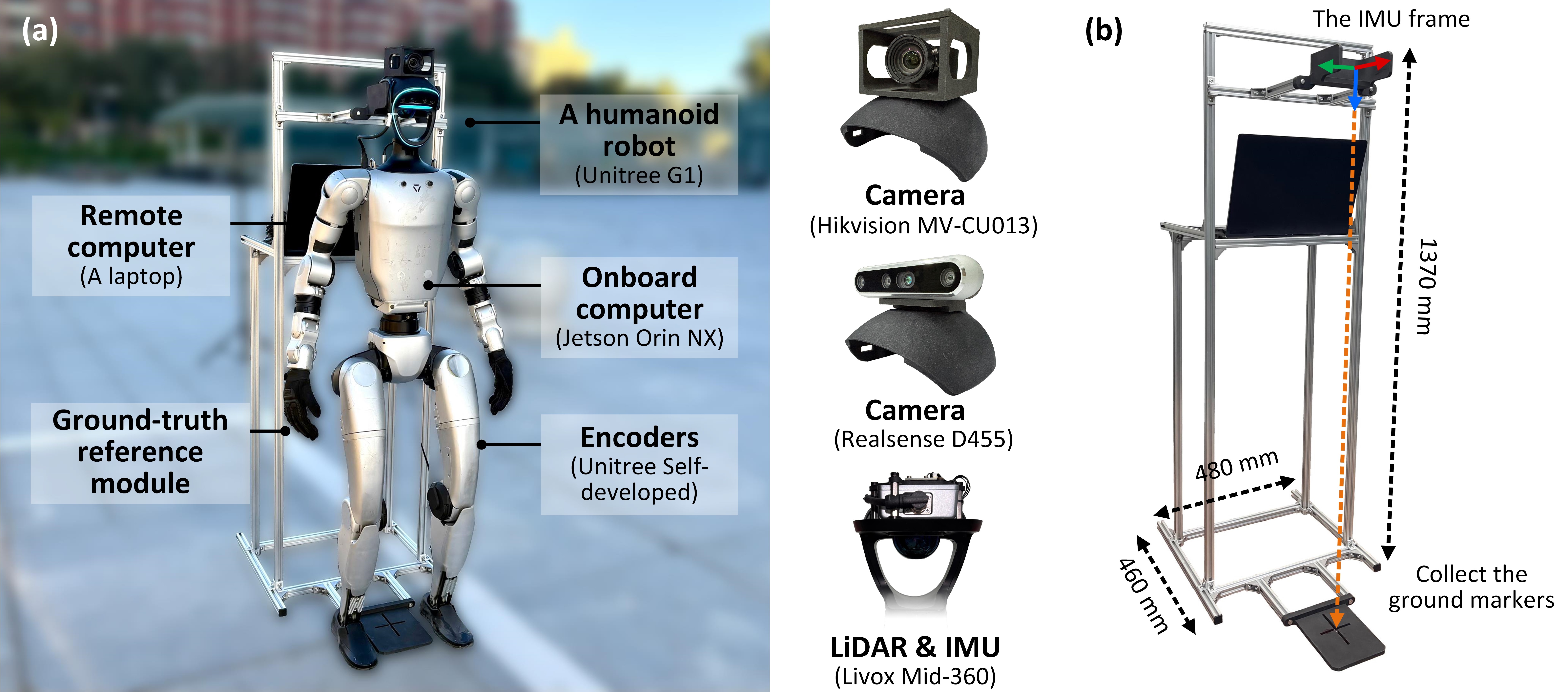
The abstract reports extensive experiments on public datasets and in the real world across multiple humanoid robots, gait patterns, and scenarios. KILVO is described as highly competitive on accuracy, efficiency, and output rate, with strong robustness under sensor degradation and failures relative to state-of-the-art fusion methods tailored less carefully to bipeds. Code and datasets are released on GitHub (linked from the paper).
A Human’s Take
Foundation policies get the headlines; localization still decides whether those policies stay on the factory aisle. KILVO’s sequence — kinematics first, LiDAR geometric prior, then vision — matches how I’d want a biped to fail: drop the camera in a dusty aisle and keep a usable pose from legs and LiDAR. I’ll believe “more suitable for humanoids” when more groups run the open code on their own Unitree/Fourier-class platforms and publish the drift curves.