KIT Turns CAD Into a Guess-and-Check Plan for Taking Stuff Apart
Researchers at the Karlsruhe Institute of Technology (KIT) published a system that plans how to take a worn product apart when the CAD file is a lie. The paper, From CAD to POMDP, is on arXiv as 2511.23407 (28 November 2025) and is accepted at ICRA 2026. IEEE Spectrum covered the lab work on 10 August 2026.
The point is simple. Assembly assumes the drawing is right. End-of-life parts are corroded, missing, or repaired in ways nobody wrote down. A deterministic unscrew-in-this-order plan wastes a shift the first time a fastener will not move.
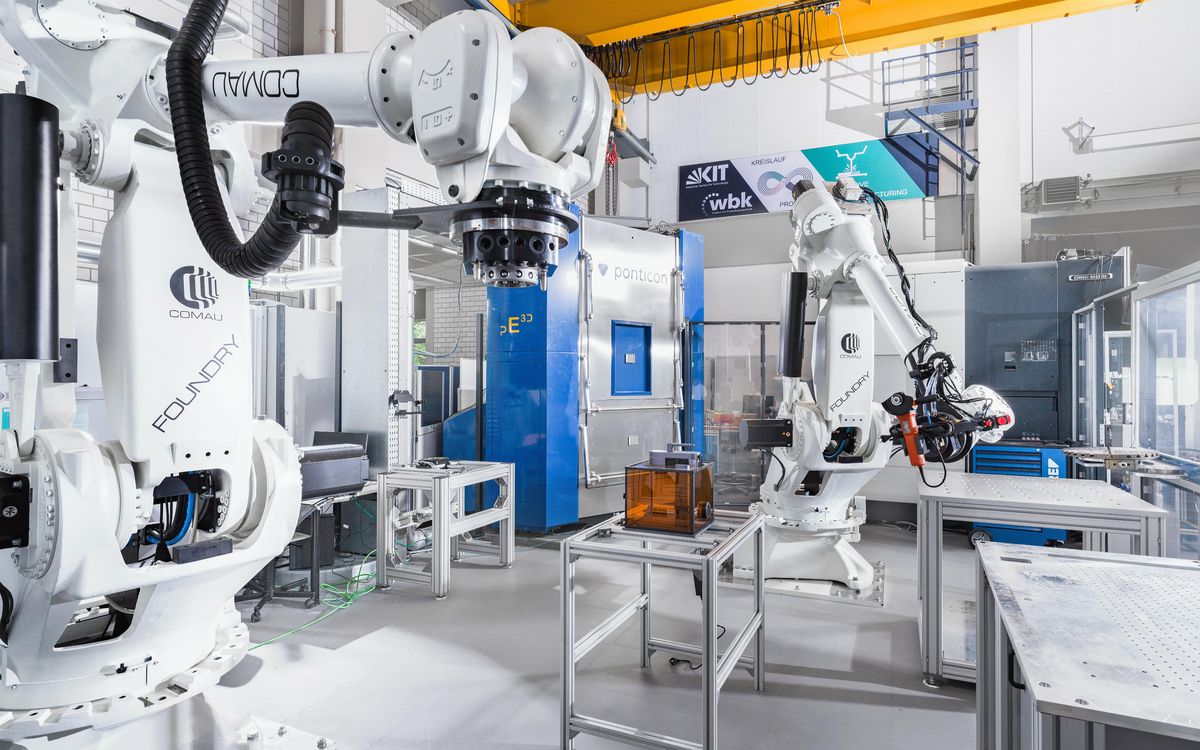
Disassembly as a POMDP
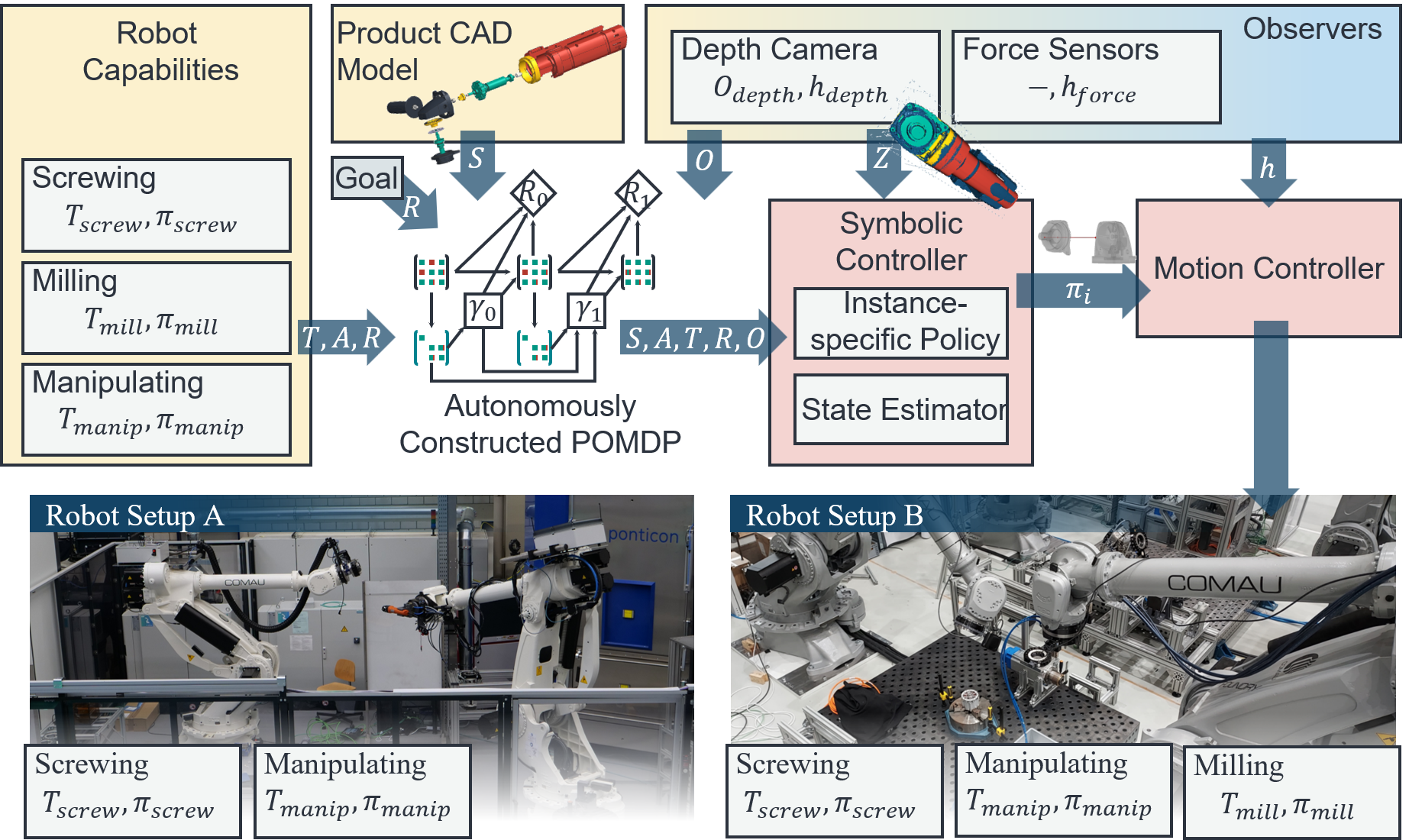
A POMDP is a planner that keeps a belief over hidden state instead of pretending it can see everything. Here the hidden variables are structural and physical properties of the used product. The team automatically builds that model from CAD, robot capabilities, and inspection results.
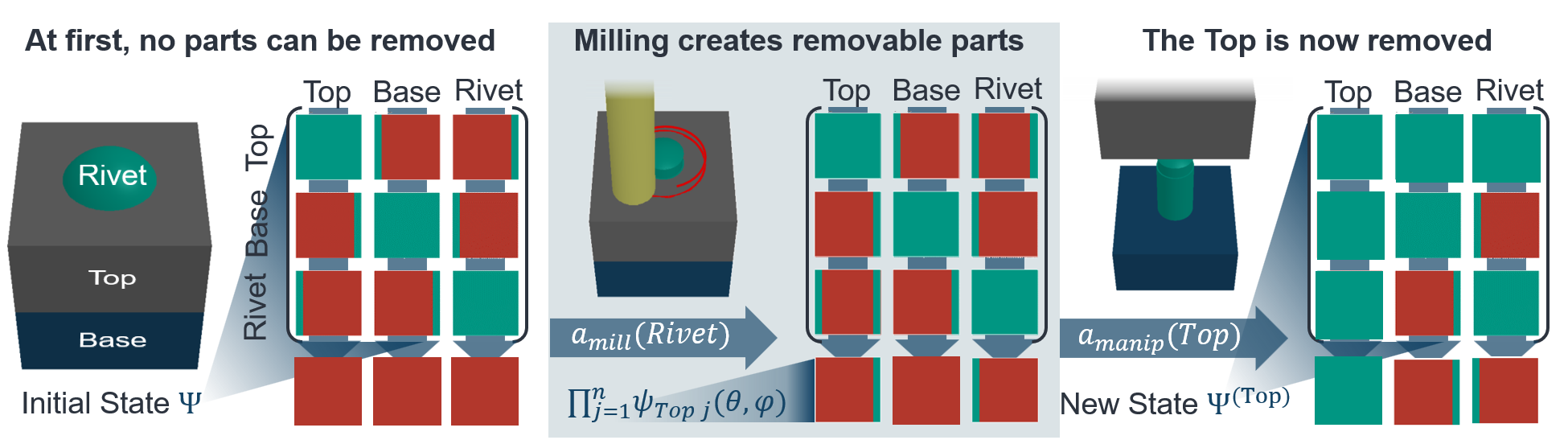
They approximate the full POMDP with reinforcement learning on stochastic action outcomes, then run a Bayesian filter while the arms work. Actions include non-destructive removal and destructive cuts. Destructive moves exist because corrosion can block every “legal” removal direction. The project page shows a rivet example: milling opens a new direction when the fastener will not come out.
IEEE Spectrum describes the loop on the physical cell: guess how the product is broken, nudge each part, update the guess, and change tools. In the Spectrum video, a researcher resticks a screw. When the system still sees it, it switches from unscrewing to milling.
Jan Baumgärtner, one of the designers, told Spectrum that building with new parts is easy because every step is specified. Taking something broken apart is not. “We can imagine 100 ways that something can go wrong.”
What they ran
The abstract says they used three products on two robotic systems. The planner beat deterministic baselines on average disassembly time and variance, transferred across the two cells, and adapted to missing or stuck parts. Spectrum notes you can mark which parts must survive so the planner protects them.
The authors are Baumgärtner, Malte Hansjosten, David Hald, Adrian Hauptmannl, Alexander Puchta, and Jürgen Fleischer at KIT’s wbk Institute of Production Science. Funding: DFG SFB-1574. Spectrum also cites the IFR figure of over 4 million industrial robots in use, and a forecast (linked to ABI Research) that the installed base will grow to over 16 million by 2030.
A Human’s Take
This is the rare recycling-robot story that starts from the failure mode instead of a glossy “circular economy” slide. If the CAD says the screw turns and the screw does not turn, the useful machine is the one that notices and grabs a mill. I care less about the 100-arm factory vision and more about whether this policy still works when the next product is a sealed consumer brick with no usable CAD.