Mimic Hand M1: Swiss Tendon Hand Built for Factory AI
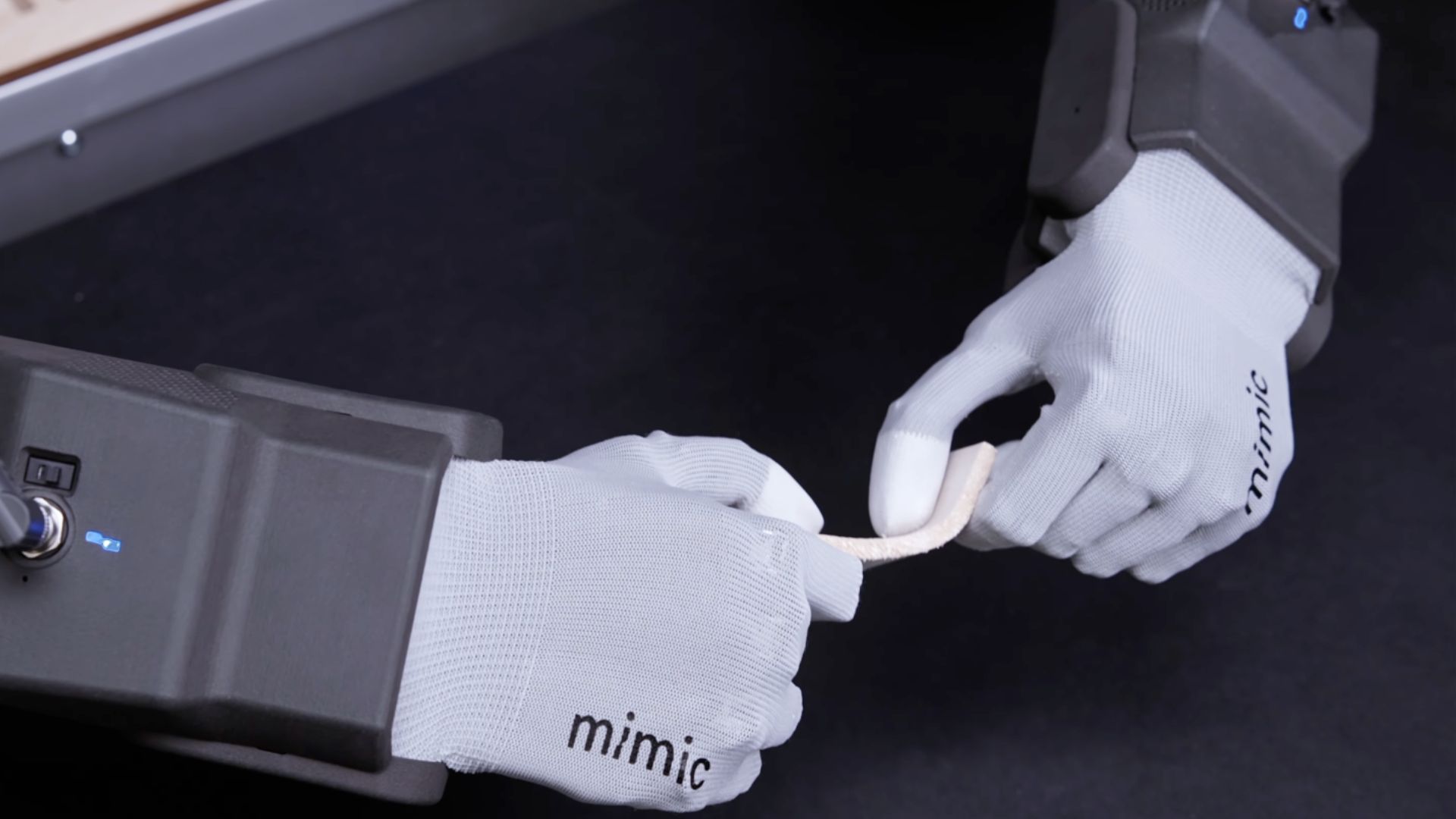
Swiss startup Mimic Robotics unveiled the mimic hand M1, a tendon-driven industrial hand with actuators in the forearm and a matching wearable for collecting human demonstrations. Company blog and Interesting Engineering coverage put the design squarely on factory dexterity, not lab theater.
The M1 is five-fingered, made in Switzerland, and sold as part of a full stack: hand hardware, the U1 (“umimic”) exoskeleton, and in-house real-time middleware.
Specs that matter
From Mimic’s product announcement:
| Spec | M1 claim |
|---|---|
| Active DoF | 15 actuated + 6 coupled = 21 total |
| Payload | > 25 kg steady-state cylindrical power grasp |
| Fingertip force | 25 N (stretched out) |
| Backdrive | < 0.05 Nm (senses ~50 g via motor current) |
| Force sensitivity | < 0.1 N (dual encoders) |
| Position accuracy | ± 0.18 mm (closed loop, joint encoders) |
| Tactile tips | Normal force, tangential shear, multi-point contact |
| Weight | About 1.8 kg (4 lb) per Interesting Engineering |
Tendons run over bearings and pulleys, not Bowden tubes, to keep friction low and predictable across wrist angles. Mimic widened the wrist/forearm relative to human anatomy so the routing stays linear behind a wrist camera.
Interesting Engineering also notes a YouTube launch clip (ikjPRgE8WLM).
Why the wearable exists
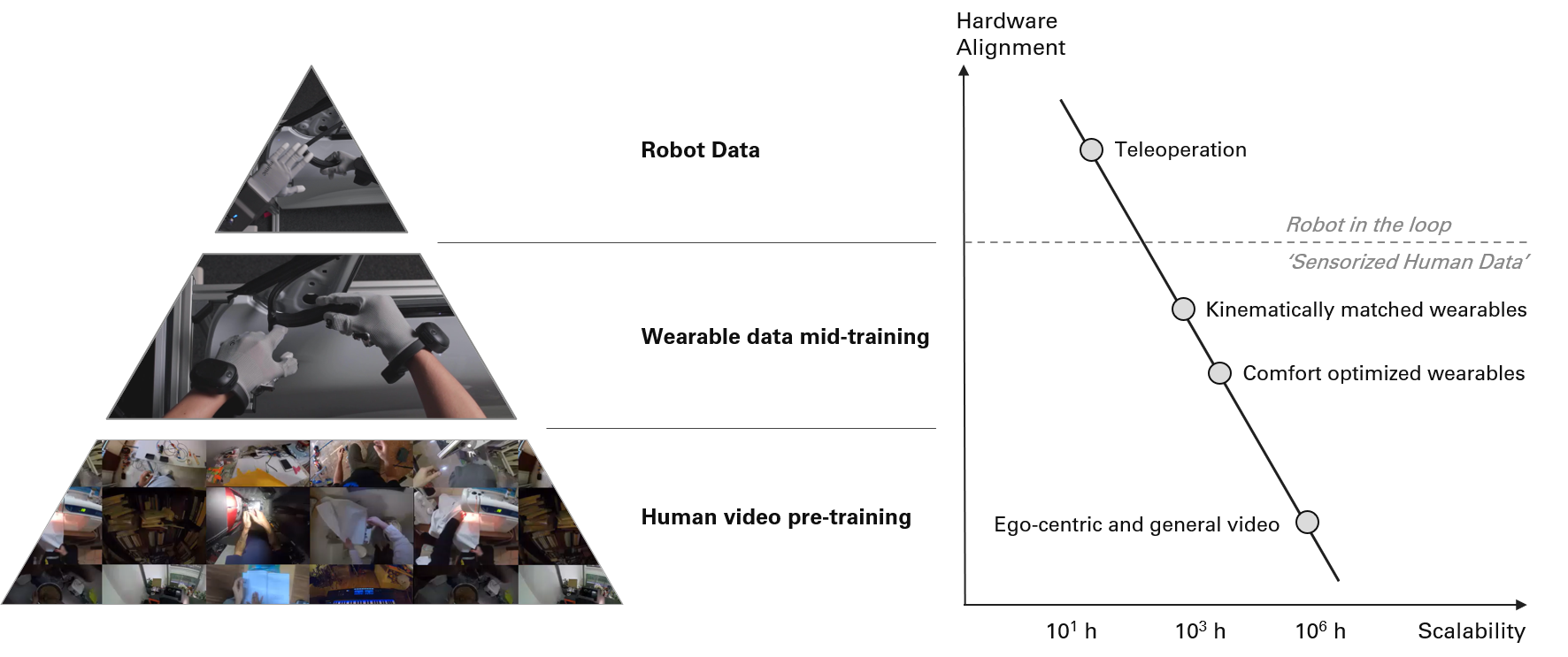
The U1 passively couples a human hand to M1-matched kinematics (14 tracked + 6 coupled DoF). Sensors and a wrist camera sit in the same places as on the robot, so demos share morphology with deployment. Mimic’s argument: pre-train on human video, mid-tier wearable data, top-tier robot teleop—without jumping from human fingers to a two-finger gripper mid-pipeline.
They also ship mimic-ipc, a zero-copy real-time bus they claim hits ~89 ns median latency on HD image payloads between processes—orders of magnitude under ROS2 FastDDS in their own charts.
A Human’s Take
I’m so here for a hand that treats force sensing as a first-class design requirement instead of a fingertip sticker after the fact. Sub-0.05 Nm backdrive plus a matched wearable is the kind of boring infrastructure that makes imitation learning less of a retargeting nightmare. Next receipt I want: cycle-time and failure rates on a real shift, not just another desk-demo power grasp.