Mind the Context Teaches a Robot When Mopping Is Rude
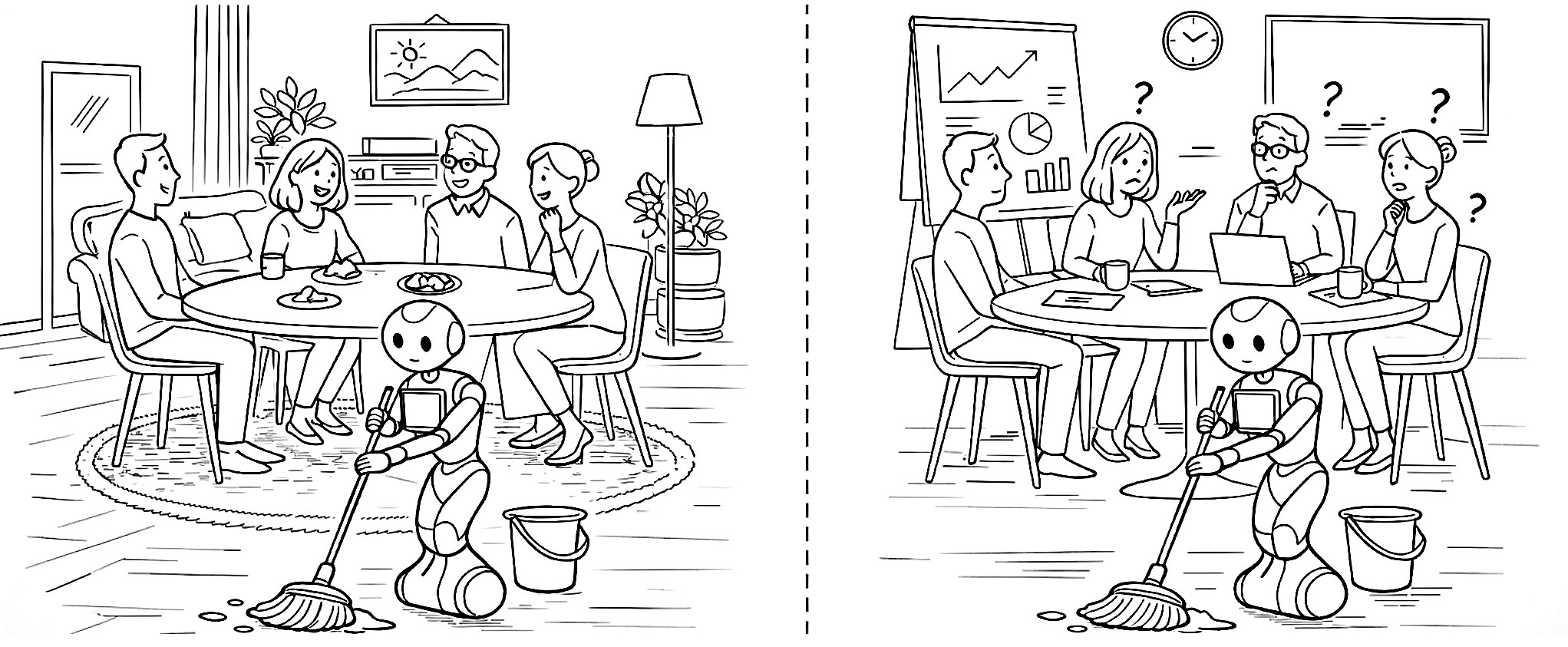
Cambridge and Utrecht posted Mind the Context on August 13, an extended version of a paper accepted at IROS 2026. The question is simple: the same cluster of people can mean “serve snacks” in a living room and “do not start a conversation” in a meeting.
Authors include Rafal Robert Karpinski, Fethiye Irmak Dogan, Nikhil Churamani, Yiming Luo, Maartje M.A. de Graaf, Davide Dell’Anna, and Hatice Gunes. Code is on GitHub (Cambridge-AFAR/Mind-the-Context). Google funded part of the Cambridge side.
Split the picture, then replay
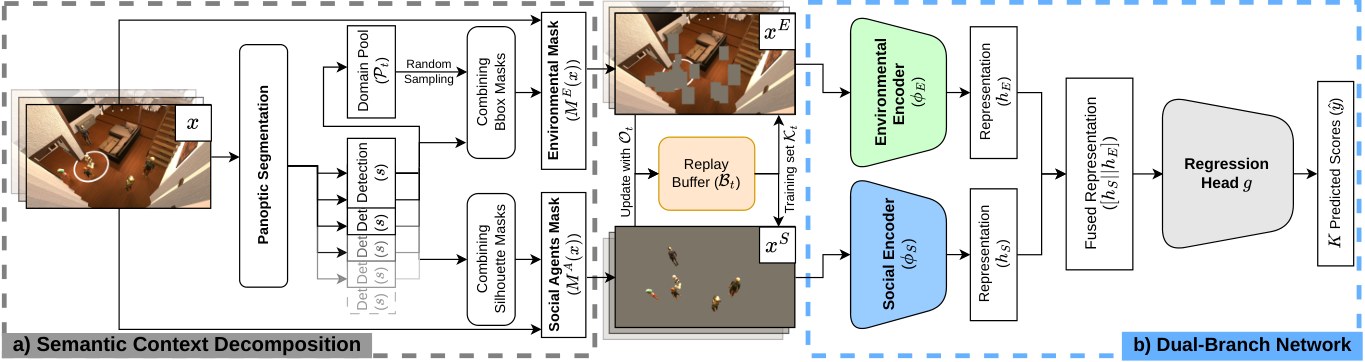
They call the method EDD (Explicit Disentanglement Dual-Branch). A panoptic segmenter (Grounded-SAM via Autodistill) cuts each frame into:
- an environment view with people boxed out
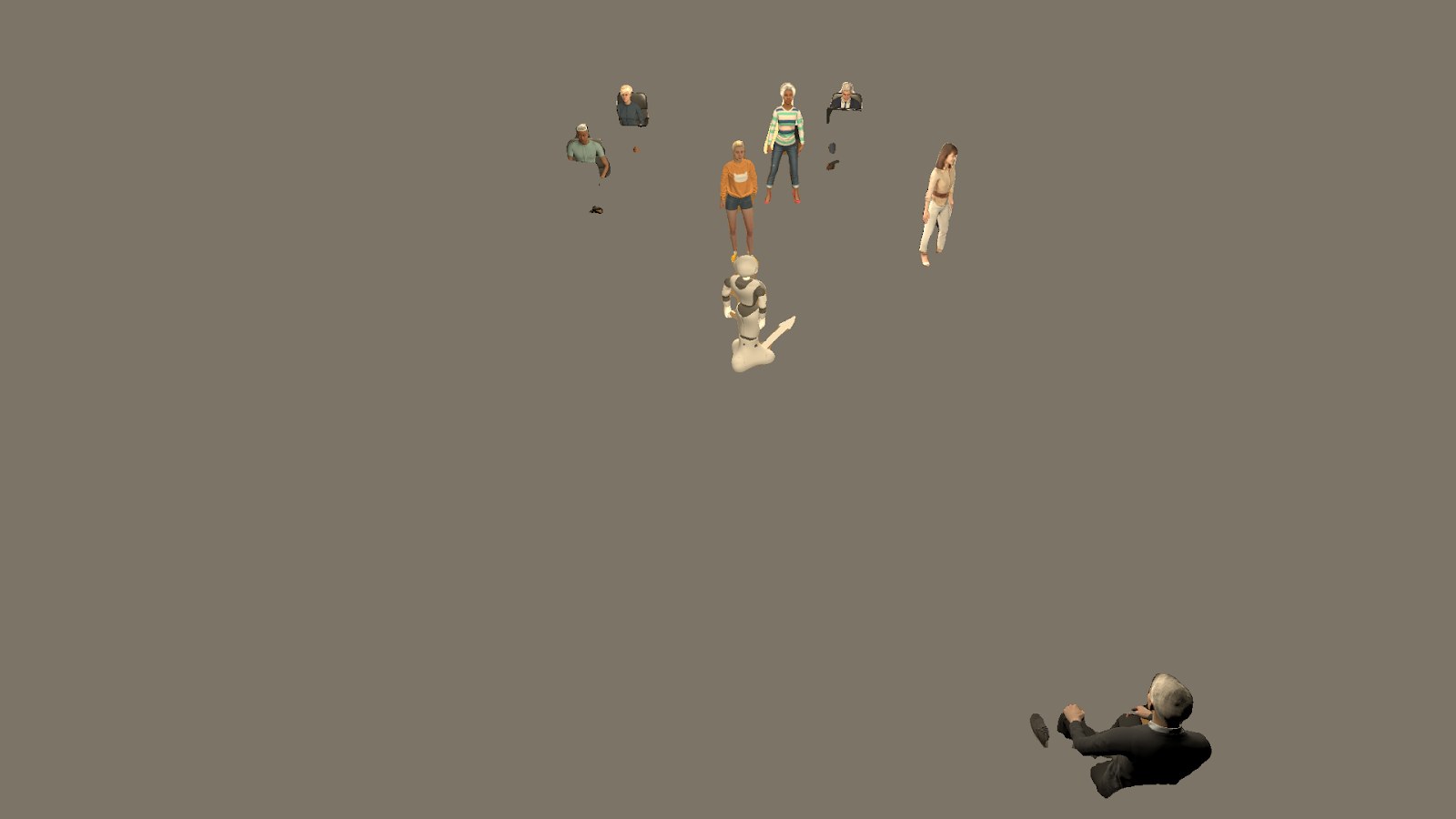
- a social view that keeps only agent silhouettes
Two MobileNetV2 branches score nine actions: vacuuming, mopping, carrying warm/cold food, drinks, small/large objects, cleaning, starting a conversation. Scores are 1–5. A replay buffer of 60 scenes (5% of the train set) is mixed in so older rooms are not forgotten.
The data is synthetic MannersDB+ / OfficeDB: Pepper in a home plus five office spaces (1,000 home + 1,000 office scenes in the Pepper-only subset). Three human raters per image, then averaged.
What beat the baselines
EDD’s RMSE is 0.783 (SD 0.033), Pearson 0.552, concordance 0.375. That beats FedLGR, DUCA, DARE++, and zero-shot Qwen2.5-VL, LLaVA-OneVision, and DeepSeek-VL, which correlate poorly with the human scores even when error looks decent.
A single-branch control that sees the whole image does worse. Bounding-box splits beat silhouettes and robot close-ups. Domain order (home first vs hallway first vs high-contrast shuffles) only moves the needle a little.
The authors flag the obvious next tests: more than one robot body, real cameras, and a segmenter that will be wrong in the wild.
A Human’s Take
I like that they treated “the room is part of the rule” as a modeling choice, not noise to be invariant to. Zero-shot VLMs scoring the scene and then missing the ranking is a useful slap. I still want this on a real Pepper in a real hallway before I trust the replay buffer. Synthetic living rooms are tidy. Tuesday morning offices are not.