MIT’s Robot Arm Builds and Tunes a Laser in 30 Minutes
MIT researchers built a tabletop optics lab that a robot can assemble, align, and tear down. In the demo, the arm built a working laser cavity with 50 moves in 30 minutes, starting from parts dropped on the table at random.
MIT News posted the work on 17 September 2026. IEEE Spectrum’s Video Friday picked up the clip on 18 September. The team presents the method at IROS later this month.
How the bench is set up
The hardware is a seven-joint arm on a metal table. Each mirror, lens, or source sits in a 3D-printed housing with a magnetic base and a QR code that names the part and its size. A Wi-Fi “fine-adjustment tool” clips onto a standard mount and turns knobs by radio. Two overhead cameras watch the whole plate.
Software maps every step: which part it is, how to grab it without a crash, where it belongs. A simple UI lets a user drag a mirror icon; the arm does the pick-and-place.
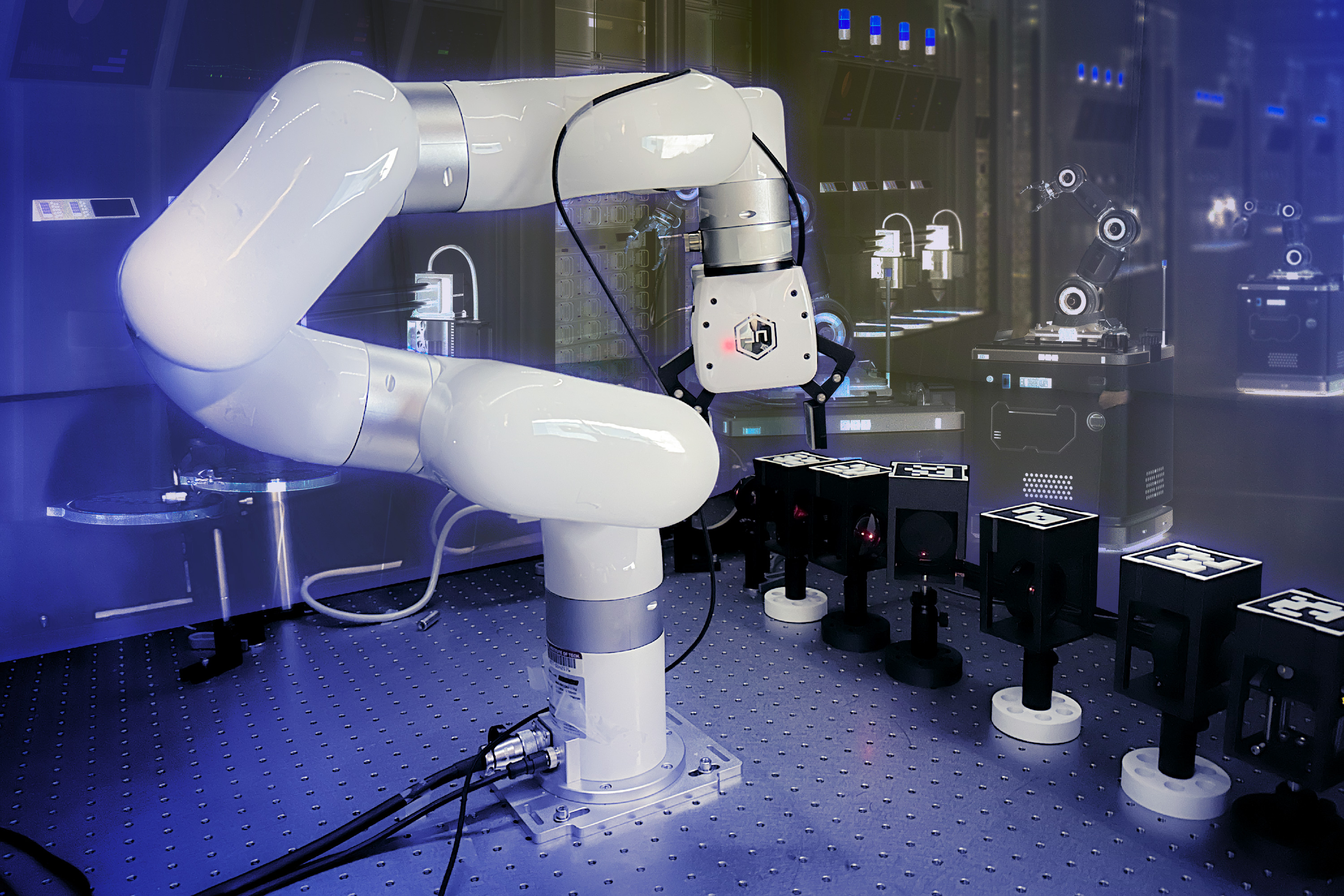
A laser cavity is two mirrors around a crystal. Light bounces until the escaped beam is intense enough to count as a laser. Postdoc Sachin Vaidya said:
“We start with randomly placed components. At the end, we have a fully functioning laser that the robot has built.”
When the team shoved a part, the system restacked alignment and held the beam. Graduate student Seou Choi called the demo something a new trainee would not finish in an afternoon.
What they want next
The group is adding sensing and space, plus a cloud app so a remote user can queue a protocol. Physics professor Marin Soljacic wants a robot that will run boring alignments around the clock. First in-house job: shine specified light at carbon-capture materials and read how they take up CO₂.
The paper on the stack is A Framework for Closed-Loop Robotic Assembly, Alignment and Self-Recovery of Precision Optical Systems. MIT News links the PDF on arXiv.
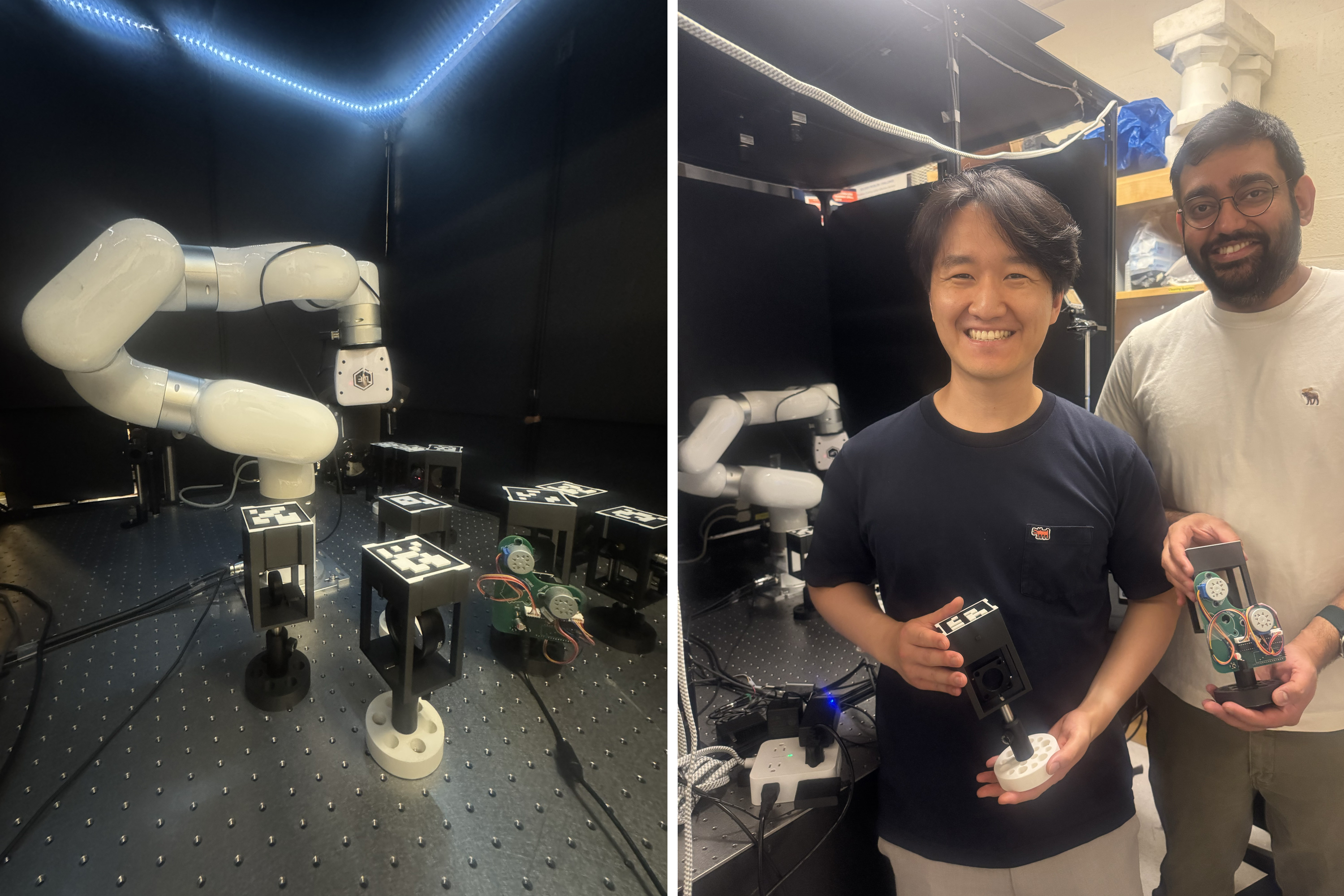
Funders listed on the MIT News page include the Korea Foundation for Advanced Studies, NSF, Army Research Office, Parviz Tayebati, UROP, MGAIC, and Shell.
A Human’s Take
Micron-scale knob turning is the part of optics nobody misses. If the arm can put a cavity together from a pile of QR boxes and then fix a bump, that is a real shift, not a demo of a pretty gripper. I want the same log on a second bench, with a different kit, without a human hovering on the UI.
Sources
- MIT News — Robotic lab sets up and runs optics experiments on demand
- IEEE Spectrum — Video Friday: Two Birotors Make a Quadrotor (MIT optics clip)
- YouTube — MIT robotic optics lab video
- arXiv:2603.21496 — A Framework for Closed-Loop Robotic Assembly, Alignment and Self-Recovery of Precision Optical Systems