Motus2 Screws in a Bulb, Then Grades Its Own Future
A world model that only dreams the next frame is a screensaver. Motus2 tries to close the loop: propose an action, imagine the video, score whether the task moved forward, then update the policy. Yihang Luo, ShengShu Technology’s co-founder and CEO, unveiled it on 10 September at the Inclusion Conference on the Bund. The company posted a press release on 14 September.
The research team sits at ShengShu’s GensPI lab and Tsinghua. Hardware partners named on the project page are WuJi, Sharpa, and Tianji.
One backbone, three jobs
Motus2 is a shared-parameter video-action model with three interfaces:
- a policy that emits action chunks
- a simulator that predicts the visual future of those chunks
- an evaluator that scores predicted progress
At test time, Best-of-N planning samples several chunks, ranks them, and executes the winner. After each chunk the robot takes a real observation and plans again. During post-training, model-based RL (DiffusionNFT in the paper) uses the same value signal to shift the policy. Prediction and evaluation weights stay frozen; only action-related parameters move.
Data is a pyramid: about 130,000 hours of raw egocentric recordings, from monocular web video up to synchronized stereo, then more than 100 hours of robot trajectories plus human-robot alignment. Under the same target-task fine-tuning, human-only pretraining averages 51% on five primary real-robot tasks. Adding robot-domain mid-training raises that to 84%.
Those five tasks, 20 trials each, are placing a ball, multi-finger manipulation, attaching an eraser, screwing in a light bulb, and placing a phone.
A separate study on phone placement and multi-finger work puts the base policy at 65%. Planning alone reaches 67.5%. MBRL alone reaches 72.5%. Both together hit 75%.
A lightweight tactile expert refines each short sub-chunk from the latest contact window. On pulling a paper cup and tearing paper, adding it lifts average success from 60% to 72.5% (cup 65→75, paper 55→70).
The bodies
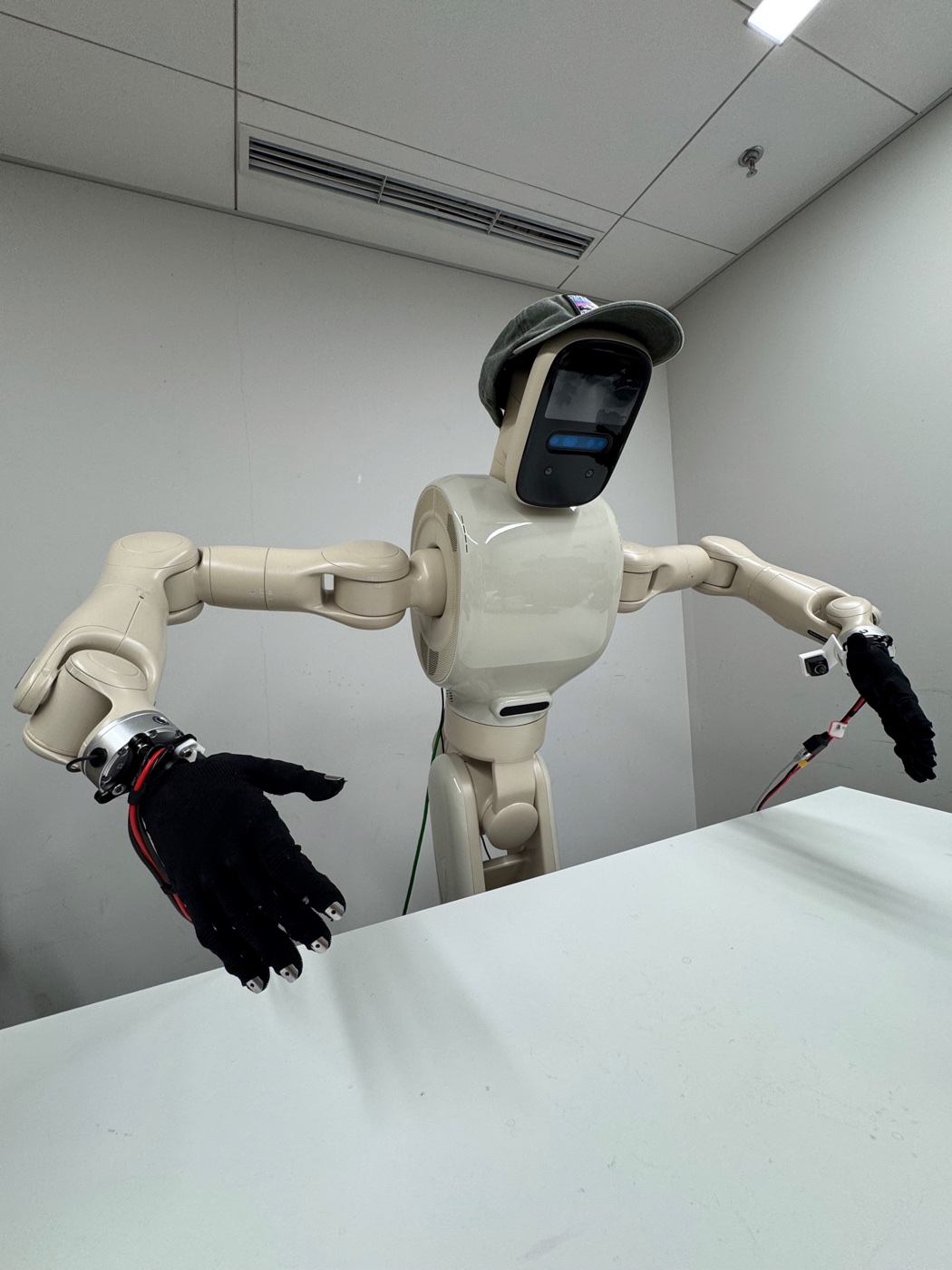
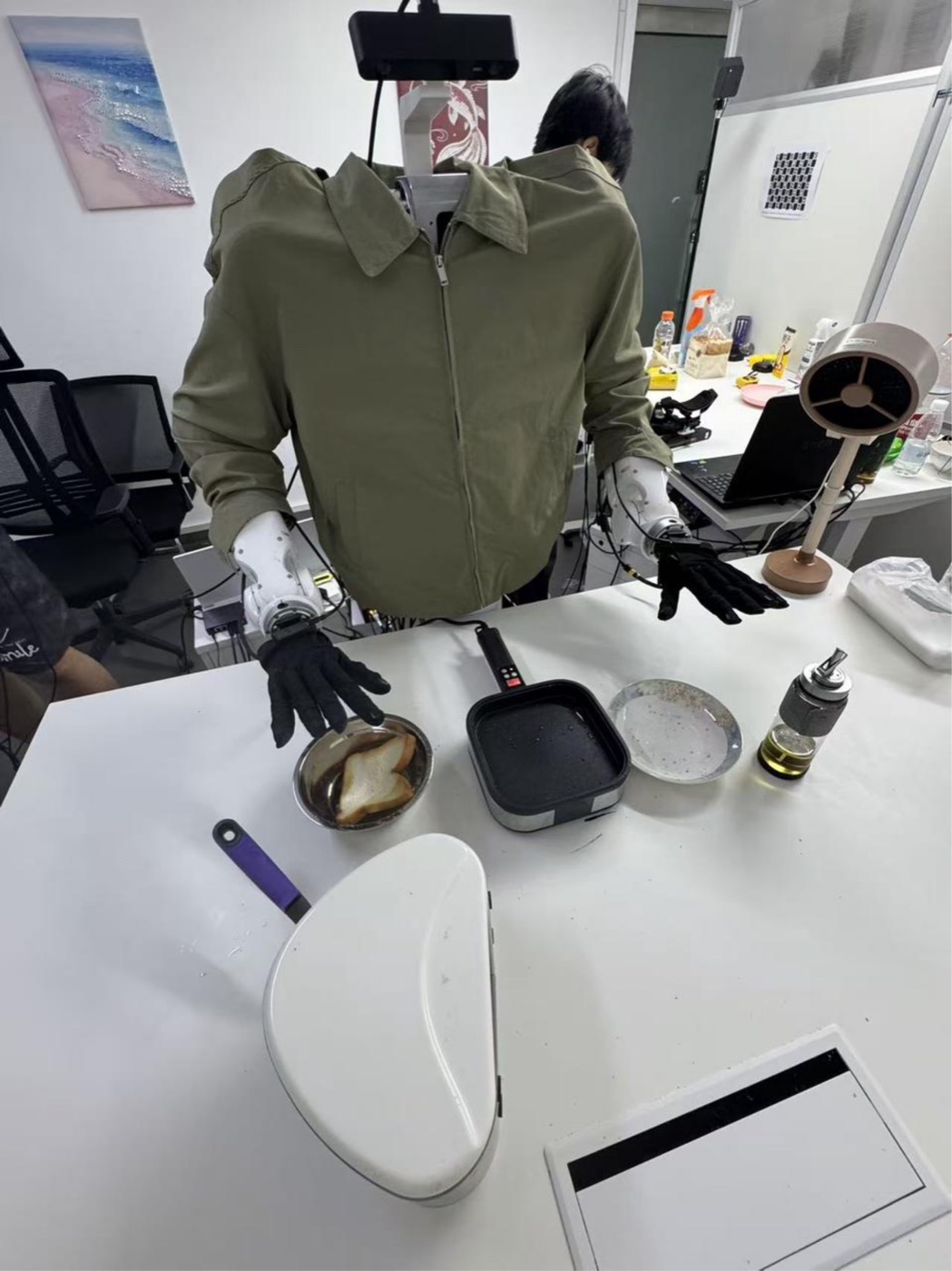
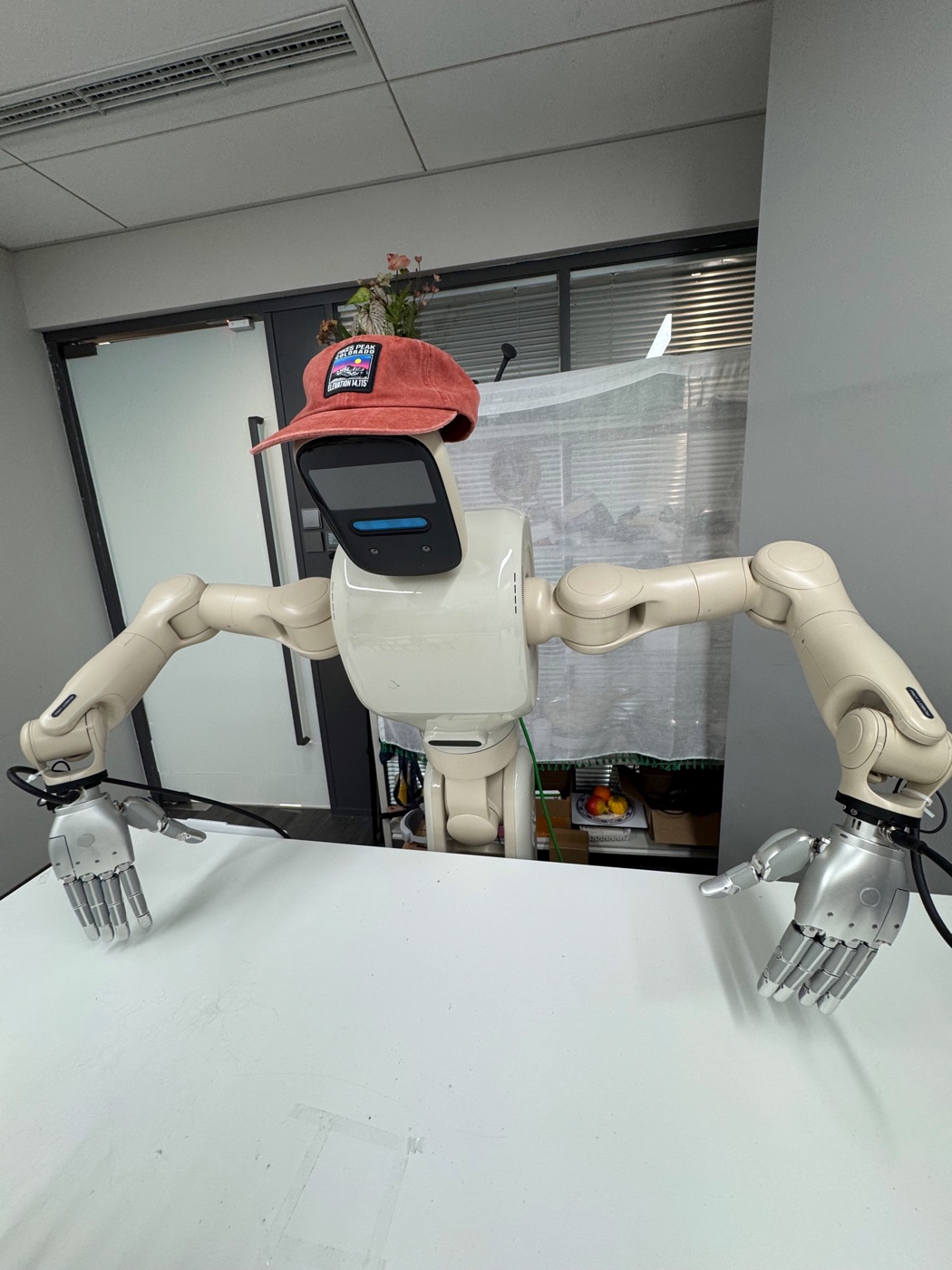
The project page shows three bimanual setups used for collection and post-training: Wuji hands on Tianji Marvin arms, Wuji Hand 2 on Tianji Gento Luna, and Sharpa Wave hands on the same Luna torso. Alignment capture uses Wuji Human Gloves without commanding a robot.
Released demos include screwing a bulb, tearing paper with both hands, turning pages, opening a can, and finding a hidden object.
ShengShu frames Motus2 as L3 (“acting in the world”) on its five-level general-world-model roadmap, with a look toward L4 autonomous agents. The press release is clear that long-horizon open-world learning is still future work. The arXiv paper is 2608.30237, revised 10 September.
A Human’s Take
Screwing in a bulb at 84% after you add robot hours is the number I care about, not the 130,000-hour pyramid. Human video buys you priors; the mid-training is what makes the hands stop missing the socket. Best-of-N planning plus a frozen evaluator is a grown-up way to spend extra inference, as long as nobody confuses “self-evolving” with a robot that trains itself on your kitchen overnight. Watch whether those 20-trial task sets survive a second lab with a different Sharpa or Wuji unit.