Naver’s ARCBRAIN Flow Aims at No-Code Robot Service Design
Naver is pushing its robot software stack beyond developer-only tooling. According to Seoul Economic Daily, Naver Labs Europe built ARCBRAIN Flow — a no-code / low-code layer so site operators can design robot services without rewriting the full control stack every time a building layout changes.
What ARCBRAIN Flow is
ARCBRAIN Flow sits on top of Naver’s large-scale robot control system ARCBRAIN. Non-developers can combine building blocks — movement paths, delivery-complete notifications, and other service steps — into site-specific workflows. A Naver official told Seoul Economic Daily the goal is “customized services tailored to customer demand at each site,” with controls “as easy as moving shapes with a mouse in PowerPoint.”
Naver Labs Europe filed a Korean trademark for the name on July 10 and is pursuing European patent procedures, the report says.
How it fits the ARC stack
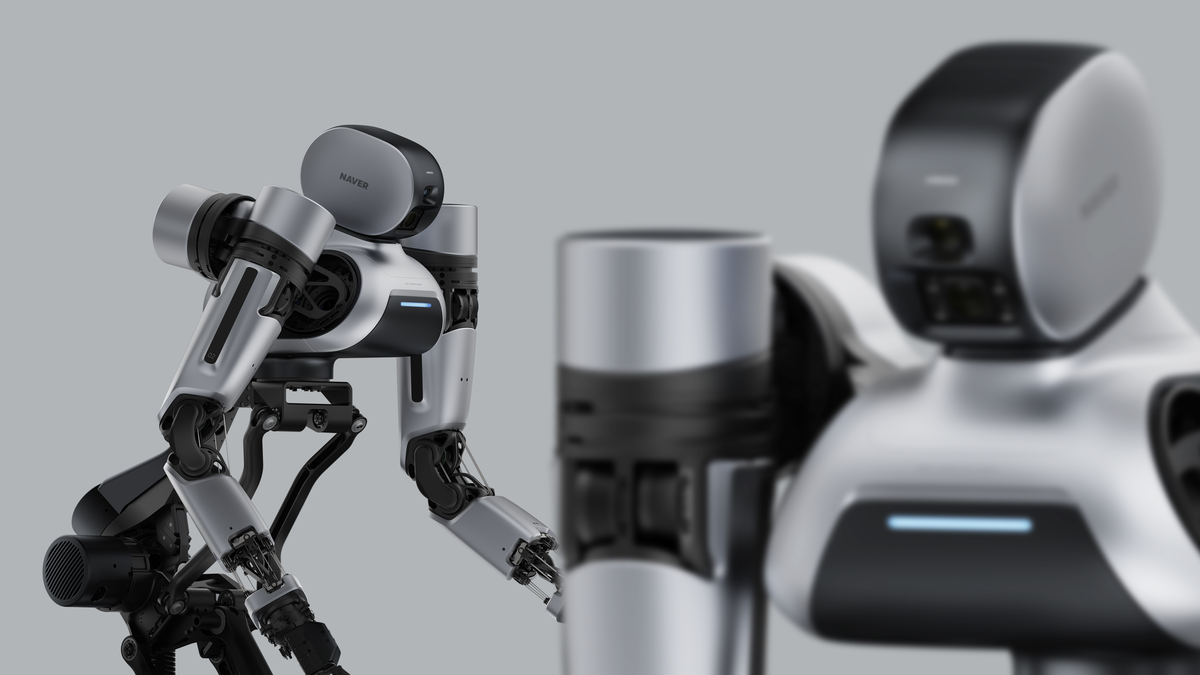
Naver has been assembling an ARC robot OS ecosystem since founding Naver Labs in 2017. Pieces already in the public description:
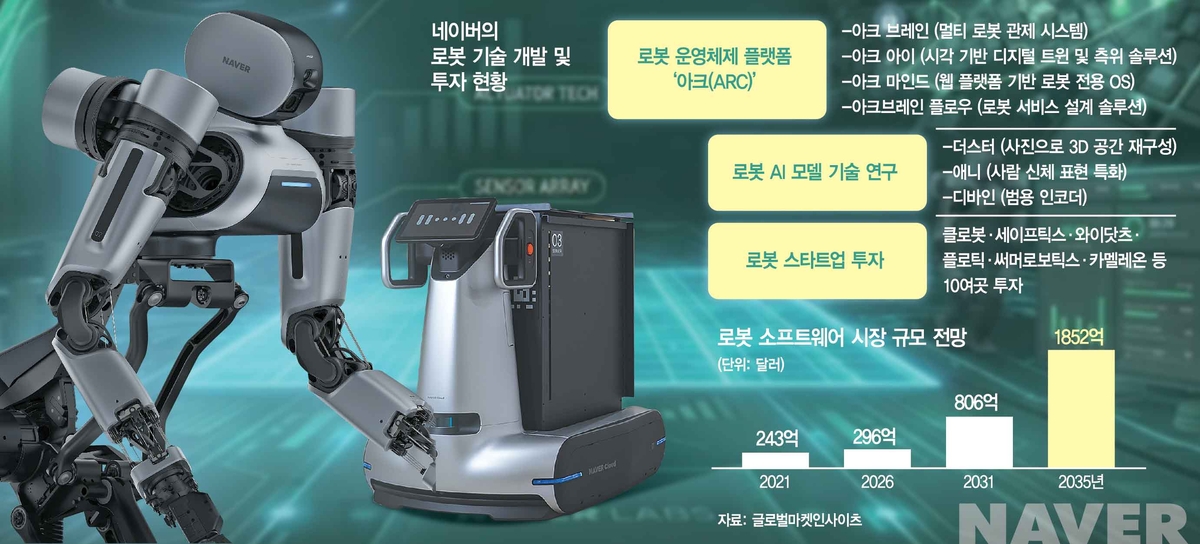
- ARCBRAIN — cloud-based multi-robot control
- ARC eye — vision-based positioning without GPS
- ARC mind — web-based robot OS (Naver’s claim: first of its kind)
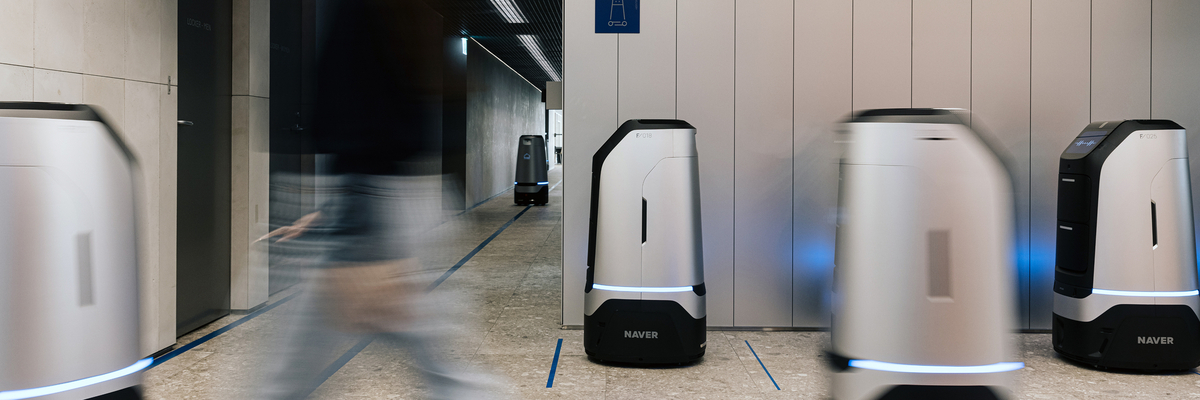
Those tools run on Naver’s second HQ, 1784 in Seongnam, driving the in-house autonomous delivery robot Rookie. CEO Choi Soo-yeon previously told investors Naver concentrated core capabilities on ARC and considers its robot software among the world’s strongest.
The gap ARCBRAIN Flow targets: outside robot-friendly buildings like 1784, services had to be redesigned from scratch. Flow is meant to make ordinary buildings usable without a full re-engineering pass.
Where it could ship next
Full-stack ARC deployments are currently limited to 1784 and Tokyo Midtown Yaesu, the first export case of Naver’s smart-building model. The company is considering Flow for Yaesu so delivery routing and service rules are easier to tune in a building never designed for robots.
Seoul Economic Daily cites Global Market Insights projecting robot software from $29.6B this year to $80.6B in 2031 and $185.2B in 2036 — market-size framing for why a platform play is attractive, not a Naver revenue forecast.
Korea University professor Lee Sung-yup flagged the real scoreboard: adoption. Many robot makers ship their own control software; Naver has to prove full-stack verification experience wins multi-vendor sites.
A Human’s Take
“Android of robotics” is a heavy slogan. What I actually care about is whether a facilities team can re-route a delivery bot after a remodel without calling a robotics PhD. Flow is the right product shape for that. Proof will be third-party buildings and third-party robot brands on the same canvas — not another slick video from 1784.