FDA Clears Neptune’s Triton 1 Robotic Colonoscope
Neptune Medical’s Triton 1 robotic endoscopy system now has U.S. FDA 510(k) clearance for diagnostic and therapeutic work through the colon. Healio dated the write-up 17 September 2026. The Robot Report followed on 18 September.
The Burlingame, California company built Triton for screening, surveillance, and diagnostic colonoscopy, plus endoscopic mucosal resection and submucosal dissection. Conventional scopes still go slack in long, floppy colon. Neptune’s pitch is robotic stability on that same path.
What CARE 1 reported
Healio, citing Neptune’s release, says the first-in-human CARE 1 study met both primary endpoints: no adverse events and 100% cecal intubation (the scope reached the start of the large intestine). Adenoma detection was 54.2%, against a 35% industry threshold named in the same release. Average ergonomic burden was 67% lower than manual colonoscopy. The trial did not need patient repositioning, abdominal pressure, or a switch back to a hand-held scope.
UC Irvine GI chief Jason B. Samarasena said in the release, as quoted by Healio:
“Bringing robotics to lower GI procedures is an exciting prospect for us. Triton showed us the possibility of one system that can screen and treat anywhere in the colon, efficiently, thoroughly and with minimal burden.”
Founder and CEO Alex Tilson:
“Triton has the potential to fundamentally transform colonoscopy, creating a better experience for both physicians and their patients. Achieving regulatory clearance in the U.S. brings us one step closer to that reality.”
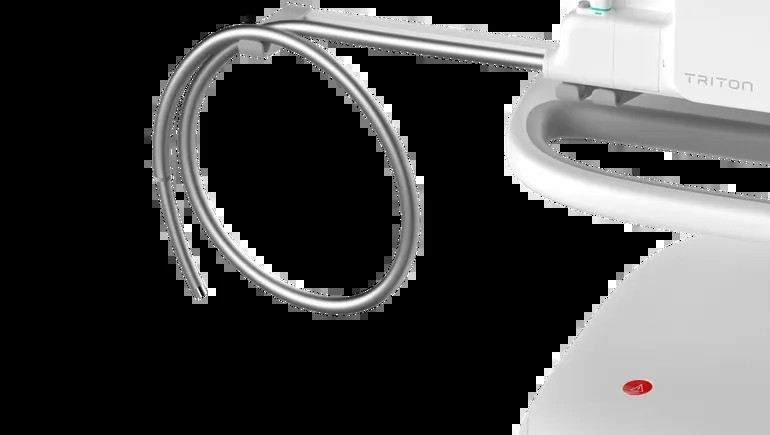
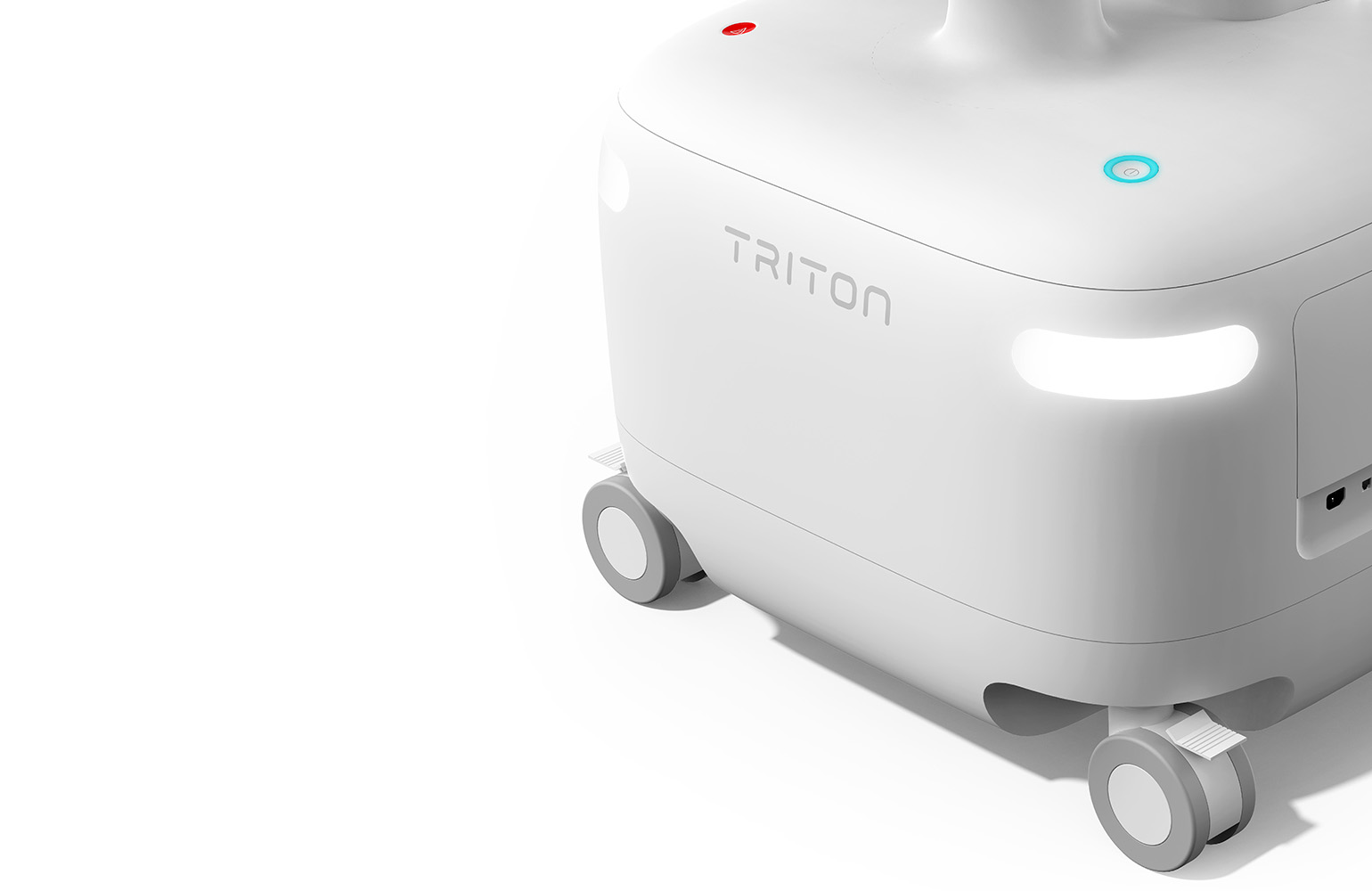
The Robot Report’s feature photo is the wheeled Triton cart. MedTech Dive’s story art is the labeled insertion tube on the same platform.
Clearance is not a commercial rollout. Healio is a short note on the 510(k) and the CARE 1 endpoints. Independent post-clearance case volume is not in the pages we fetched.
A Human’s Take
A 510(k) plus 100% cecal intubation is a real hardware gate, not a booth demo. I care whether the 54.2% adenoma number holds once this cart is in rooms that did not run the study, and whether the 67% ergonomic cut shows up on a full clinic day. Until then, it is a cleared robot that still has to earn a shift.