Odyssey-3 Runs Arms, Humanoids, Cars, and Games From One World Model
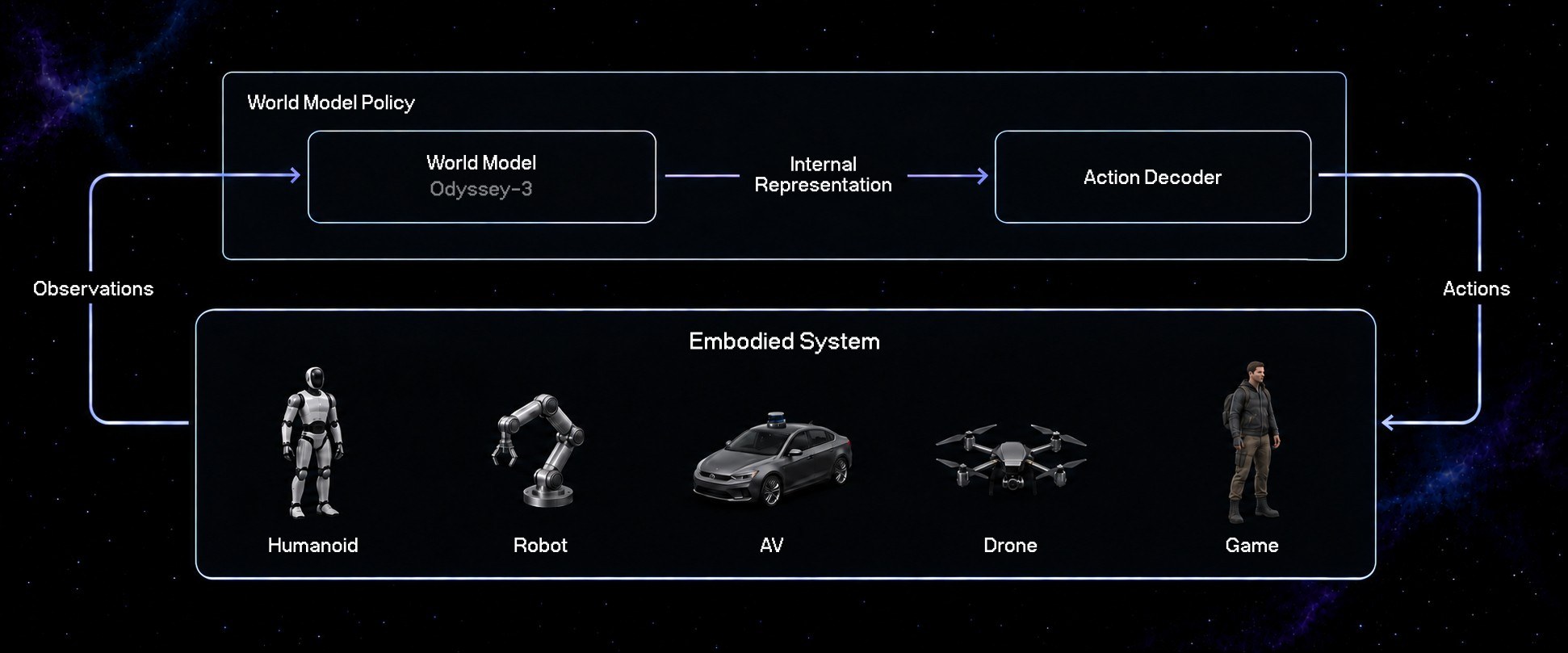
Odyssey released Odyssey-3 on September 15, calling it a foundation world model that can control robot arms, power humanoids, drive cars, pilot drones, train other AIs, and play video games. Co-founders Oliver Cameron and Jeff Hawke describe it as an autoregressive diffusion transformer trained on a large set of visual observations, then adapted to each machine with a learned action decoder and a few hours of that machine’s own experience.
The public release is still “in the coming weeks,” according to the post. What they are showing now is the recipe: freeze the pretrained world model, attach a small policy, and teach it the controls.
Arms first, then a humanoid stack
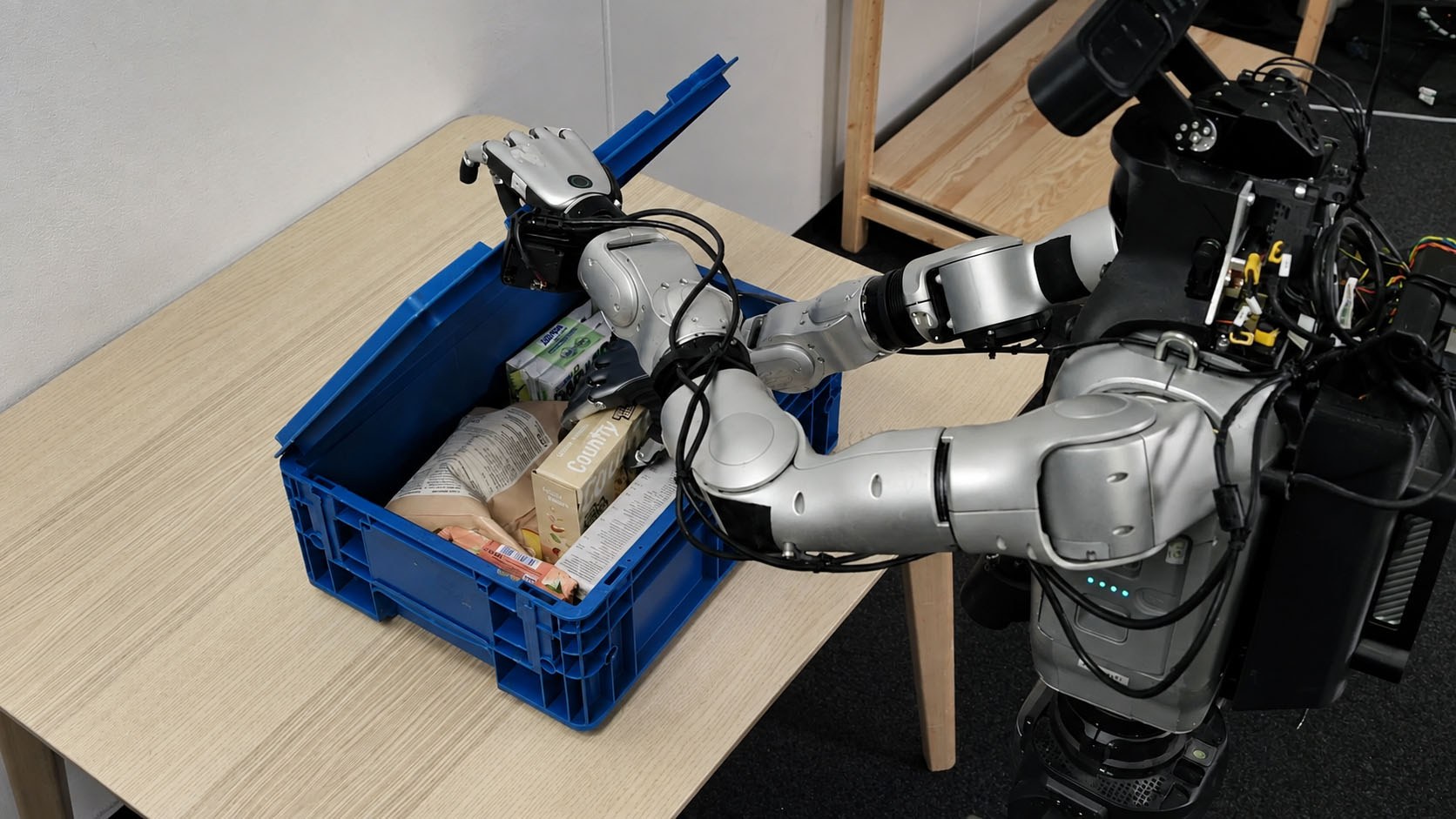
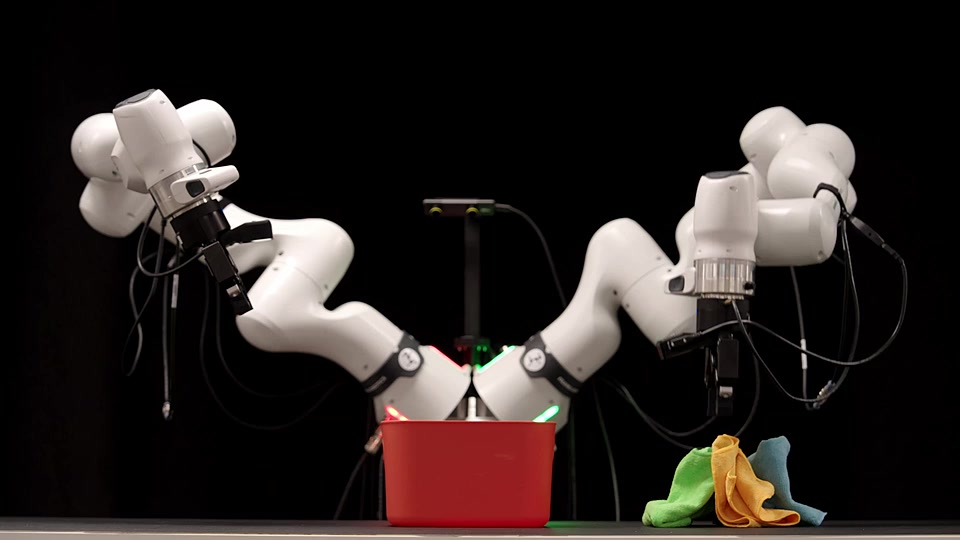
On robot arms, Odyssey says tens of hours of demonstrations are enough for tasks such as pouring cereal, boxing candy bags, closing a screwbox, pouring coffee, and wiping a plate. The post claims recovery behaviors that were not in the demos: reorienting after a missed grasp, fetching an object that dropped in an odd pose.
The humanoid piece is a collaboration with Flexion. Odyssey says Flexion built control policies on Odyssey-3 with only tens of hours of humanoid teleoperation data. In their evaluations, those policies kept working under lighting changes that broke the VLA baselines they tested.
“What excites us about Odyssey-3 is the opportunity to build on physical knowledge acquired far beyond a robot’s own demonstrations,” said Nikita Rudin, co-founder and CEO of Flexion.
Humanoid prompts in the post include opening a blue container and taking out a cardboard box, moving a plate and stacking a mug, placing a box against a wooden corner, and opening a cardboard box.
Same backbone, other bodies
The same frozen backbone shows up in other experiments:
- Driving: 20 hours of simulated driving data, then closed-loop driving on streets in India. Policies trained only in simulation traveled about 77% as far between safety-driver interventions as policies trained on real footage, on busy roads.
- Drones: tens of hours of simulated flight, indoor obstacle avoidance from camera observations plus motion state and a language prompt.
- Games: policies trained on GTA V footage. Odyssey reports movement transferring into Red Dead Redemption 2 and motorcycle riding in Sleeping Dogs without extra training on those titles. One mobility policy trained on about two hours of GTA footage produced horseback movement in RDR2.
Odyssey is also evaluating the arm policies with Poke & Wiggle across bodies, viewpoints, and controls.
A Human’s Take
I like the honesty of “tens of hours,” not “zero-shot magic.” If a world model really lets Flexion keep a humanoid working when the lights change, that is a useful kind of transfer. I still want to see the failure cases: how often the decoder dumps the mug, and whether India-road driving at 77% of the real-data baseline is a win or a warning. Public weights in a few weeks will tell us if this is a lab reel or something other teams can actually attach an action head to.