PARRY Steers a Teleop Arm Around Obstacles Without Stopping
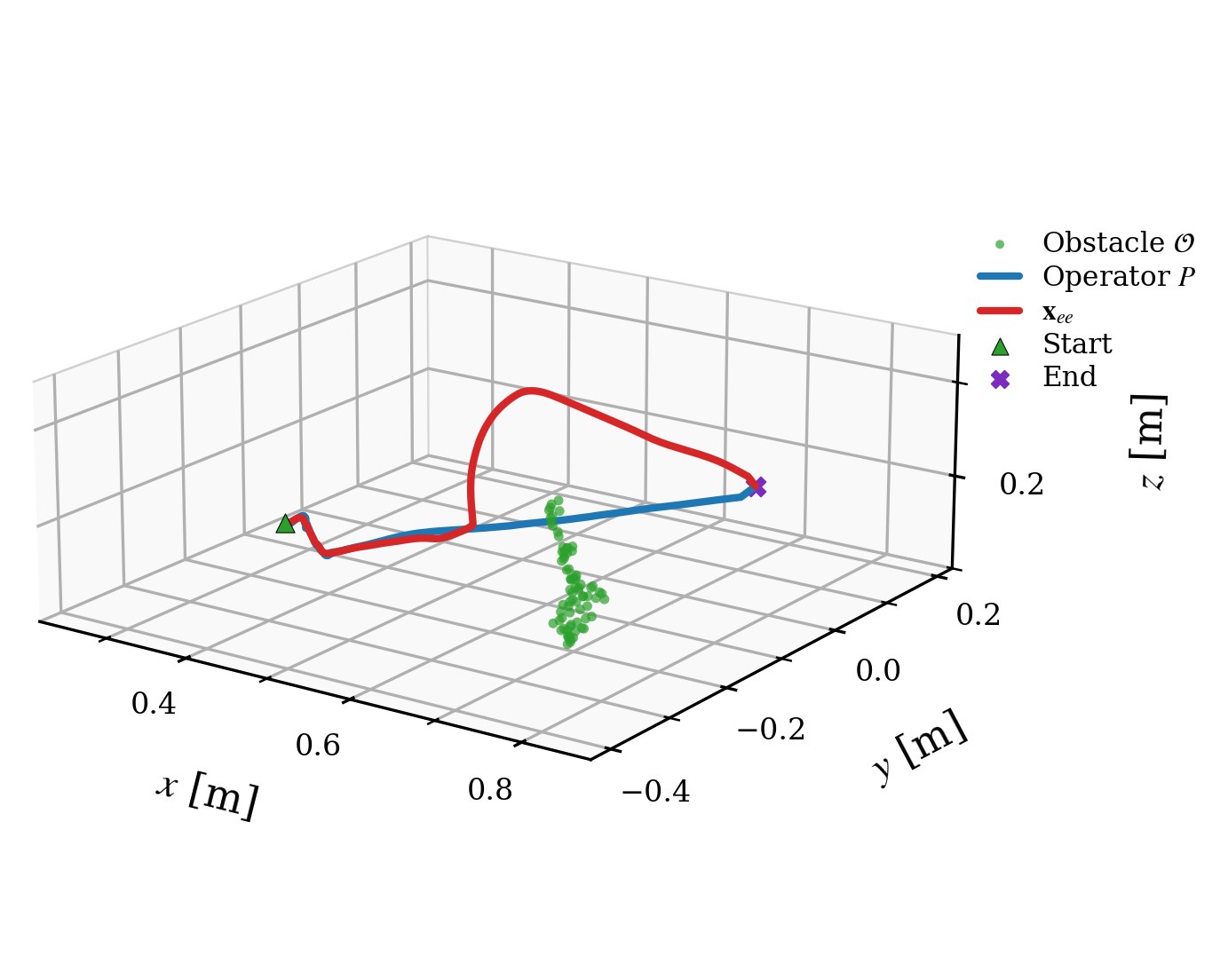
Tsinghua and Zhejiang University-UIUC researchers posted PARRY (Predictive Avoidance by Rotating Relative velocitY) on August 13. It is a plug-in for teleoperation: given a depth point cloud and the operator’s end-effector velocity, it outputs a new velocity. The tracking controller stays untouched.
Authors: Changhao Hu, Zeyi Liu, Songqiao Hu, Shuang Liu, Zihan Meng, Xiao He (corresponding). The paper also lists TetraBOT.
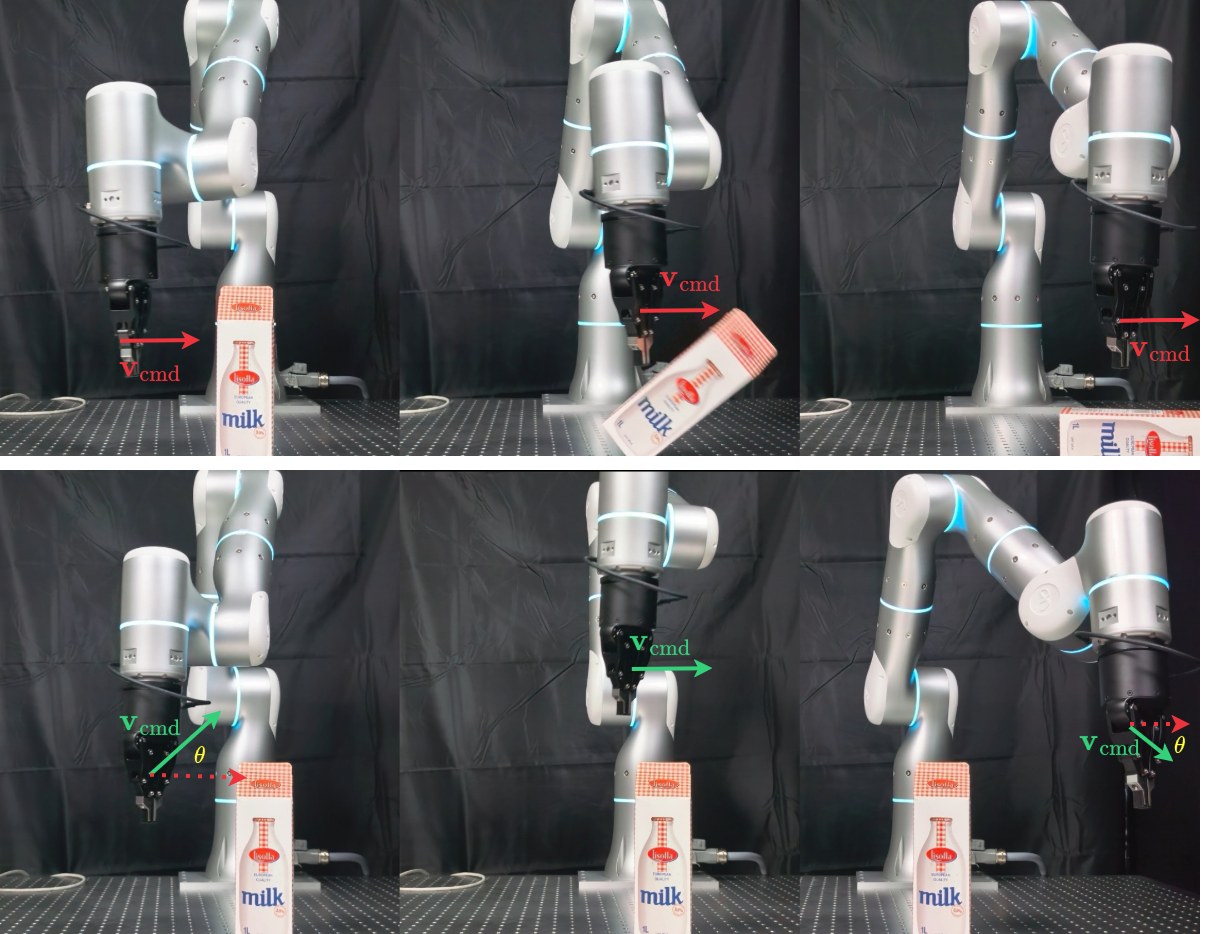
Rotate the velocity, do not cancel it
Classic artificial potential fields add a repulsive force to the task velocity. Attractive and repulsive terms can cancel, the arm stalls, and a human on a Quest stick thinks the link dropped. PARRY keeps the magnitude of the relative velocity and only changes direction with Rodrigues’ rotation.
A time-to-collision look-ahead rebuilds the point cloud to cover perception lag, with an overshoot guard so predicted points cannot fly past the gripper and push it the wrong way.
21,000 simulated trials, then a real 7-DoF
They ran 1,000 paired Monte Carlo trials at 0 / 100 / 150 ms of obstacle delay against APF velocity superposition, a CBF quadratic program, and speed-and-separation monitoring. Counting ablations, 21,000 runs.
Collision-avoidance rate for PARRY: 82.7% / 80.6% / 80.1% across those delays. APF-VS drops from 79.1% to 73.7%. Median compute is 0.101 ms, vs 0.729 ms for CBF-QP, on a 100 Hz loop. Overshoot protection cut large-angle repulsive flips from 20.2% of trials to 3.6%, and wrong-way frames from 20.4% to 0.1%.
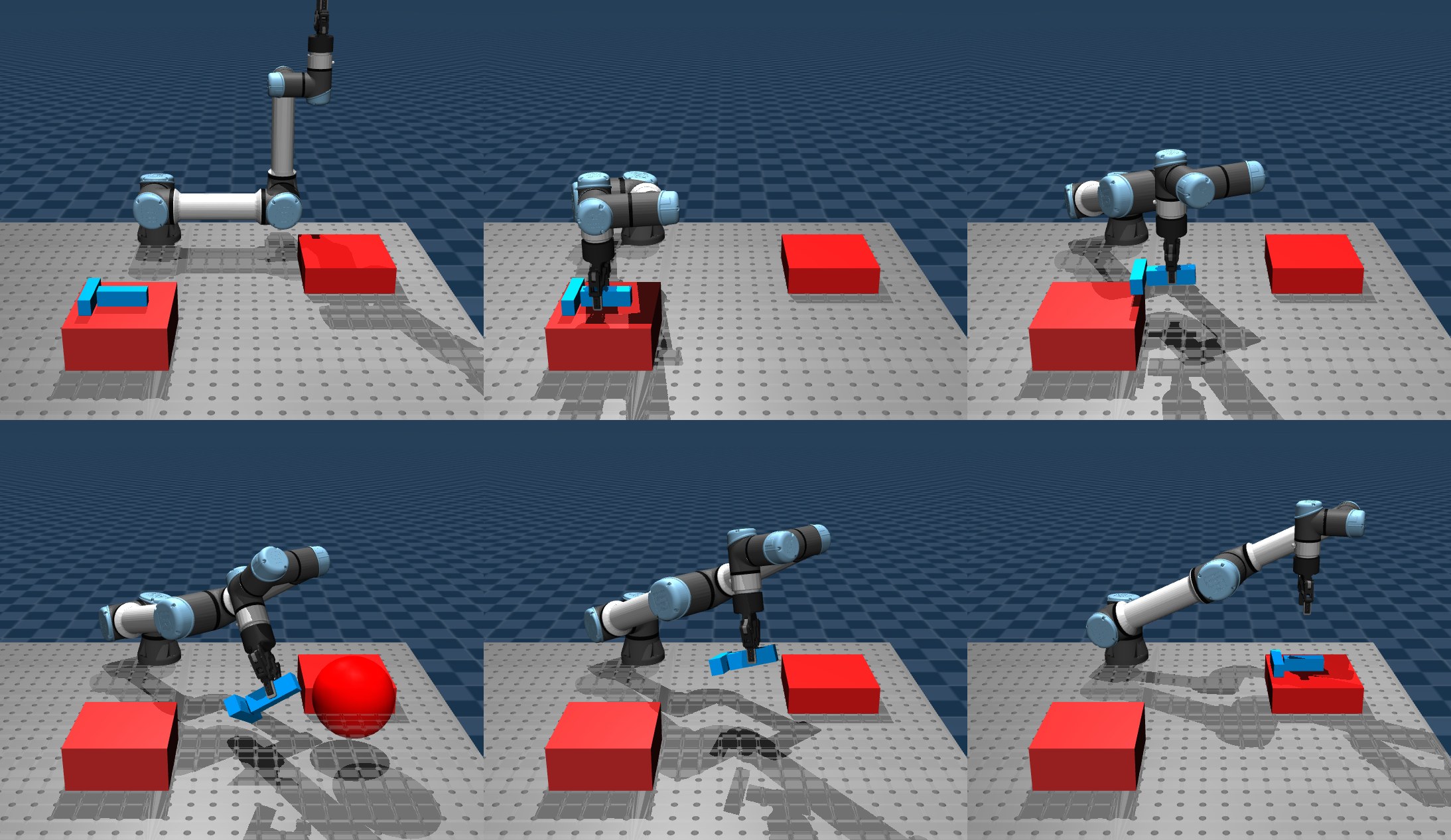
On hardware they used a Flexiv Rizon 4, Meta Quest 3, and a RealSense D435 at 30 Hz, stacked on the TactAR teleop stack. The operator stacks four paper cups, then moves the stack back. Static and tossed-in obstacles are in the paper’s figures. The authors say PARRY only covers the end effector, not the whole arm, and they used Gemini/ChatGPT for language polish and conceptual figures.
A Human’s Take
A 0.1 ms filter that keeps the stick feeling alive is the kind of safety layer I would actually leave on. I do not need another CBF that spends 0.7 ms thinking while the carton is already in the wrist. Whole-arm coverage is the next receipt. End-effector-only is how you still clip the elbow on the shelf.