PartialBiGrasp Guesses the Hidden Side of the Object Before Two Arms Close
Most two-arm grasp planners want the whole object as a point cloud. PartialBiGrasp, posted to arXiv on August 19 by Ayush Kaura, Vignesh Vembar, Md Faizal Karim, Keshab Patra, and K. Madhava Krishna, starts from the messier thing you actually get: a partial view.
Large, heavy, or awkward objects often only have a few legal grasp patches, set by thickness, edges, and whether the gripper jaws fit. A full scan contains that geometry. A single depth camera usually does not. The hidden back side of a chair or a toolbox is exactly where a naive grasp wants to close.
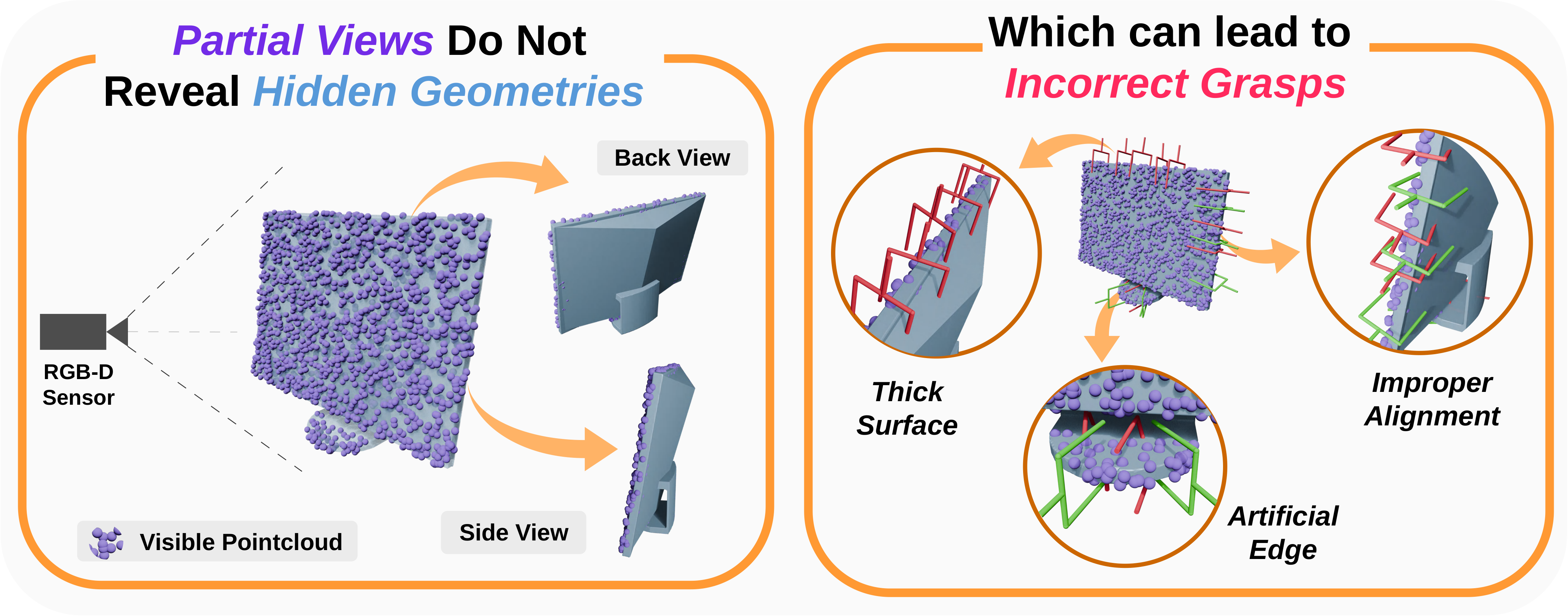
Occupancy instead of a completed mesh
The method learns local geometry with convolutional occupancy networks, then reasons about graspability, collision-free contact, and thickness from that implicit field. It samples force-closure-compliant grasp pairs and runs a sampling-based refinement step to mop up the ambiguity left by missing geometry.
The authors evaluate with analytical force-closure scores, large-scale simulation, and real-robot runs on noisy partial clouds of novel objects. The paper does not put a single headline success percentage in the abstract, so I am not inventing one.
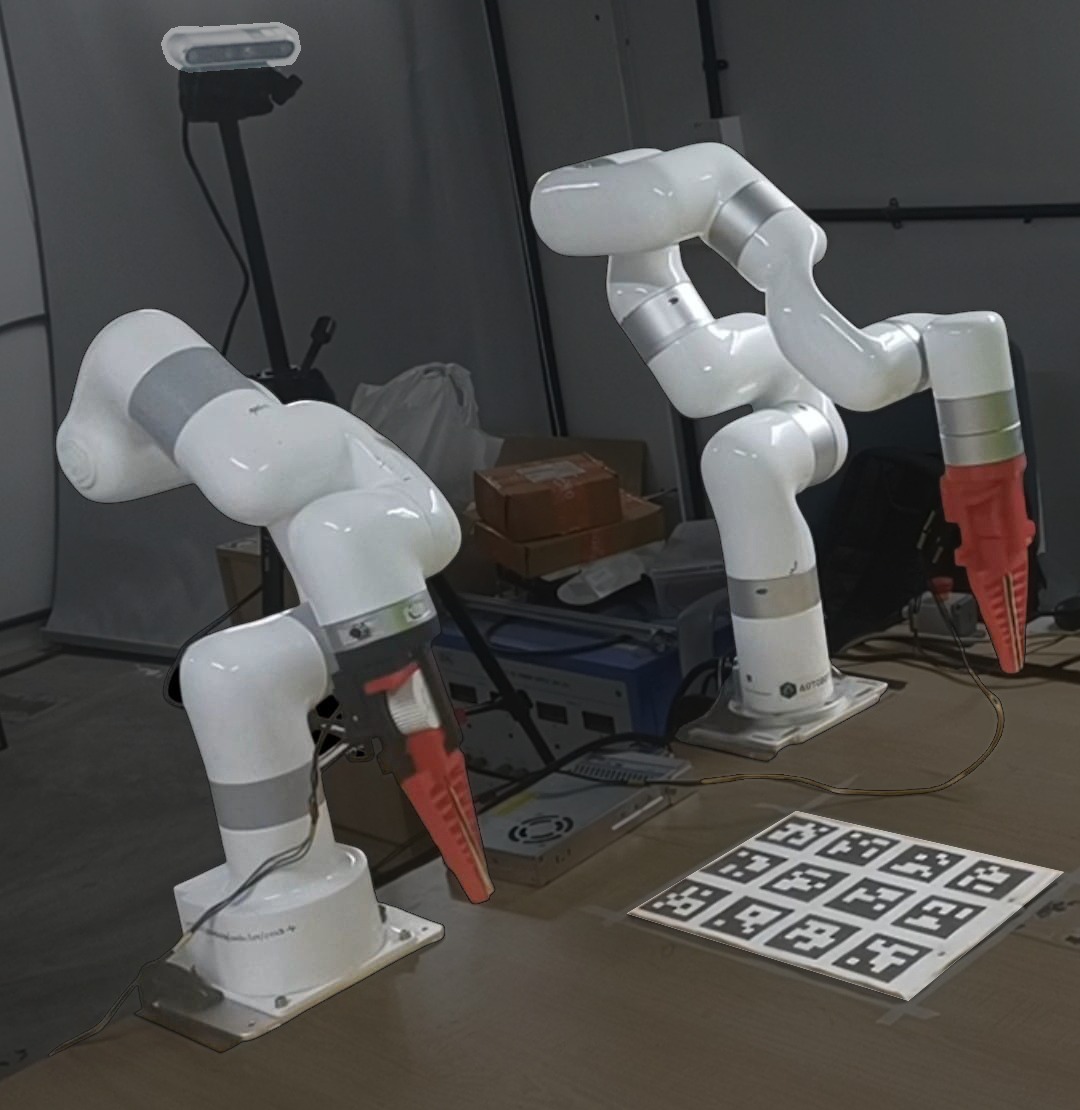
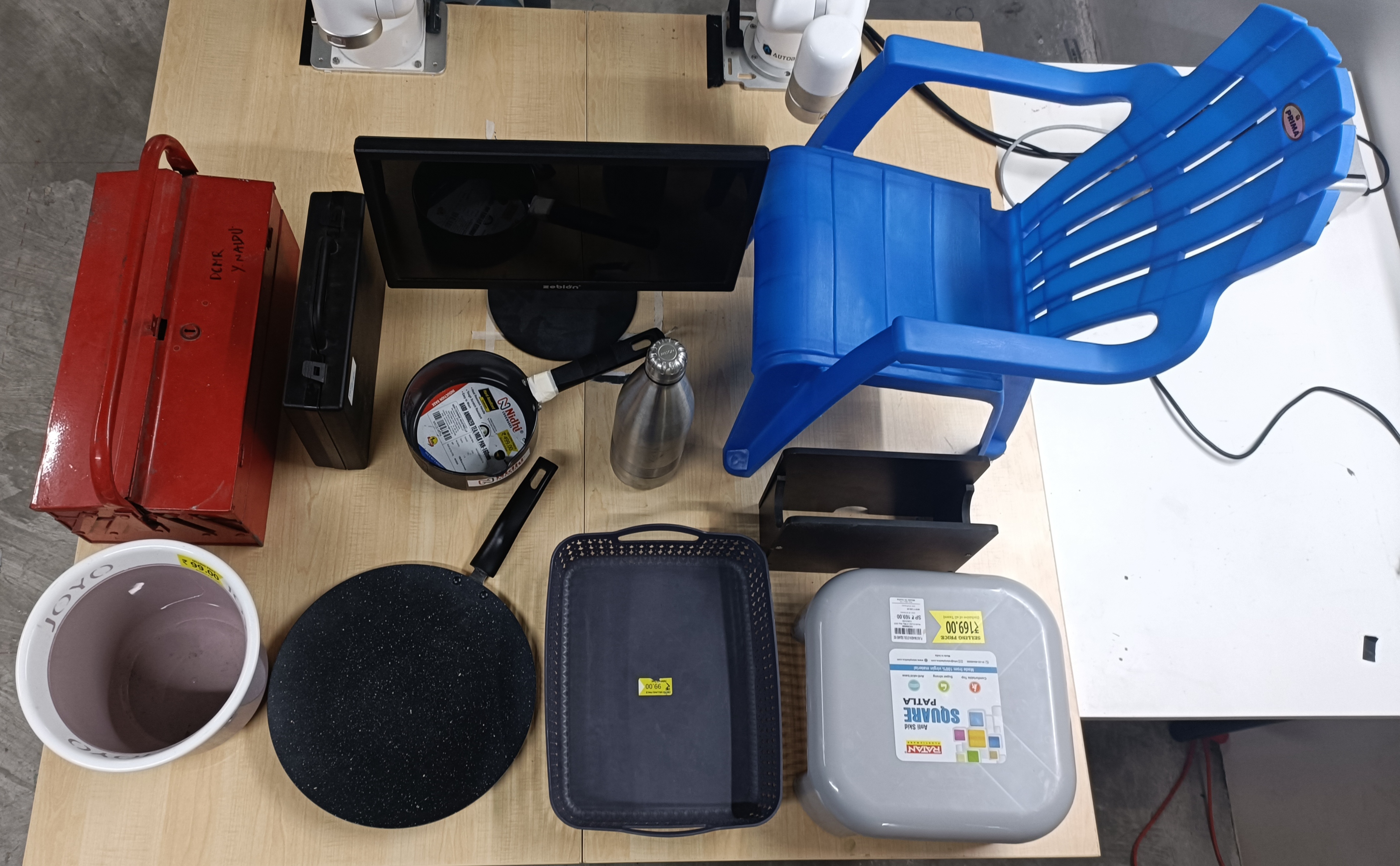
The object set in the paper’s real-world figure is the kind of stuff that actually needs two hands: a blue plastic chair, a toolbox, a monitor, pans, a bucket, a water bottle. That is the point. A single Franka can pick a mug. Two arms on a chair is the dual-arm problem.
A Human’s Take
I like a paper that admits the camera cannot see the back of the chair. Completing a pretty mesh in simulation is a different sport from putting two grippers on a toolbox you only saw from one side. I want the real-robot table of wins and drops in a follow-up, with the same objects, lights left ugly.