PASSAGE Walks a G1 Through 50 Unseen Clutter Layouts Onboard
Stepping over a pallet, ducking a beam, and squeezing past a case are different skills if you train them that way. PASSAGE is a single destination-conditioned planner plus a whole-body tracker that is supposed to pick the mix from onboard geometry. The paper, dated 16 September, puts a Unitree G1 through 50 physical layouts with no prebuilt map and no offboard computer.
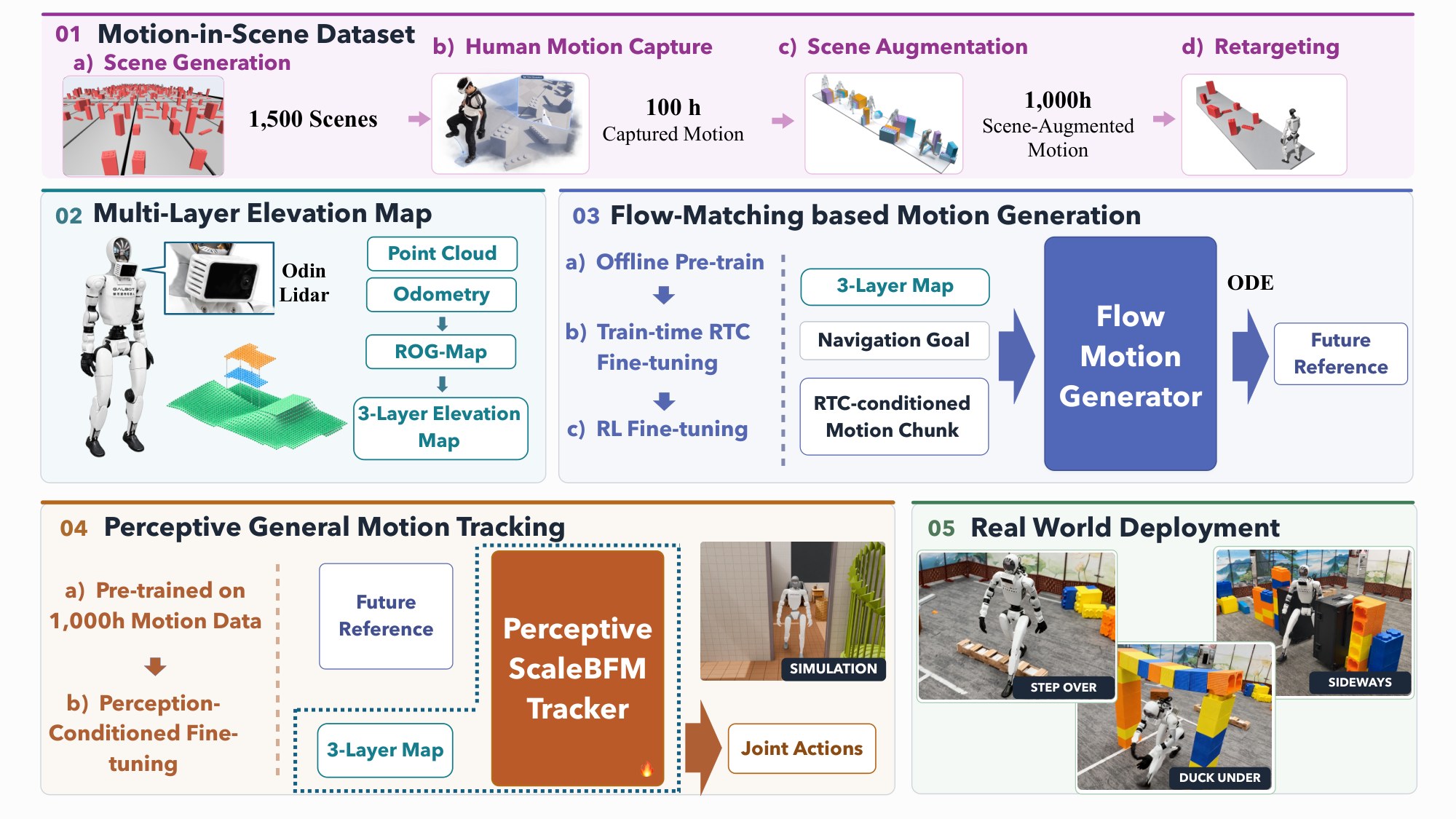
100 hours in a headset, 1,500 fake corridors
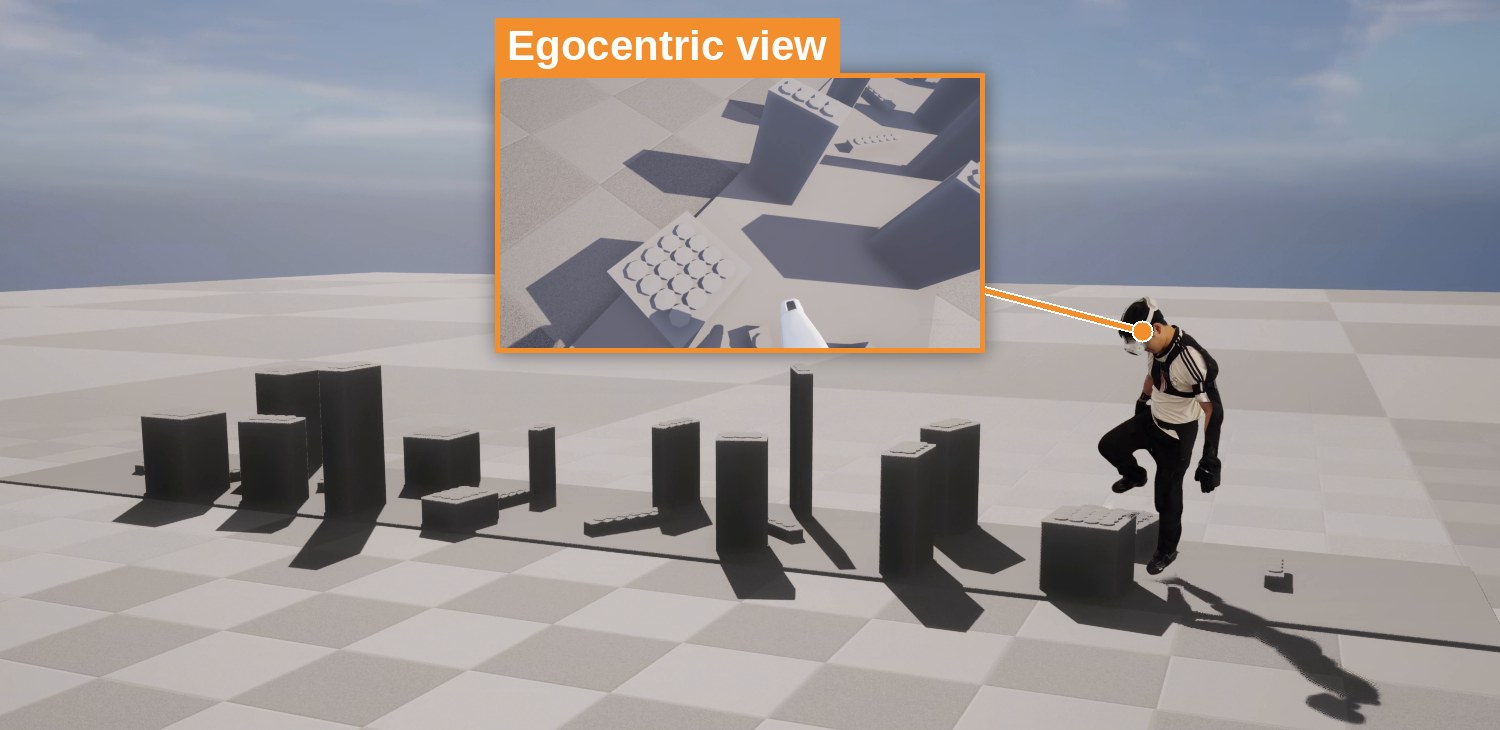
Operators in a Noitom PN Link mocap suit and a VR headset walk 10 m procedural corridors stuffed with ground, side, and overhead blocks. Collisions get haptic buzz and the take is thrown out. After retargeting to a 29-DoF G1 and screening, they keep 19,310 sequences, about 100 hours, across 1,500 scenes. Validated obstacle rescales (0.5–1.5 scale, ±15°) expand that to roughly 1,000 hours of motion–scene pairs without more capture.
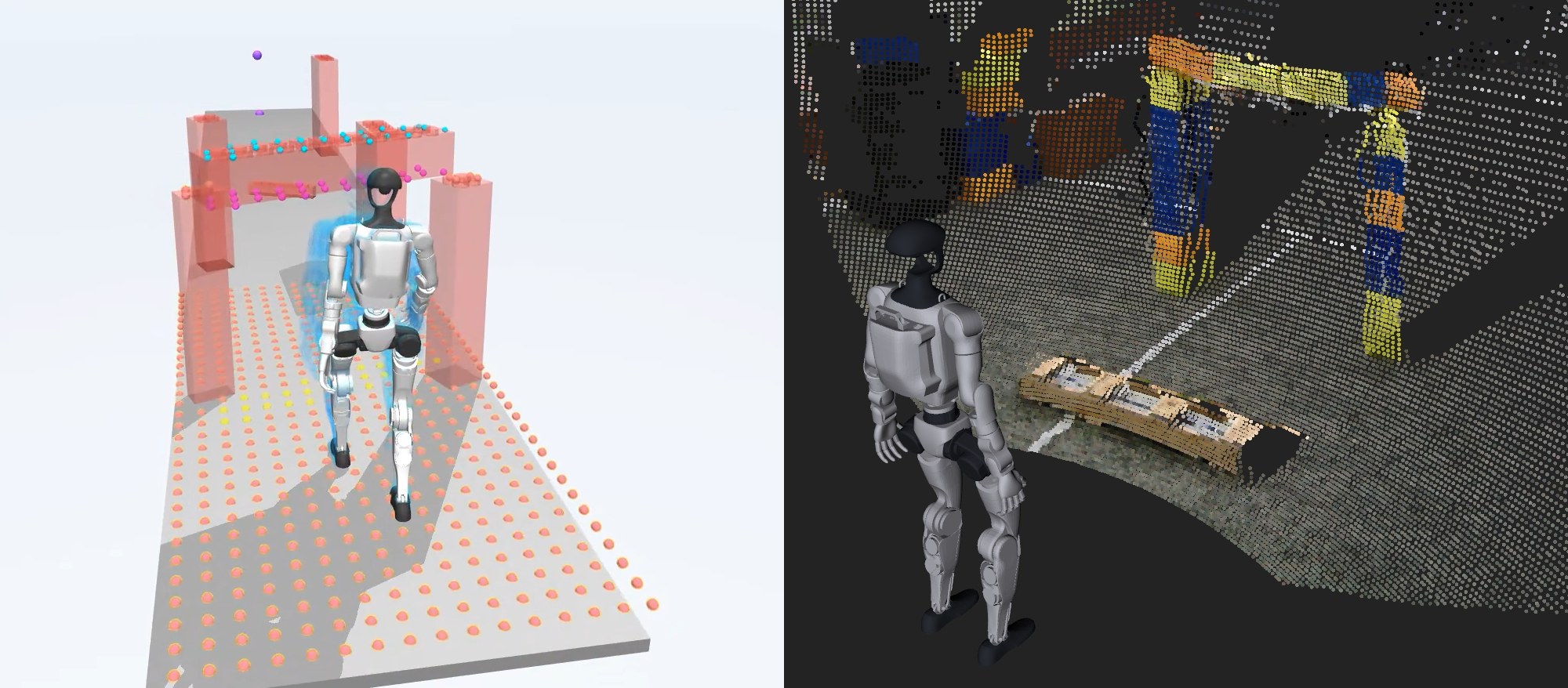
A conditional flow-matching planner emits 0.5 s (25-frame) references at 6.25 Hz from four history frames, a local destination, and a torso-centered three-layer elevation map (support, lateral block, overhead clearance). Real-time chunking blends the previous plan into the next so the robot does not twitch at chunk boundaries. A ScaleBFM tracker, perception-augmented, runs at 50 Hz. Then they freeze the tracker and RL-fine-tune only the planner on closed-loop rollouts.
Onboard: Manifold Tech Odin LiDAR, ROG-Map occupancy, TensorRT FP16 planner on a Jetson AGX Orin, CPU tracker, joint commands at 500 Hz.
Sim scale, then 50 real layouts
In MuJoCo, 150 held-out scenes × 5 rollouts. Across three seeds, scaling captured data from 6 to 100 h lifts mean success 84.3% → 96.4% and contact-free success 48.1% → 68.9%. The final augmented checkpoint hits 98.7% success and 70.3% contact-free. CAT’s released generalist, zero-shot on the same test distribution, is 70.3% / 14.0%. Ablations are brutal: drop RTC and contact-free success falls to 24.5%; drop planner RL, 26.4%; swap in the base tracker, 18.4%.
Hardware: 50 distinct layouts, destination-only commands, one attempt each. 50/50 reach the finish without a fall or safety stop. 45/50 (90%) are contact-free. The five contacts are the remaining problem, not falling over.
Project page: galaxygeneralrobotics.github.io/PASSAGE.
A Human’s Take
Fifty layouts with one planner and a backpack Jetson is the demo I want more of. Contact-free at 45/50 is the honest number: it finishes the course, and sometimes it still kisses the foam. If they add stairs and thin cables like the conclusion teases, keep the same 50-layout rule. I will be watching the contact column, not the highlight reel.