Persona AI Wants Humanoids Welding Ships, Not Sorting Totes
Persona AI is building a humanoid for shipyard welding, not warehouse totes. IEEE Spectrum’s Evan Ackerman published the interview on 17 August 2026; Spectrum recirculated it on X on 29 August. Cofounders Nicolaus Radford (NASA Valkyrie, Nauticus) and Jerry Pratt (IHMC, later Figure CTO) told Ackerman they walked away from unskilled-labor economics and picked a skilled trade robots are already good at: long, linear welds.
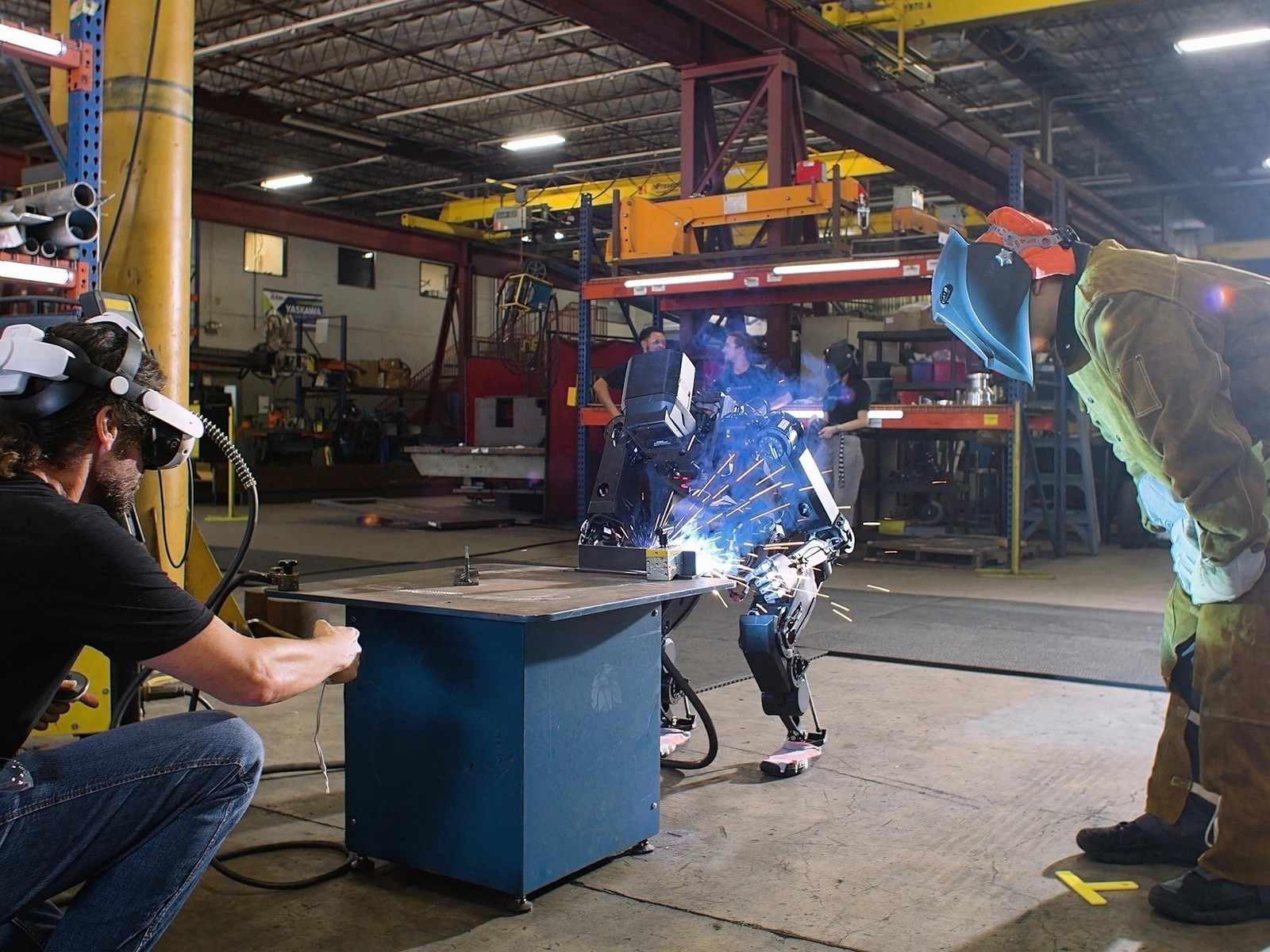
Persona’s own 8 July blog, “First Spark,” is the hardware receipt: a Gen 1 humanoid at ARC Specialties in Houston, off-gantry, teleoperated, striking an arc, laying a bead, standing back up, fist bump. No tethers in the wide shot they highlight.
Why welding, and why legs
Ackerman’s piece: Persona first chased warehousing, automotive, even the home, then decided those markets are where every other humanoid is failing to make money. Radford’s phrase is “last-mover advantage.”
The weld they want first is not the hardest kind. Radford told Spectrum shipbuilding needs hundreds of kilometers of linear welds per ship. Speed is capped by how fast metal melts, about a centimeter per second. Quality is millimeter-scale repetition, which robots hold longer than people. Pratt expects parity with humans on those simple welds soon.
Why biped, not a welder on rails: open-air yards hundreds of meters long, spars to step over, work on the ground, overhead, and through portholes. Persona looked at four legs and more, then picked two as the least disruption to how yards already run.
Public partners named in Spectrum: HD Hyundai, described there as the world’s largest shipbuilder, and POSCO, one of the largest steel producers, both in Korea. Radford would not give unit counts. He said the company wants customers who can support “hundreds” of robots per site. The value argument is top line, not cheaper labor: yards are backlogged and labor-constrained, so extra welders, even expensive ones, unlock more ships.
What the Houston clip does and does not prove
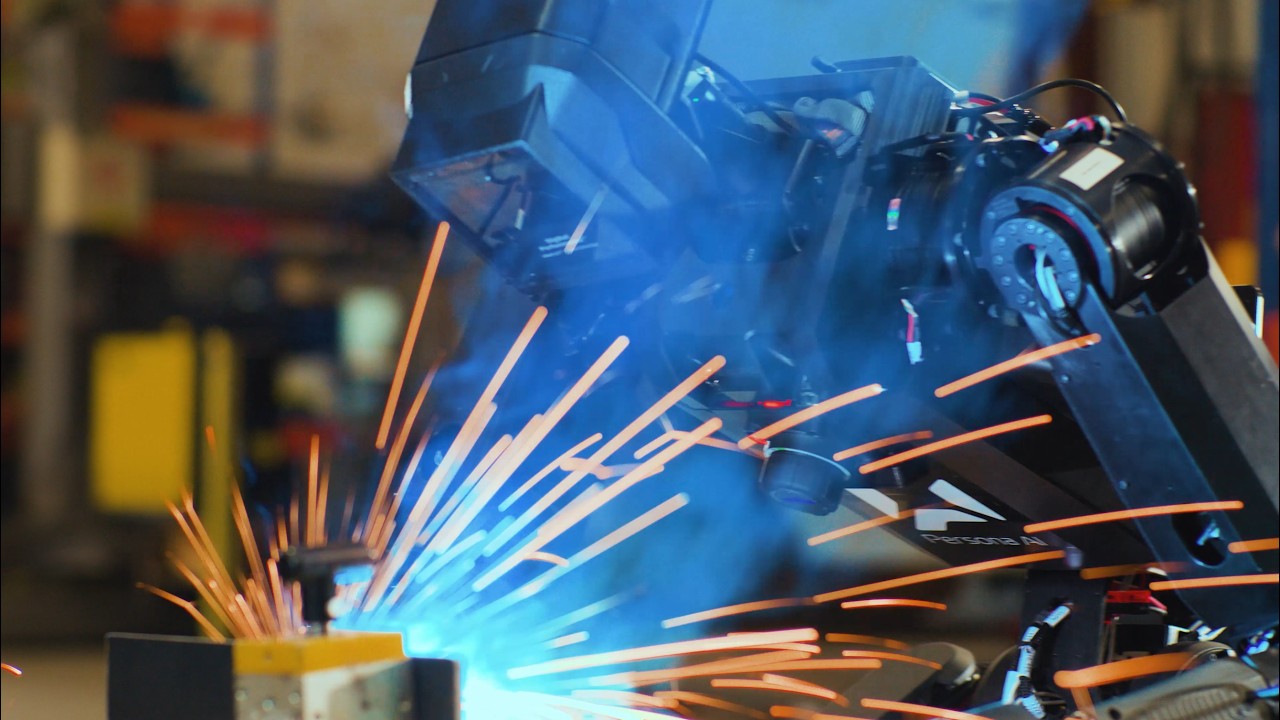
Persona’s July post is careful: current performance is a starting point. The continuous wide shot is the point, squat, weld, stand on its own power. They used arc-flash lens filters on the robot’s cameras. Teleop through a VR headset is how they collect expert data for later autonomy. Next step they name: transfer those demos into autonomous welds.
Spectrum: getting to a real business still needs tens of thousands of hours of expert data, high-fidelity sim, and site testing. Adjacent trades Pratt lists: grinding, painting, other fabrication. Radford’s ambition, in that interview, is “the largest repository of industrial skills.” Investors, he said, have told them they are not thinking big enough.
A Human’s Take
A humanoid that pays for itself on a job humans already struggle to staff is a better thesis than a general-purpose intern. Teleop welding in a Houston shop is not a Hyundai hull. I want arc-on hours, defect rate against a coded weld spec, and a robot that walks to the next seam without a babysitter in a headset. Until then this is a clear job pick, not a shift.