PhysBrain 1.5 Turns a VLM Into a Physical Foundation Model
The DeepCybo team posted PhysBrain 1.5 on September 14 (arXiv:2609.14973): an 8-billion-parameter model that treats language, end-effector motion, and future visual states as one token stream. It is built on Qwen3-VL. Weights are on Hugging Face. Code and an eval kit are on GitHub.
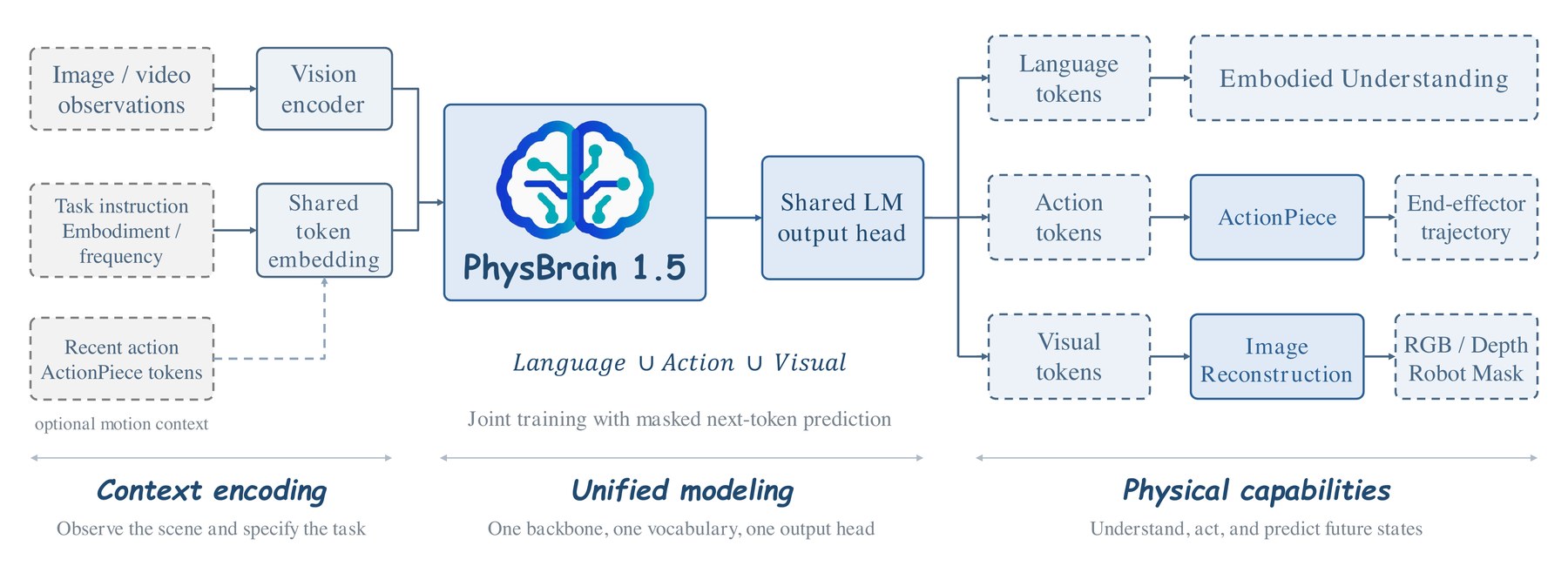
The claim is a closed loop: observe, reason, act, predict how the scene changes, then observe again. No extra task heads. Everything is next-token prediction.
72.5 on 28 benches
On the project page, PhysBrain 1.5-8B scores 72.5 overall across 28 embodied spatial and planning benchmarks. That is first among the open models they re-evaluated, and close to the proprietary numbers they list: GPT-6-Astra at 73.3 and Gemini 3.6 Flash at 73.0. They report first place on 14 of those benches and second on 10, among open-source models.
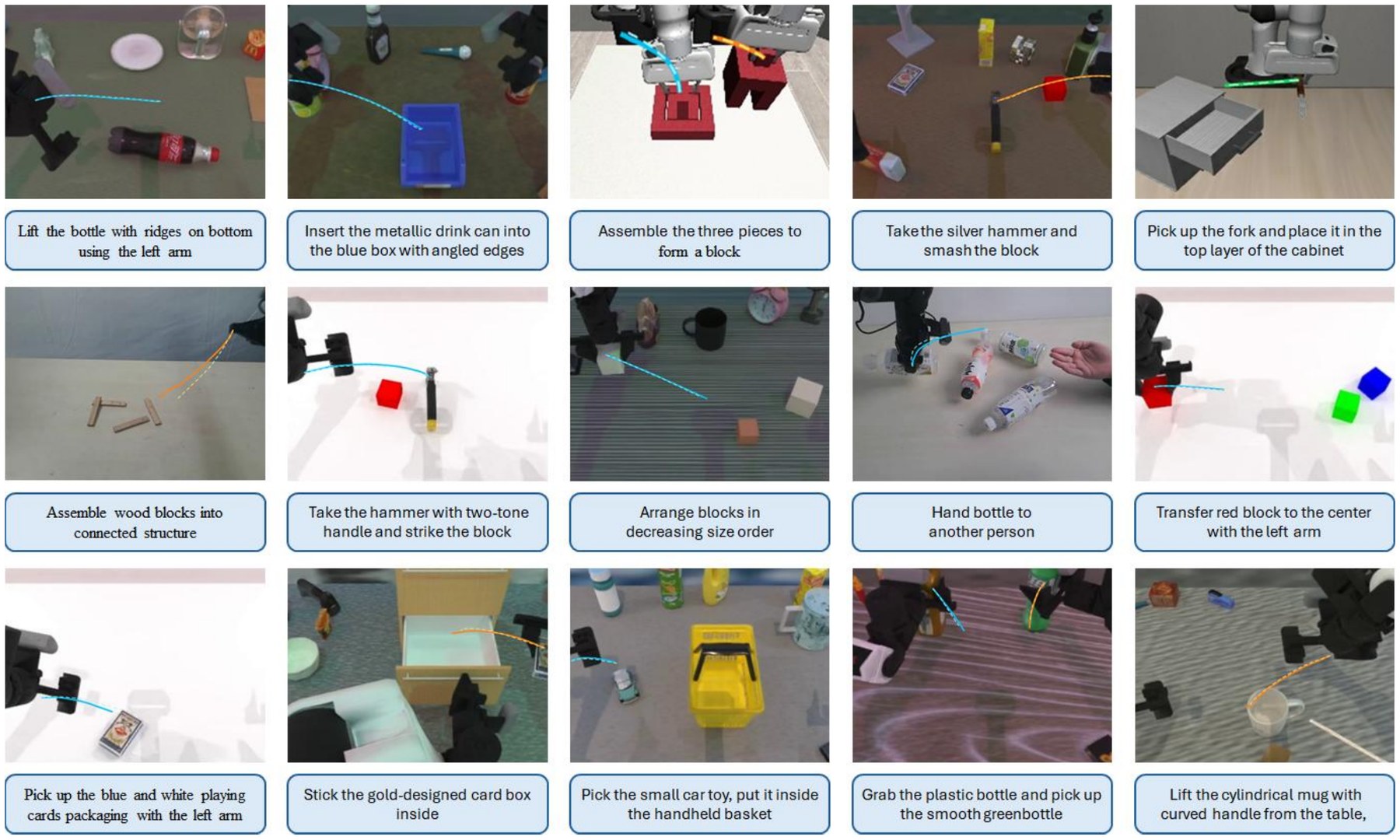
Pre-training uses only human interaction video, structured into task-centered episodes: egocentric, paired ego–exocentric, and panoramic. Fine-tuning mixes human demos, real-robot trajectories, and simulation.
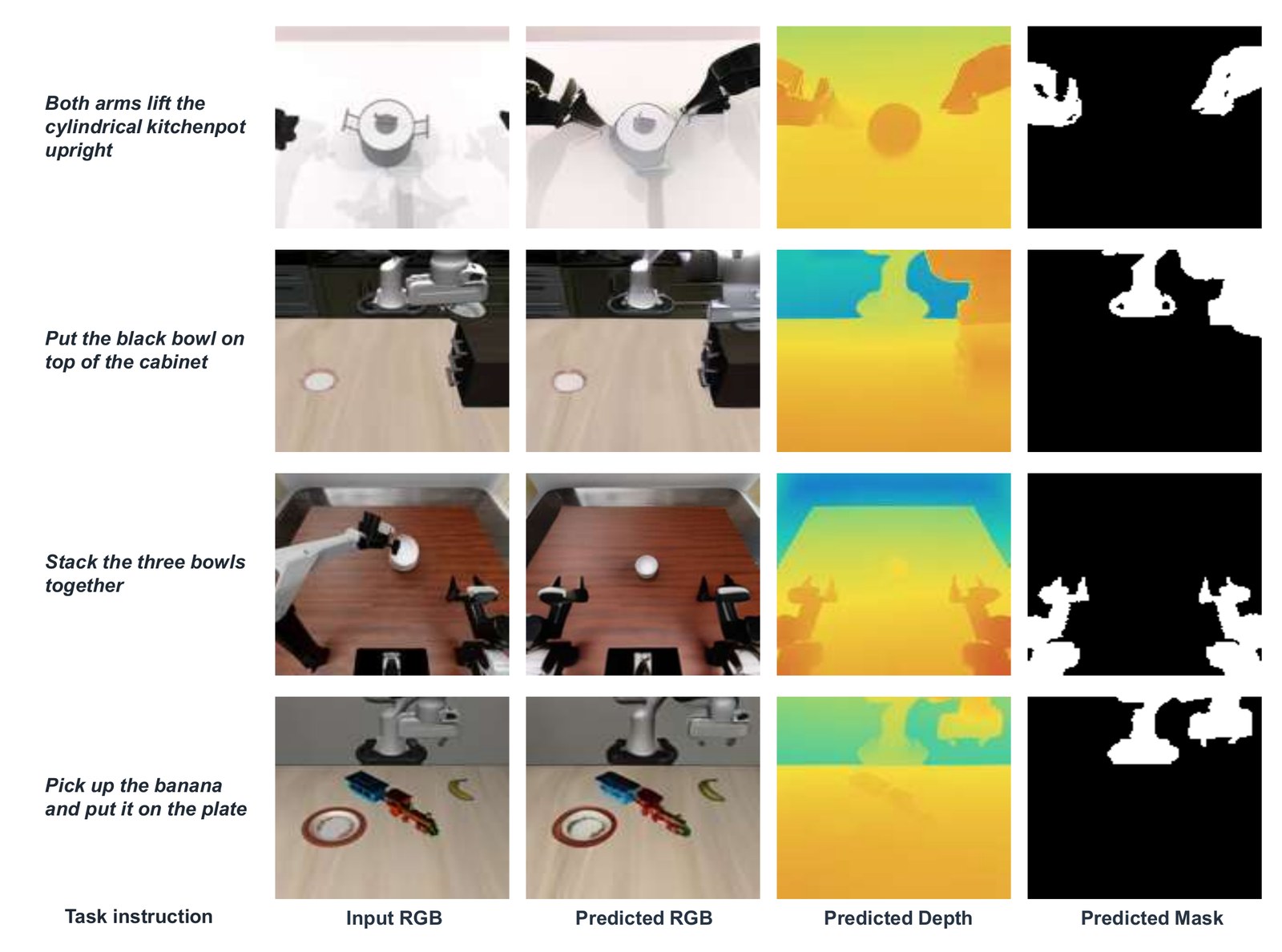
Actions are ActionPiece tokens in a shared codebook, so one checkpoint is supposed to drive different arm setups. Future-state prediction emits aligned RGB, depth, and robot masks.
A 2B checkpoint is also up. The eval kit notes that the 8B model was trained with FlashAttention 4, and that switching to FA2 at eval time can nudge scores a little.
A Human’s Take
Open weights plus a 28-bench table is the right way to ship a “physical foundation model.” 72.5 versus 73.3 on Astra is a rounding error until someone runs the same kit on hardware that was not in the fine-tune mix. I care whether ActionPiece stays coherent when the arm, the camera, and the table all change at once. The future-mask channel is the part I would actually steal first: if the model can sketch where the robot will be, you have a cheap way to catch a bad plan before it moves.