Pollen’s $399 Microduck Is a Desk Biped You Can Retrain
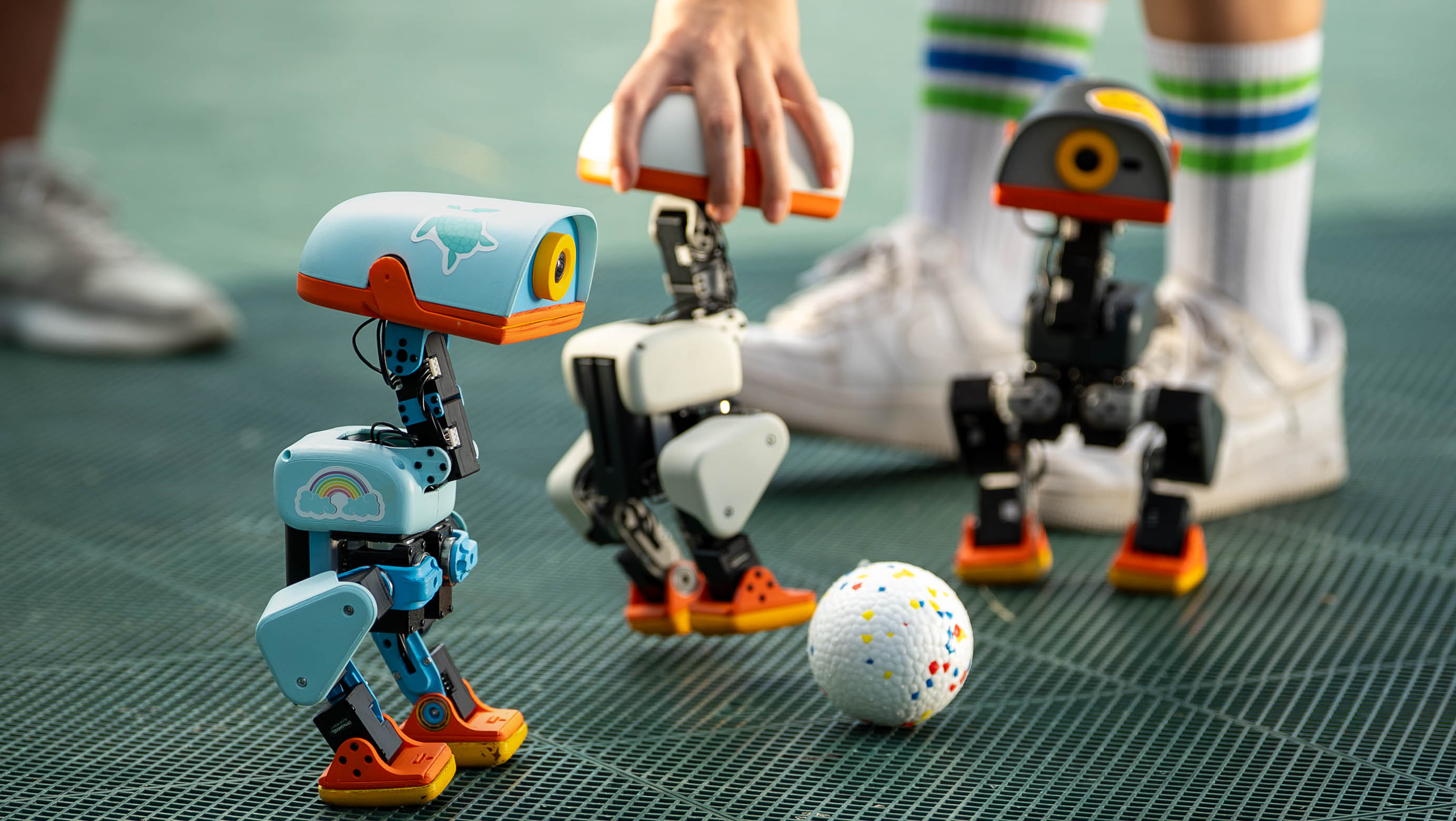
Pollen Robotics, Hugging Face’s Bordeaux robotics team, opened pre-orders on 27 August 2026 for Microduck, a 25-centimeter biped priced at $399 before taxes and shipping. The official blog and press kit put first deliveries before Christmas 2026 in North America, Europe, and the UK. Four shells ship at launch: Cream, Graphite, Lavender, and Sky.
The store page now carries a different shipping note. After the first rush of orders, Pollen says it cannot promise Christmas for new carts, and it currently estimates 4–6 months for those later orders, first-ordered first-shipped.
Hugging Face co-founder Thomas Wolf wrote on X that the team ended the first 24 hours with more than $2.6 million of Microducks ordered.
What is in the duck
The press kit and store page agree on the hardware:
- 15 motors across legs, head, and neck
- 25 cm tall, 14 cm wide, under 800 g (the store lists 780 g)
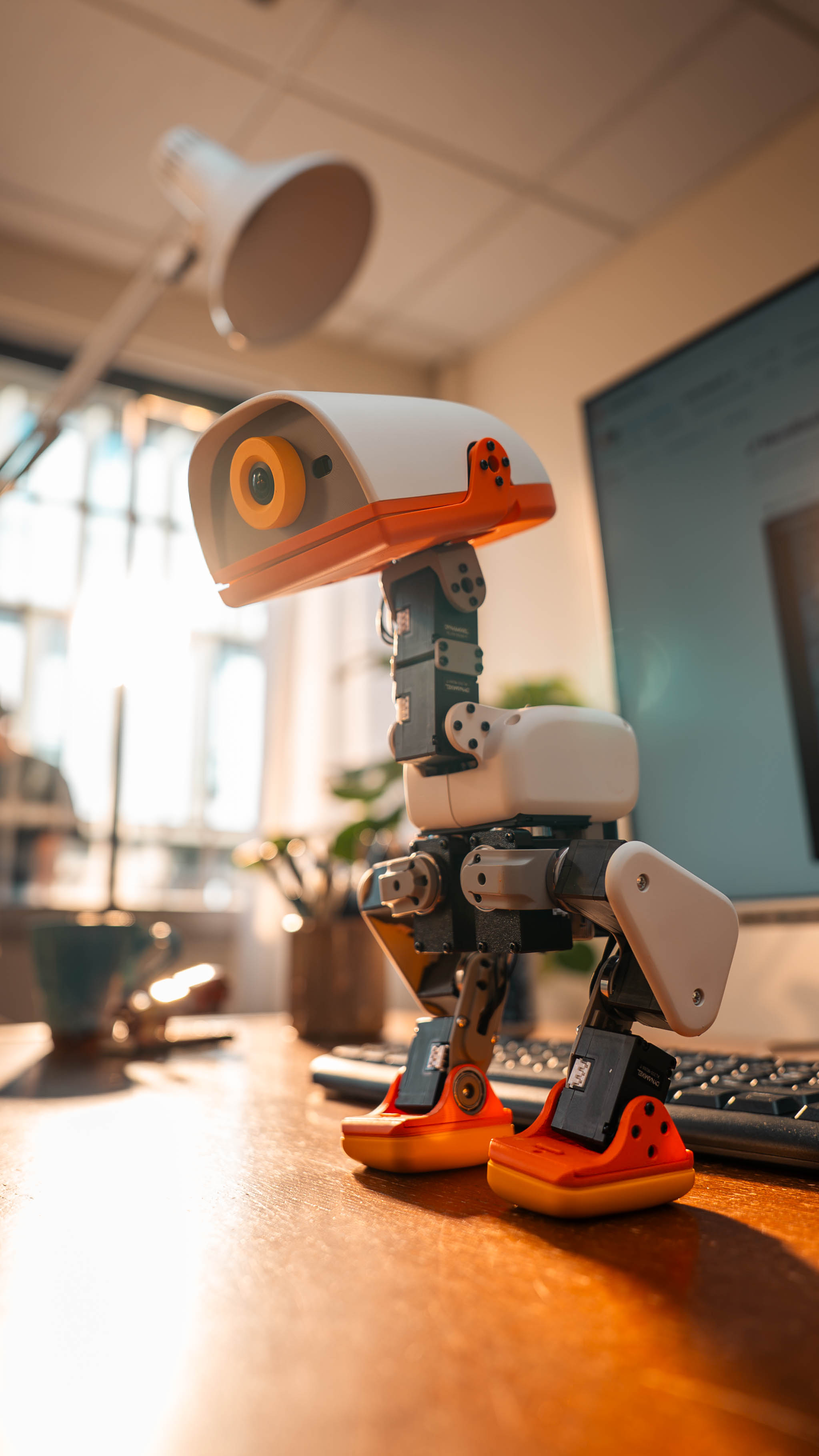
- Front camera with a dedicated “REC” indicator, 8×8 time-of-flight LiDAR, two IMUs
- Articulated grasping beak, mics, speaker, NFC in head and beak
- Rockchip RK3566 plus an onboard AI accelerator, 1 GB RAM, 32 GB storage
- Removable NP-F550 camera battery, 2,600 mAh, about an hour of runtime
- Game controller in the box
Out of the box it walks with a waddle, sits, crouches, roller-skates, picks things up, and stands itself up after common falls. The onboard policy loop runs at 50 Hz. Each unit gets a generated voice the first time it wakes up.
Open software, closed shells
The press kit is blunt: “open source” here means the software stack, not CAD or electronics. Do not call it open-source hardware. GitHub already has pollen-robotics/microduck (SDK and robot software) and microduck_rl (simulation, PPO, sim-to-real). License on the main repo is Apache-2.0.
The pitch is the cheap failure loop. A bad policy dumps a 780-gram duck on the floor, not a lab humanoid. Train in MuJoCo, export ONNX, run it on the metal, tweak, share the policy. Hugging Face CEO Clément Delangue called it “an open-source robot you can teach new tricks with reinforcement learning,” per TechCrunch.
Pollen’s last consumer robot, Reachy Mini, is a sit-still interaction platform. The launch post says more than 10,000 of those have shipped. Microduck is the mobility sibling: same company, opposite job.
Hackster notes the stack is meant to land on GitHub before the first robots ship. The company already put the repos up at launch.
A Human’s Take
Four hundred dollars for a walking policy loop you can actually brick-and-unbrick on a kitchen table is the part I care about. The $2.6 million first-day number is a demand signal, not a science result. Pollen already walked back Christmas for late orders, which is the honest hardware sentence. If the sim-to-real recipes work for people who are not on the Bordeaux team, this is a Raspberry Pi moment for legs. If they only waddle out of the box, it is a very cute paperweight with a GitHub repo.
Sources
- Pollen Robotics — Meet Microduck
- Pollen Robotics — Microduck press kit
- Pollen store — Microduck product page
- TechCrunch — Hugging Face is selling a cute $399 open source duck robot
- Hackster — Microduck wants to make physical AI easy
- YouTube — We made a new robot. (Pollen Robotics)
- GitHub — pollen-robotics/microduck
- X — Thomas Wolf on first-24-hour orders