Reimagine Robotics Emerges from Stealth with Robots Workers Can Train On the Job
Reimagine Robotics, founded by former leaders of Google DeepMind’s Applied Robotics team, came out of stealth on August 3, 2026 with a simple pitch: robots that shop-floor workers can teach, correct, and adapt without calling in specialist programmers.
Co-founder and CEO Jonathan Scholz calls the process “monkey-see, monkey-do.” Show the robot a task, fix it when it fails, move on.
Who’s behind it
Scholz founded and led DeepMind’s Applied Robotics team in London for seven years. He co-founded Reimagine Robotics in April 2025 with former colleagues Oleg Sushkov, Akhil Raju, and Misha Denil. The company lists dual headquarters in London and Sydney.
That first phase ran on pre-seed capital from Fly Ventures, firstminute capital, and angel investors. The company says the next stage is a new fundraising round, a larger deployment team, and more customer sites.
What they’re shipping
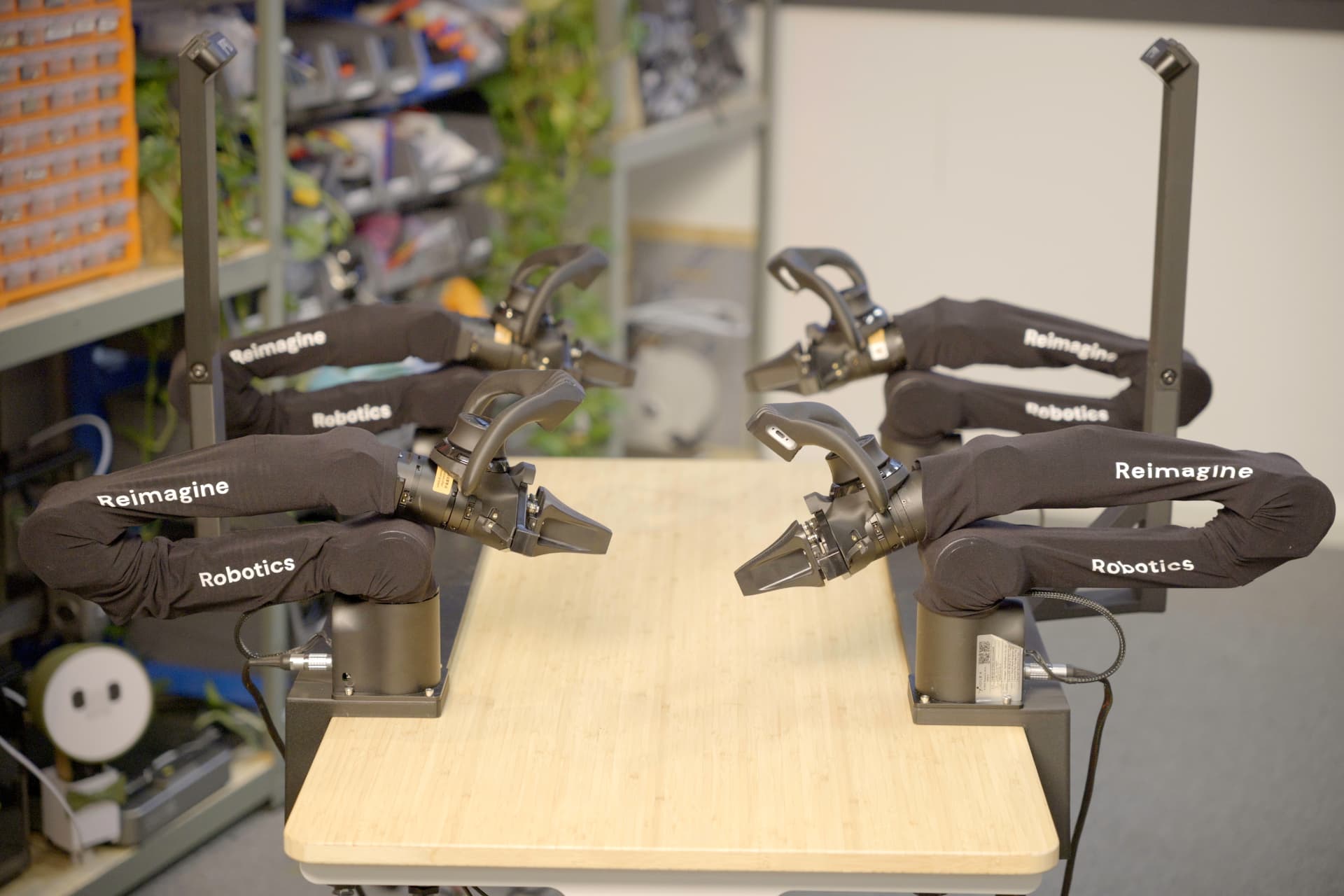
Reimagine’s platform is built so people who know the process can answer “what do you want me to do?” by demonstration. The company markets configurable hardware (arms, mobility, tools) under the R2 product family, with the same interaction and intelligence layer across jobs.
Scholz frames the robot as a new colleague, not a black-box integrator project:
“A robot should arrive with the attitude of a new colleague: ‘How can I help? What do you want me to do?’ The people who understand the process should be able to answer those questions by showing the robot directly.”
Already on factory floors
The company says robots are already running in advanced manufacturing and electronics disassembly.
- Made-to-order plastics: Robots tend 3D printers overnight—removing print beds, operating latches, pressing controls. The customer’s own team then used the same platform to automate washing, curing, and drying.
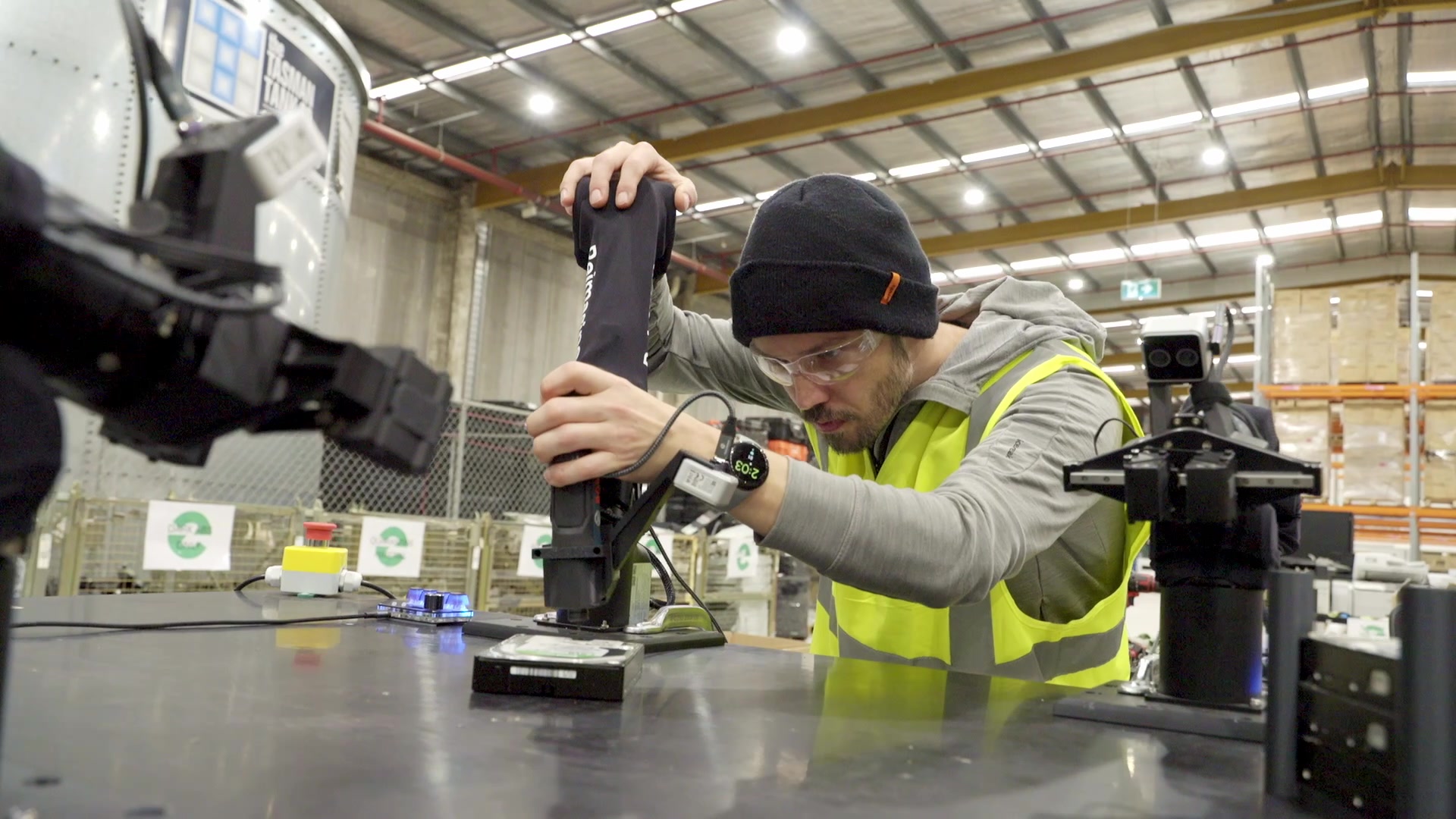
- Hard-drive material recovery: A three-robot disassembly cell, developed with process engineers, combines robots and people while the workflow is adjusted in real time. Reimagine says prototyping a new robot behavior dropped from about one day to roughly ten minutes on that project.
People stay in the loop
Scholz is explicit that the product depends on workers, not on removing them:
“For us, this is not about taking people out of the process. A robot that learns on the job depends on people. The worker identifies the bottleneck, shows the robot how to help and corrects it until it is useful.”
He describes the system as a way to amplify human labor: teach once, apply that skill wherever the process needs it.
A Human’s Take
This is the right product thesis for messy industrial work: variable SKUs, short runs, processes that change mid-week. If a line worker can cut a new behavior from a day of integrator time to ten minutes, that is the unit-economics story—not another “general-purpose humanoid” demo reel. I’ll watch for named customer metrics (uptime, interventions per hour, payback) and whether the next raise funds deployment muscle or more research branding. Until then, the plastics and hard-drive cells are the receipts that matter.