RoboReact Builds Whole-Body Humanoid Skills From One RGB-D Snapshot
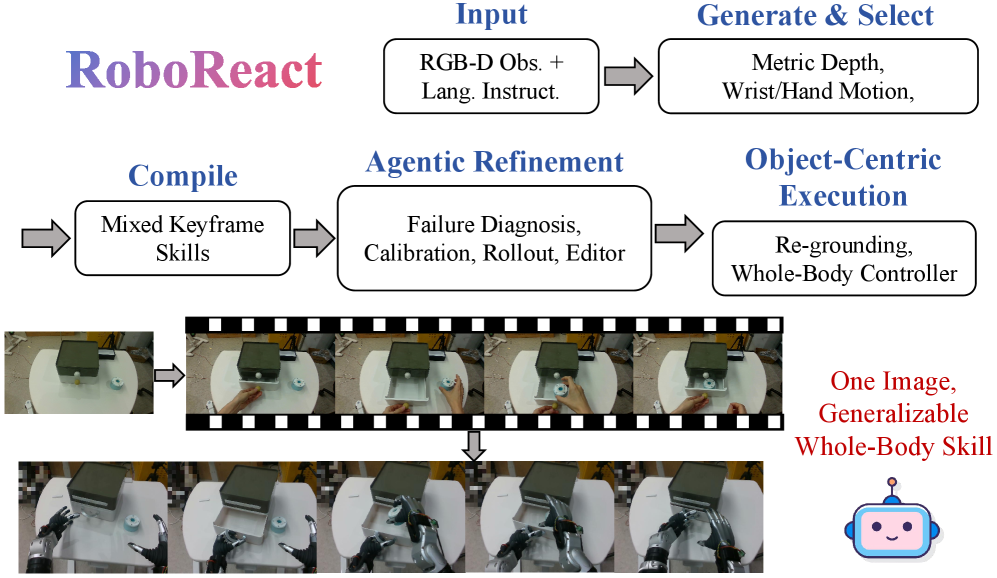
Teleoperation and big demo fleets are expensive. RoboReact (arXiv:2608.03387, submitted Aug 4, 2026) aims at a different path: from a single egocentric RGB-D observation (plus language instruction), automatically synthesize whole-body humanoid manipulation skills that run on real hardware without teleop or human demos at deploy time.
Pipeline pieces
Per the abstract, RoboReact:
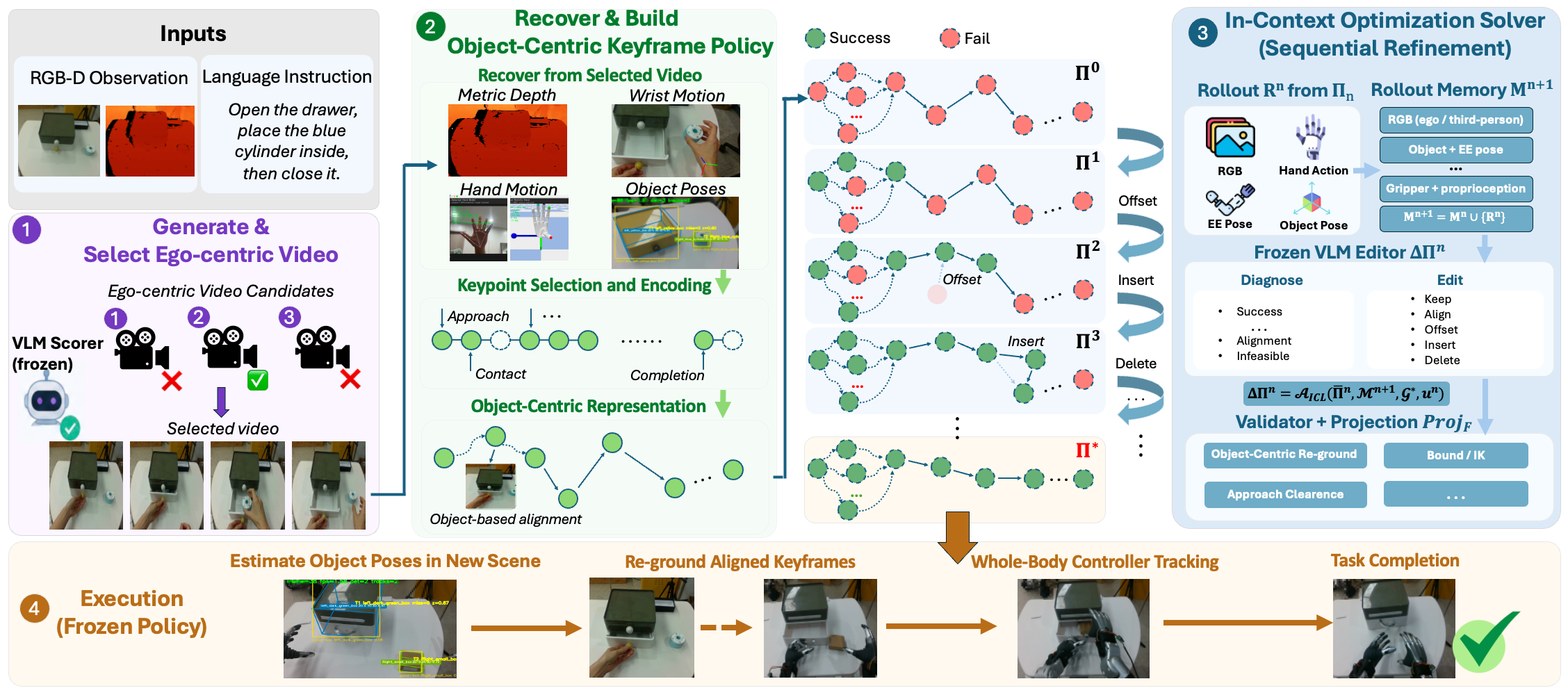
- Generates human manipulation videos from the observation.
- Extracts geometry-preserving interaction keyframes via depth-aware 3D reconstruction.
- Retargets those keyframes to high-DoF humanoids while keeping hand–object interaction geometry.
- Runs online object-centric re-grounding and a vision-language model–guided refinement loop when geometry mismatches or execution drifts.
- Executes through a whole-body controller for coordinated loco-manipulation-style interaction.
The teaser figure shows an open-box style task: generated human keyframes on top, robot rollout below, labeled “one image, generalizable whole-body skill.”
Real-robot claim
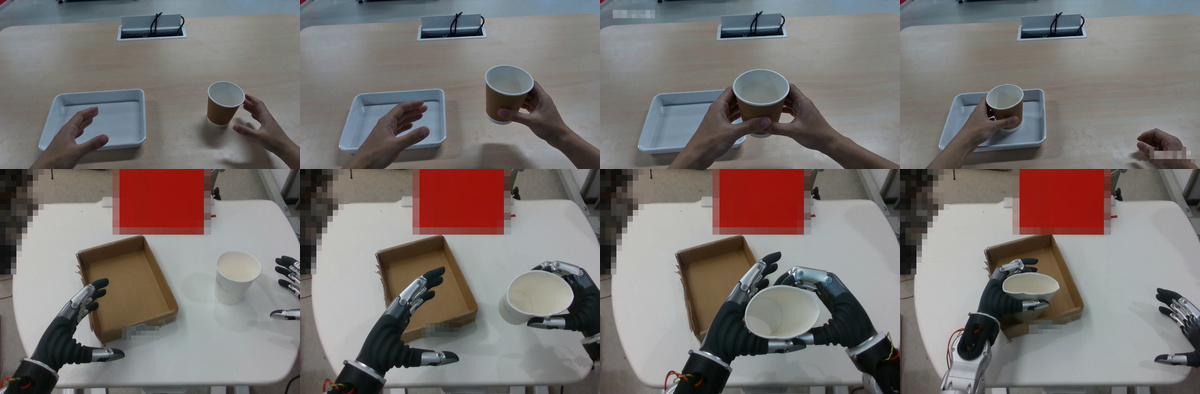
The authors report experiments on real humanoid robots showing generalization across diverse object configurations and recovery from execution disturbances — without teleoperation or human demonstrations for those skills. That is a strong claim; the paper is the primary source for metrics and failure analysis, so treat numbers beyond the abstract as “see PDF” until more secondary coverage appears.
A Human’s Take
Generated video as a skill factory is the thread connecting a lot of 2026 humanoid papers. RoboReact’s interesting bit is the closed loop: not just “imagine a plan,” but re-ground and VLM-edit when the real object is wrong. I’m here for demos that start from one RGB-D frame and recover mid-task — that’s closer to a product path than another offline imitation dataset.