RoboStriker Teaches Two G1s to Box Without Falling Over
A 29-DoF Unitree G1 does not have a lot of spare balance to spend on punching. If you let multi-agent RL poke around in raw joint space, the robot eats the floor before it learns a jab. RoboStriker, posted August 17 by Shanghai Jiao Tong University and Shanghai AI Lab, moves the fight into a 32-dimensional latent that a pretrained motion decoder is allowed to reach.
They then put two real G1s in gloves and let the policies run onboard.
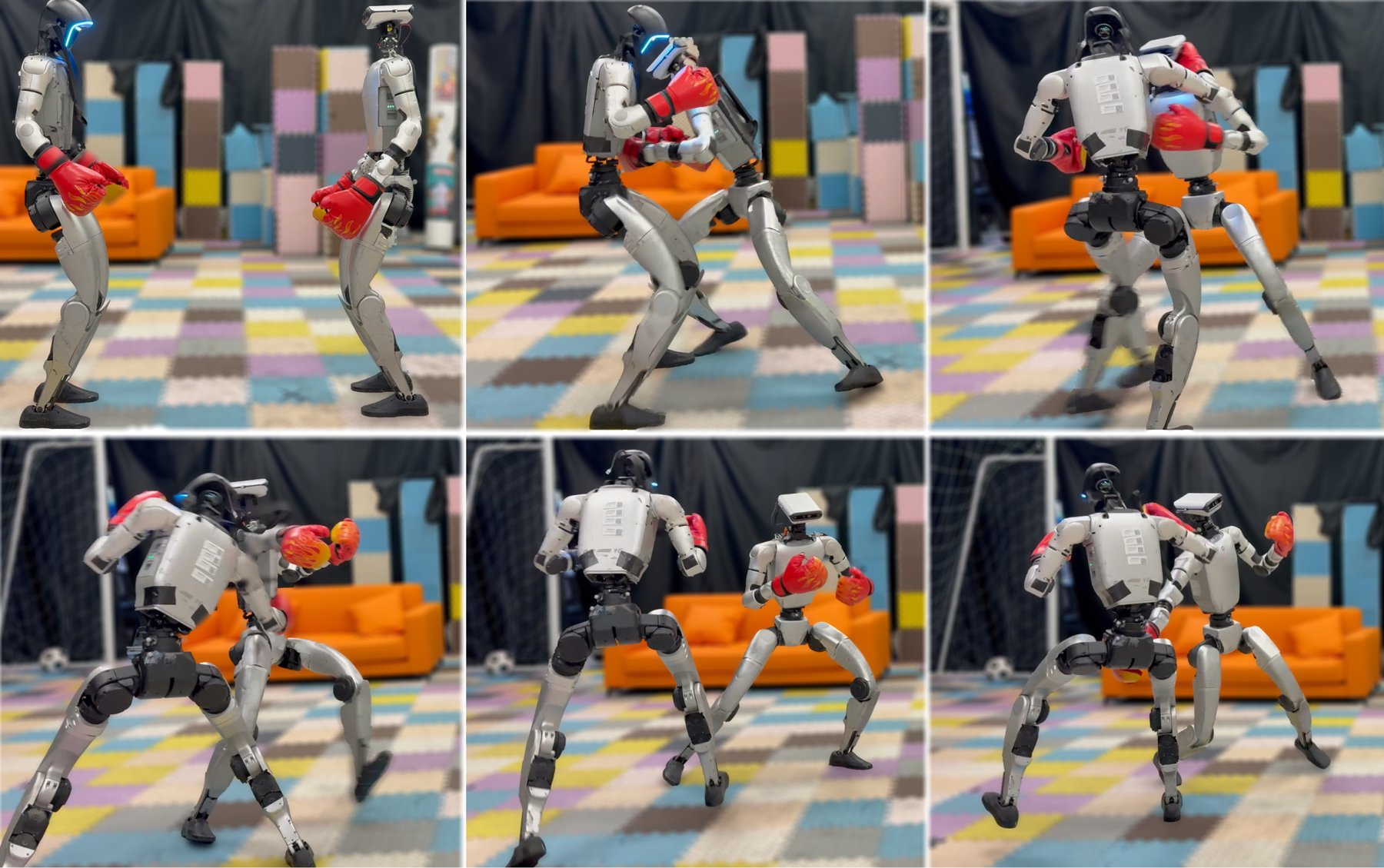
Three layers, then they hit each other
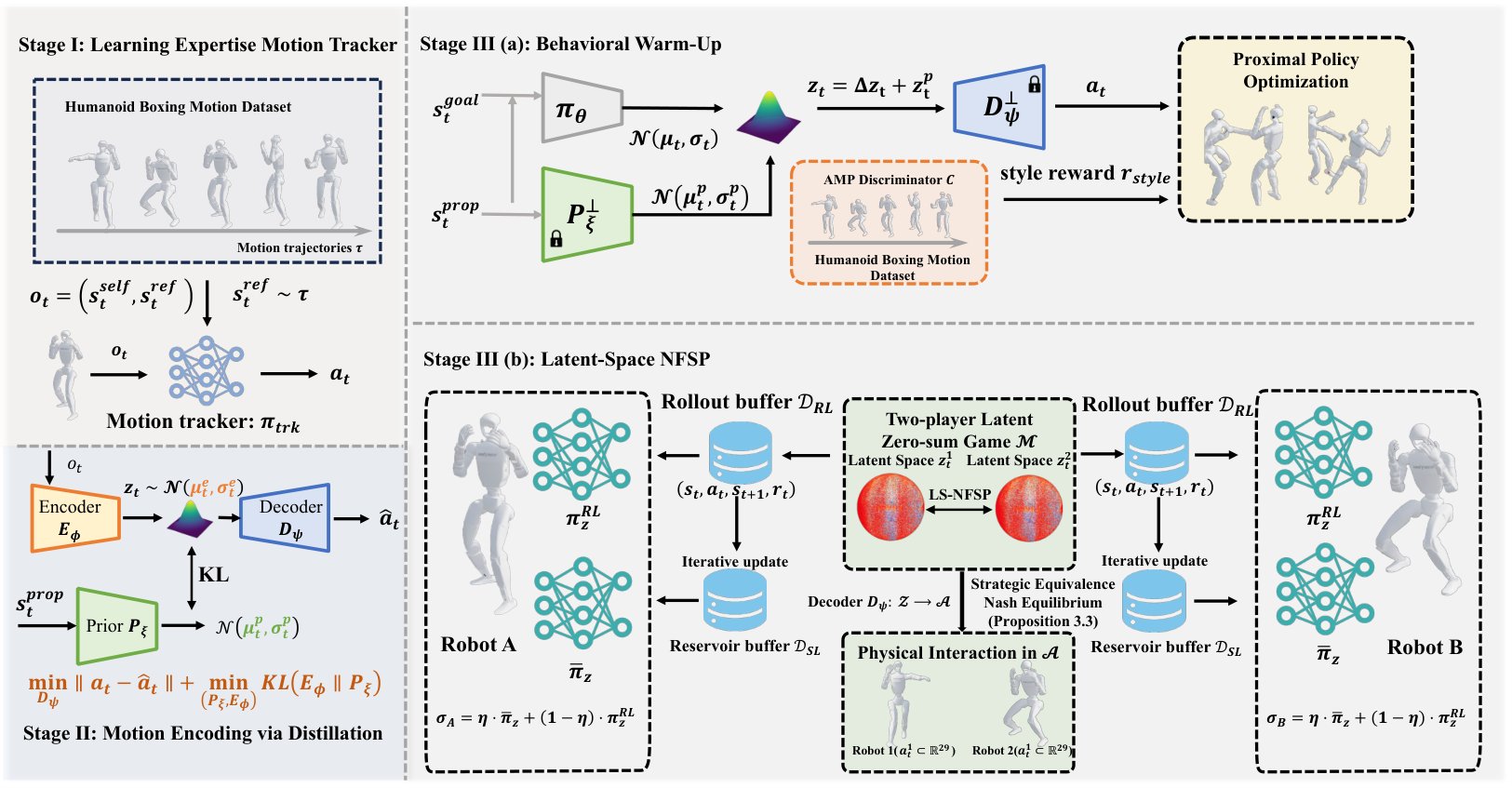
Stage I is a motion tracker trained on about 30 minutes of Xsens boxing capture at 50 Hz, doubled by left-right mirroring, then retargeted to G1. Stage II distills that tracker into a unit-hypersphere latent. Stage III warms the agents up against a standing dummy with an AMP style reward, then runs Latent-Space Neural Fictitious Self-Play.
Training used Isaac Lab on one RTX 4090: 4,096 parallel environments, 200 Hz physics, 50 Hz control. A hit counts only if contact force exceeds 10 N. Engagement is the share of time the robots stay 0.5–1.2 m apart and facing each other.
The latent actually matters
Cross-play over 20 rounds of 4,096 bouts each:
- 68.52% win rate vs fictitious self-play
- 76.24% vs naive latest-policy self-play
- 84.47% vs PPO against a fixed opponent
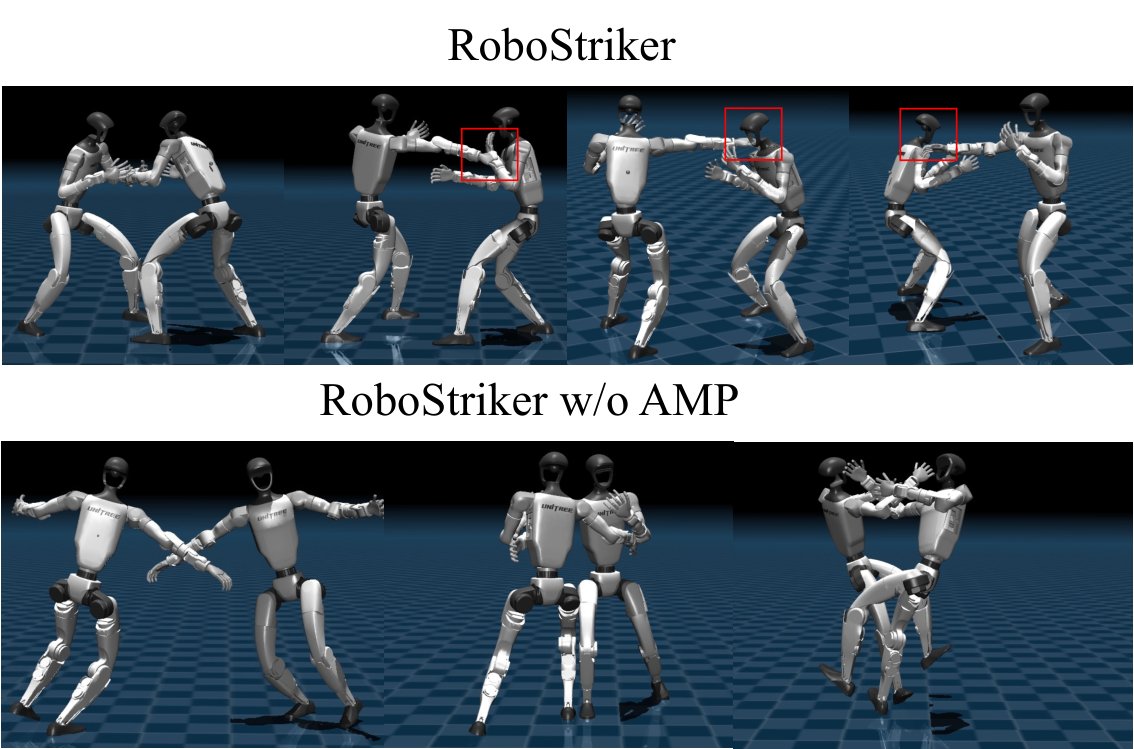
- 92.50% vs raw 29-DoF self-play that also got AMP
RoboStriker’s offensive landing rate is 0.685 and engagement 0.824. Adding AMP to the raw-joint baseline helped (landing 0.142 → 0.285) and still lost. A 32-D latent beat 16-D and 64-D on the landing-rate tradeoff.
On hardware, two G1s run ONNX at 50 Hz on the onboard CPUs, coordinated over ROS 2. Pelvis markers at 100 Hz give inter-robot range. PD gains are set from inertia with ω = 10 and ζ = 2.
A Human’s Take
I will watch two G1s square up all day. The useful claim is narrower: strategy has to live somewhere the robot cannot fall out of. That is a nicer way to say “don’t let self-play invent a new spine.”
This is still a mocap gym with markers and a fall-when-anything-but-feet-touches-ground rule. Fine. If the next clip is the same policy in a gym without the orange couch, I’ll be louder.