RoboSynChallenge Grades Manipulation on Real Arms, Not Just Sim
Most manipulation leaderboards stay in one world. Either you win in simulation, or you win on a lab table with a frozen dataset. RoboSynChallenge, posted to arXiv on August 12 for the NeurIPS 2026 Competition Track, wants the score that matters: a policy trained mostly on generated trials, then run on unseen real dual-arm setups.
The organizers sit at CUHK Shenzhen, DexForce, and a long collaborator list. The public kit is on robosyn-bench.net and GitHub under EDEM-AI/RoboSynChallenge.
Generate in sim, grade on metal
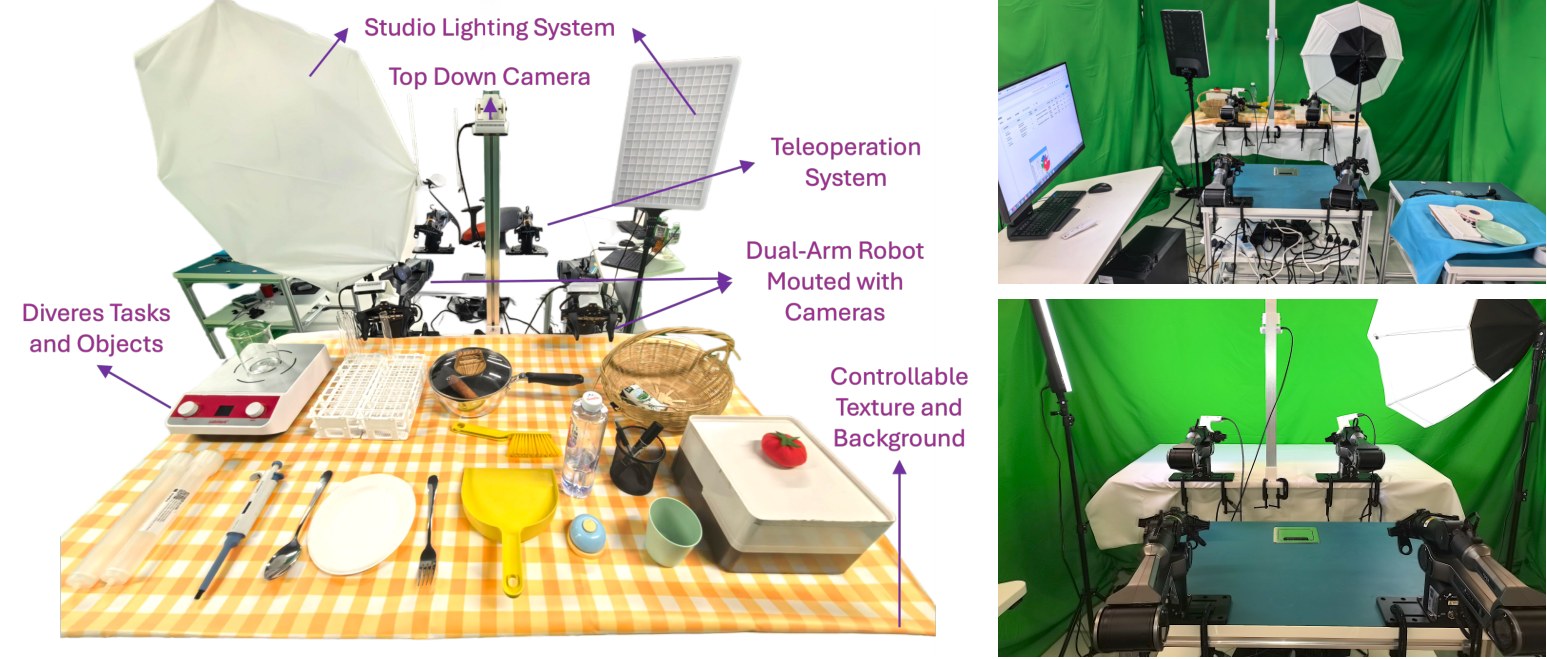
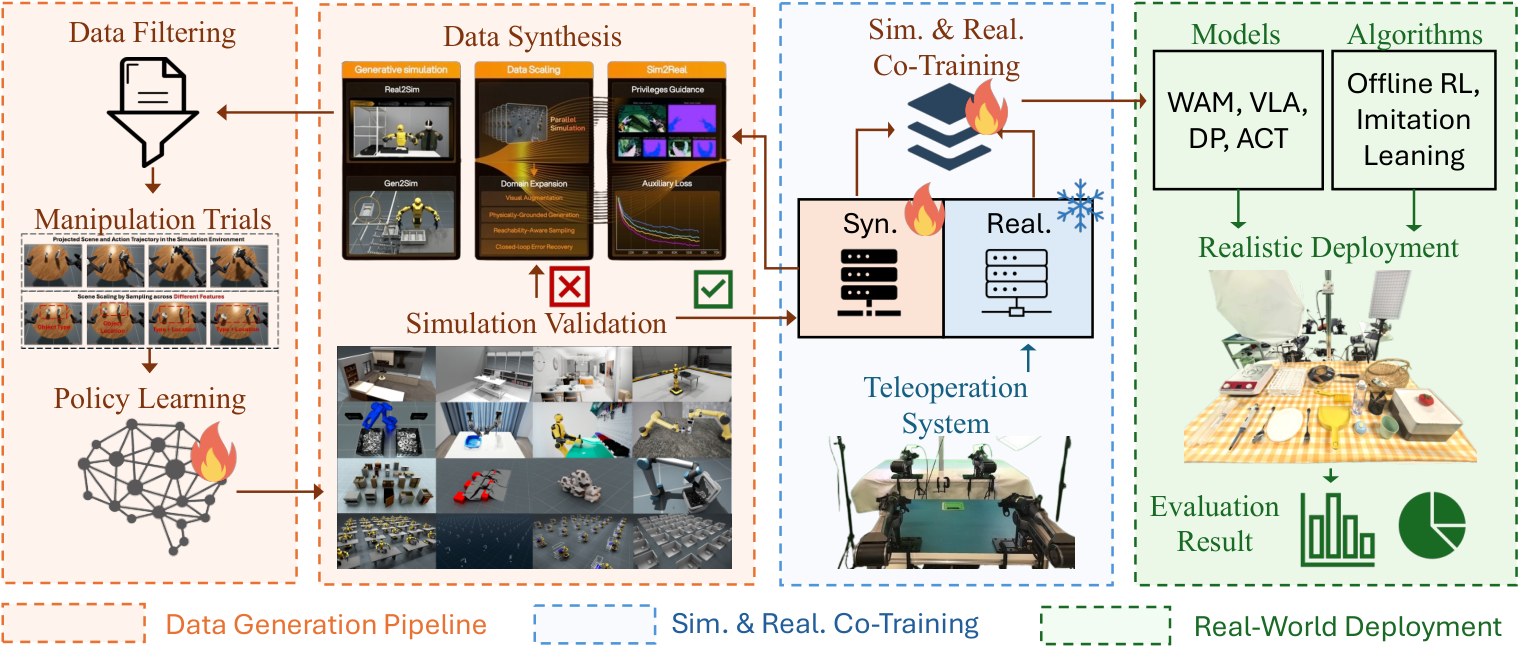
Training data come from EmbodiChain, DexForce’s generative simulation stack. For each task they sample 1,000 simulated trials with randomized lights, materials, table height, cameras, and robot start pose. A smaller real set sits beside it: five scene conditions × four positions × three orientations, or 60 teleop samples per task.
Final ranking is not another sim replay. Submitted policies go onto a standardized bimanual AgileX Piper station. Three identical backup tables exist so they can rerun eval without waiting on one broken wrist.
Tasks come in three bands:
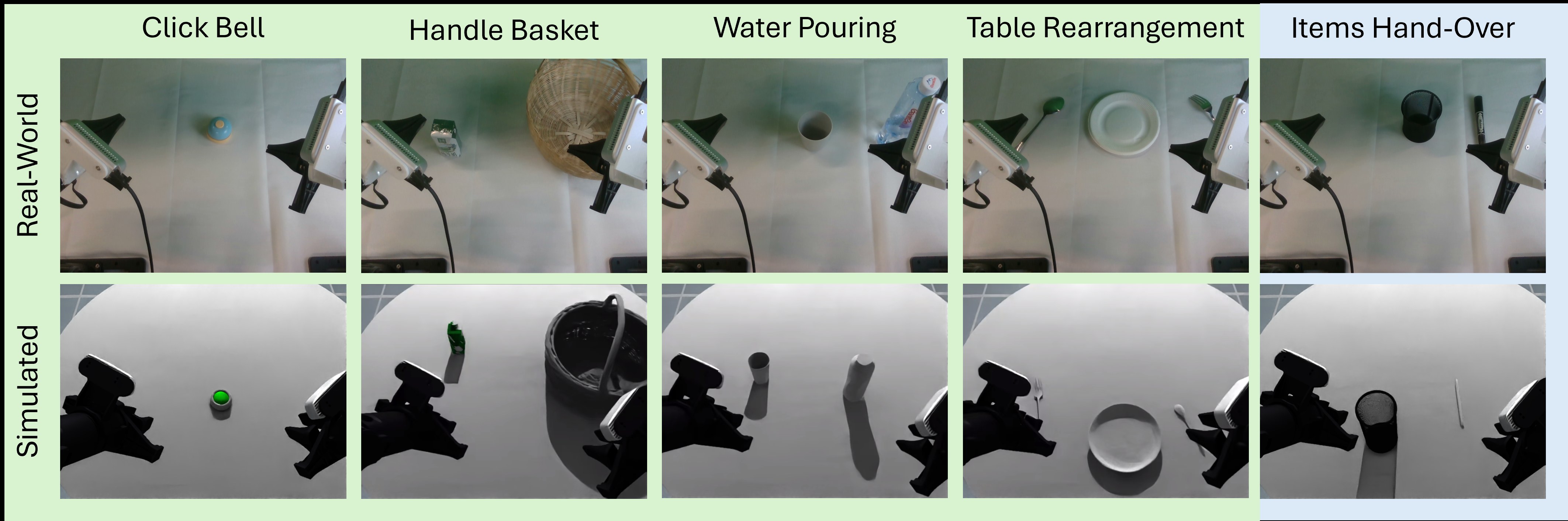
- Entry: click a bell, pour water, pick a basket, rearrange a table
- Mid: hand-over, open a drawer and place, run a mixer
- High: assembly, pipette work, sample loading
They vary one factor at a time — table texture, light, seen vs unseen objects, 2 / 4 / 8 distractors, and a 3×3 grid of unseen positions — and report success rate, inference time on an A800, and action steps (budget 1,000).
Early baselines are not crushing it
They ship ACT, Diffusion Policy, π0, π0.5, and the world-action model Motus, each trained sim-only or real-only so far. Task-average success on the current table:
- π0.5 (sim): 38.50%
- π0.5 (real): 33.00%
- Motus (sim): 31.50%
- Motus (real): 27.50%
- π0 (sim / real): 22.00% / 22.50%
High-level work is worse. π0 (real) is 0/20 on pipette. Motus (real) is 0/20 on pipette and sample loading. Click-bell and hand-over are the easier cells. The point of the contest is whether extra synthetic streams move those numbers on the physical table, not in the renderer.
A Human’s Take
A competition that refuses to let you hide in Isaac is the right kind of annoying. Sixty real demos per task is still thin, and Piper is not a factory cell. If someone’s synthetic pile actually lifts pipette and assembly on the held-out table, that is a result I will quote. If the leaderboard is just click-bell, we already knew that.