RoboTok Indexes Web Video by 3D Hand Trajectories, Not How the Kitchen Looks
RoboTok, from Rice University with NVIDIA on the author list, went up 2 September (arXiv:2609.03199). Give it a query clip of a person doing a dexterous task. It searches web video for other clips whose hands move the same way, even when the kitchen, camera, and shirt are different.
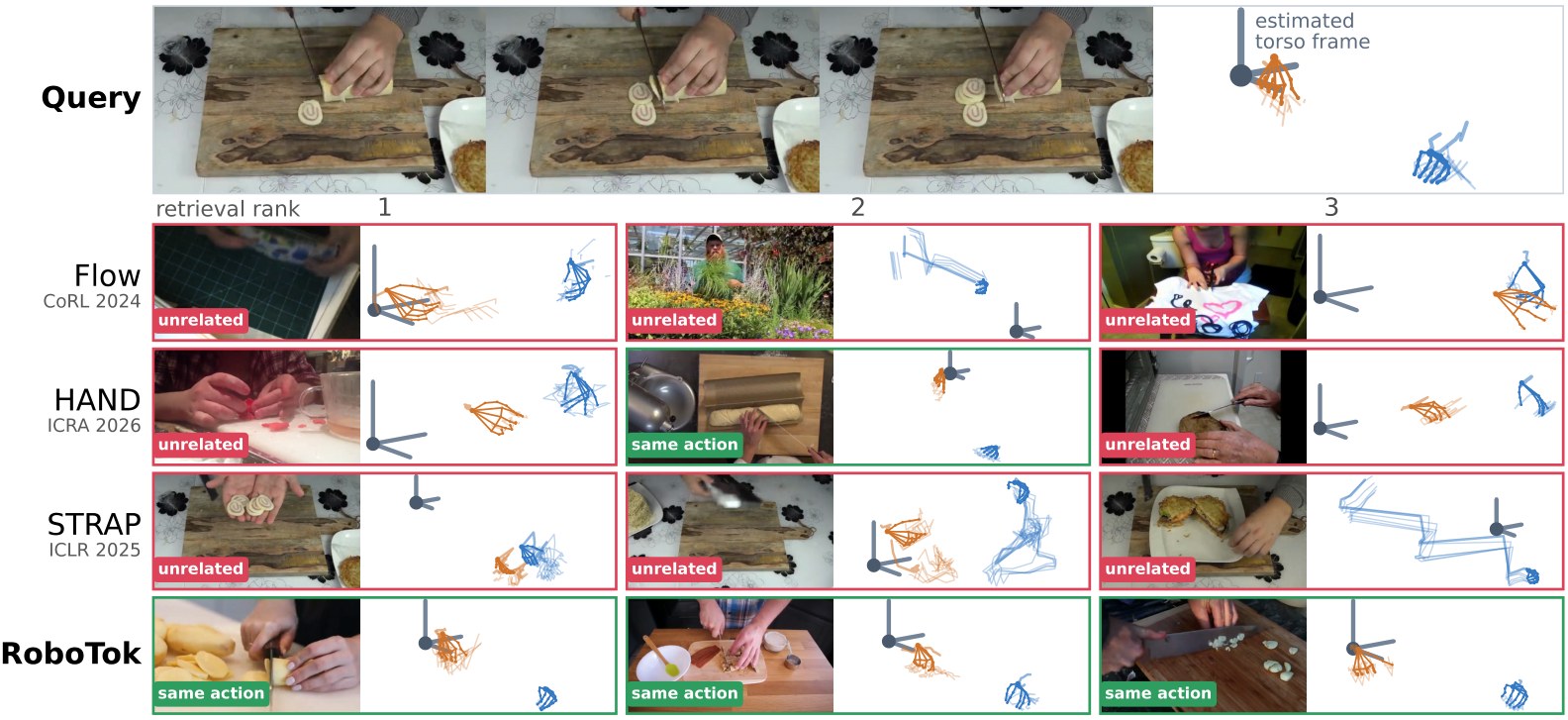
That is the whole bet. Visual similarity is a trap. Two videos can look like “someone in a kitchen” and have nothing in common at the fingers.
How the index works
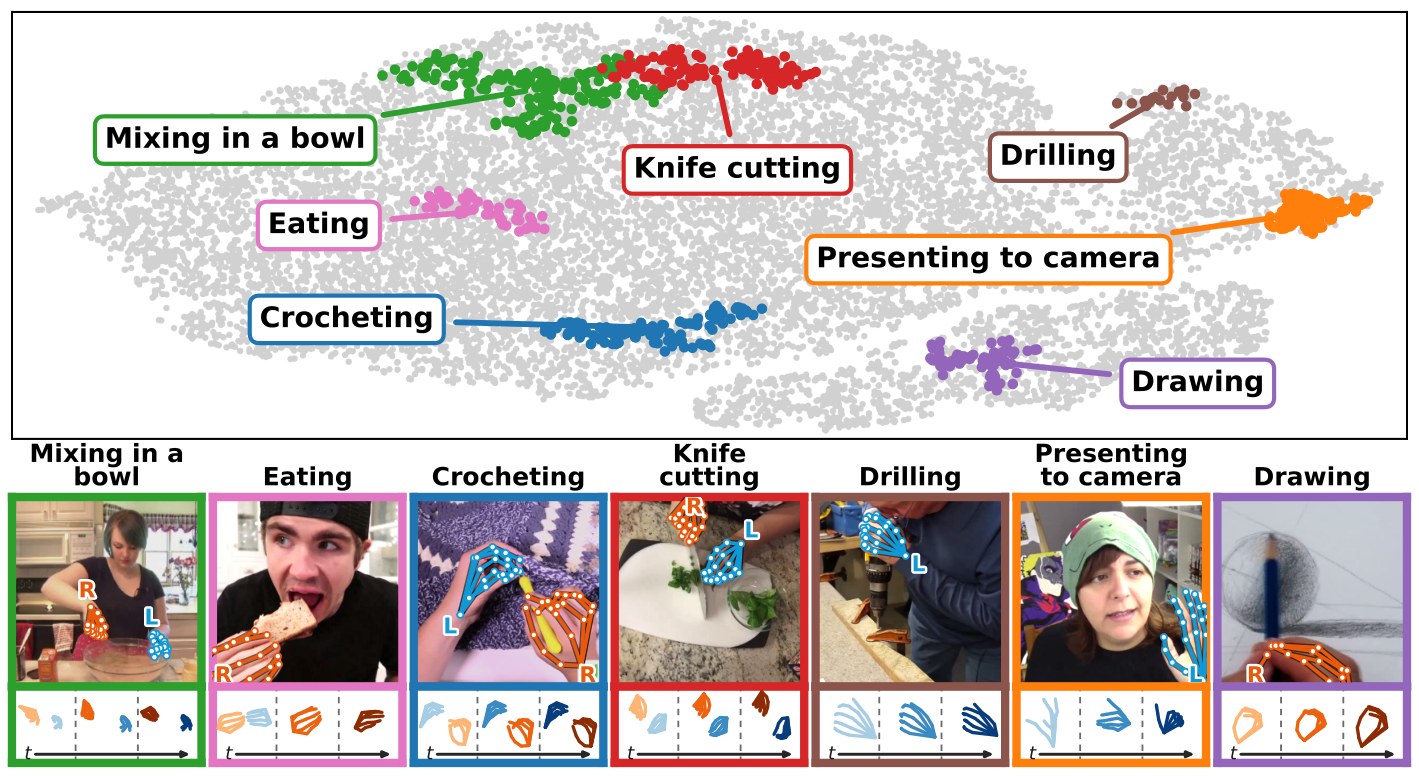
Clips come from Action100M, then get filtered to 4–8 seconds, a near-static camera, and at most one left and one right hand. Hands are lifted to metric 3D (WiLoR, MoGe-2, HaWoR infill). A small torso-frame estimator, trained only on wrist frames, puts those hands in an actor-centered frame so the body does not even have to be visible.
Similarity is Dynamic Time Warping on the 21-joint trajectories. DTW is too slow to scan the web at query time, so they distill it into a compact embedding and do cosine search. Training uses 100,000 clips. New clips can be indexed with one forward pass. No semantic labels.
On a 10,000-query holdout against that DTW oracle, RoboTok hits mAP@20 0.353 and Recall@20 0.996. STRAP, the strongest baseline they report, is 0.007 mAP@20. Mean DTW cost of RoboTok’s top-20 is 1.333 m vs 1.145 m for true neighbors and 4.776 m for random. On AssemblyHands (831 two-hand clips, sensor-grade 3D), mAP@5 is 0.261 vs 0.133 for STRAP.
Does the retrieval help a robot?
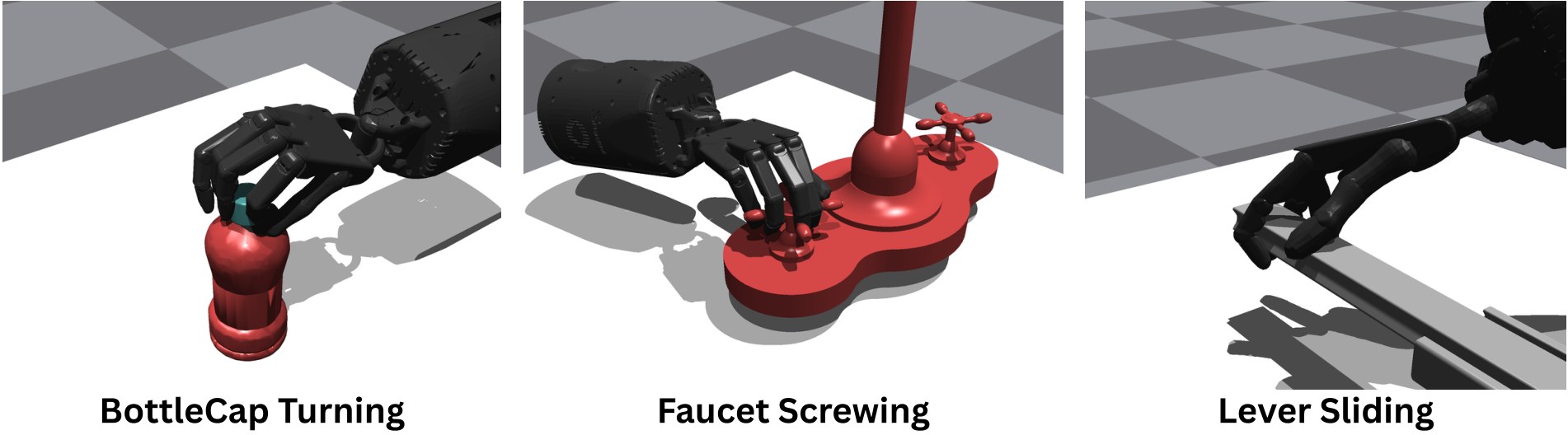
They train PPO from scratch on VTDexManip. Retrieved clips enter only as a reward for staying near retargeted hand poses. No robot action labels.
On the original benchmark, RoboTok-guided policies beat the paper’s best reported pretrained baseline on five of six tasks (about +7.45% seen / +5.83% unseen on average). On a harder formulation that restores full 3D wrist motion and strips dense rewards, the gaps get loud:
- BottleCap turning, seen: 77.3% vs 59.5% HAND
- Faucet screwing, seen: 44.8% vs 6.8% HAND
- Lever sliding, seen: 79.3% vs 19.5% HAND
The encoder is intentionally small. The 3D trajectory already did the viewpoint work.
A Human’s Take
I have watched too many “we trained on YouTube” papers retrieve the same cutting board because the wood grain matched. RoboTok is the first one in this pile that argues with the fingers. The harder VTDexManip numbers are the receipt. Moving-camera video is still future work, which is most of the internet, so this is a static-shot engine for now. For humanoid hands, a growing index of how people actually move is still the dataset I want.