S2-HWM Lets a Surgical World Model Think in Events
Surgical peg transfer is a long, stingy task. The reward shows up when the block sits on the right peg. Everything before that — approach, grasp, lift, carry, align, release — lasts a different number of steps every episode.
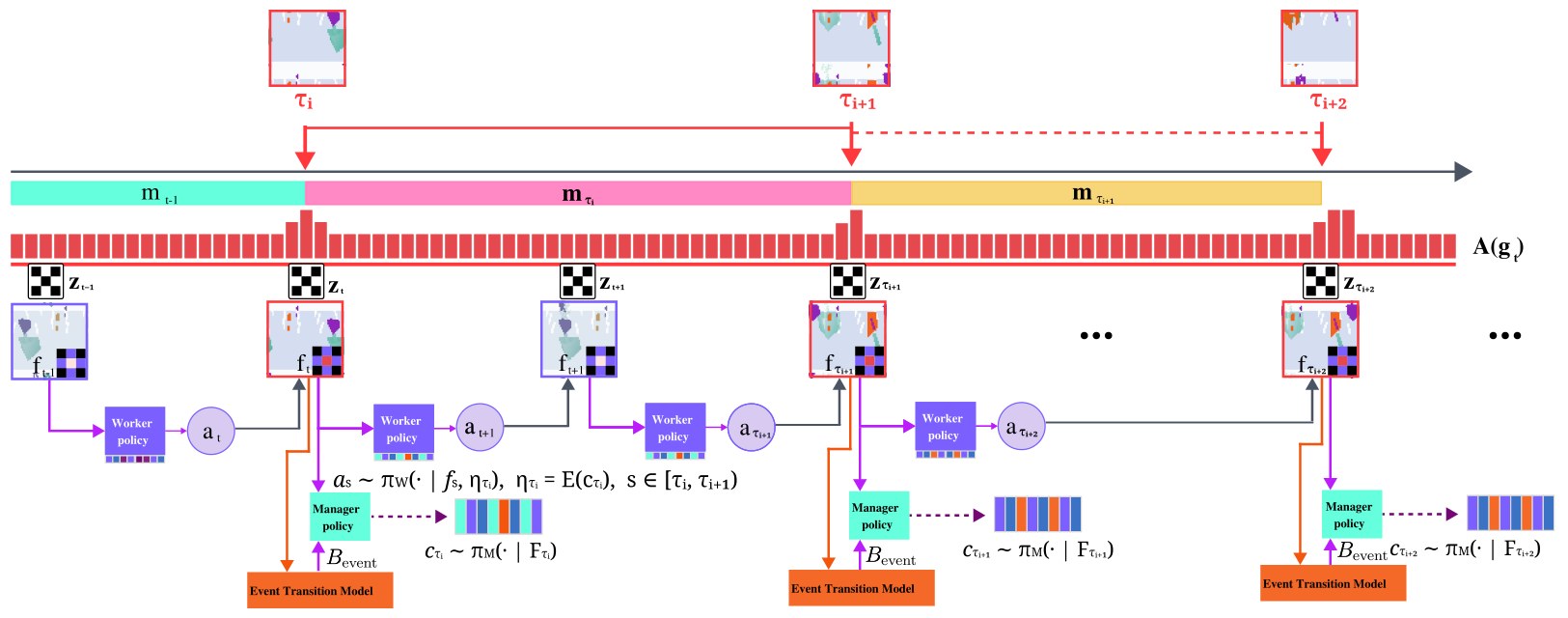
S2-HWM (Sparse Event-Structured Hierarchical World Model), posted to arXiv on August 13, tries to stop imagining every primitive tick. It learns sparse “event evidence” from latent trajectories, then lets a manager pick a latent goal only when that evidence says the interaction actually changed.
Events instead of hand-labeled stages
The authors — Shuzhe Zhang, Xin Zhu, Yinling Qian, and Qiong Wang — keep a DreamerV3-style RSSM for the worker. A gated context vector updates only some of the time. Those sparse gates become event evidence. A separate Event Transition Model then predicts the next-boundary latent, how long the segment lasted, and the reward piled up inside it.
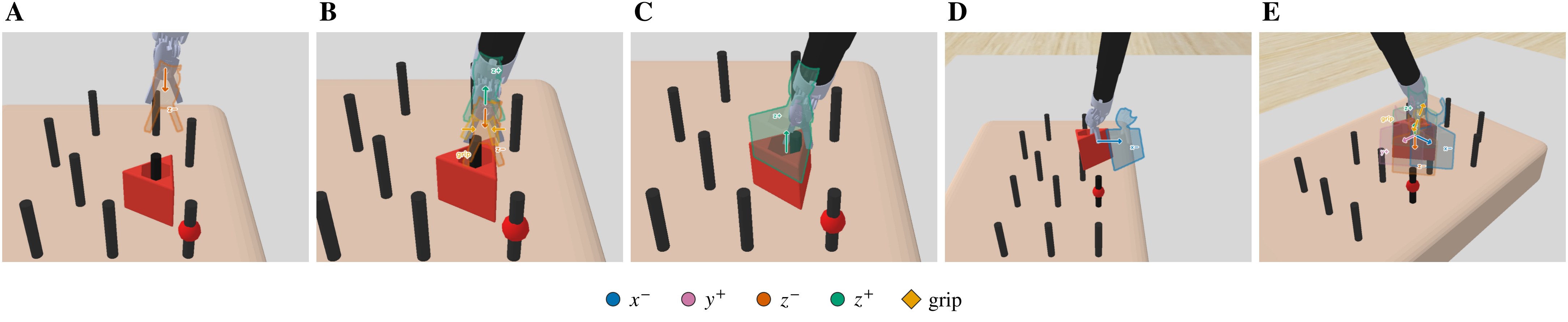
The manager bootstraps from a short primitive imagination plus a chain of those event-level predictions. The worker still learns at step resolution. Nobody feeds the agent semantic stage names; “approach / grasp / lift” labels appear only after the fact, for plots.

The scoreboard
They retrain GASDreamerV3 — a flat surgical world-model baseline from Grasp Anything for Surgery — on the same SurRoL PegTransfer setup: DSA4-depth views, a nine-way discrete action space, three seeds. At a matched checkpoint around 300k environment steps, S2-HWM hits 98.7 ± 2.3% success. GASDreamerV3 is 76.0 ± 12.0%. That is the 22.7-point gap in the abstract.
PPO and DreamerV2 finish at 0% in every setting they report.
Stress tests use the same checkpoints. Two transfers in one episode: 91.3 ± 6.1% vs 77.3 ± 18.6%. Two transfers plus an induced drop: 88.0 ± 5.3% vs 65.3 ± 14.0%. Ablations land where you would hope: drop the hierarchy and success falls to 68.0%; update the manager on a fixed K=15 schedule and it falls to 80.7% with huge seed spread; drop the event model and you still get 91.3% on a single transfer, but the gap widens on the long tests.
A Human’s Take
I like that they refused to hard-code “now you are in grasp.” Surgical timing is messy; a gate that learns when the interaction flipped is the right object. The caveat is honest in the paper: this is still one simulated peg-transfer family. Until that event loop is on a real dVRK, it is a very clean sim receipt.