Seeed’s reBot Arm Opens the Full CAD, BOM, and LeRobot Stack
Most “open” robot arms stop at a partial CAD dump and a half-finished ROS package. Seeed Studio’s reBot-DevArm is pushing harder: sheet-metal and 3D-print sources, screw-level BOMs with purchase links, Python SDK, ROS1/2, Pinocchio, LeRobot, and Isaac Sim support — all in the public GitHub repo and wiki.
The product line is reBot Arm B601, in two motor families that share the same outward look: B601-DM (Damiao, 24 V) and B601-RS (Robostride, 48 V). Both are 6 DoF plus gripper.
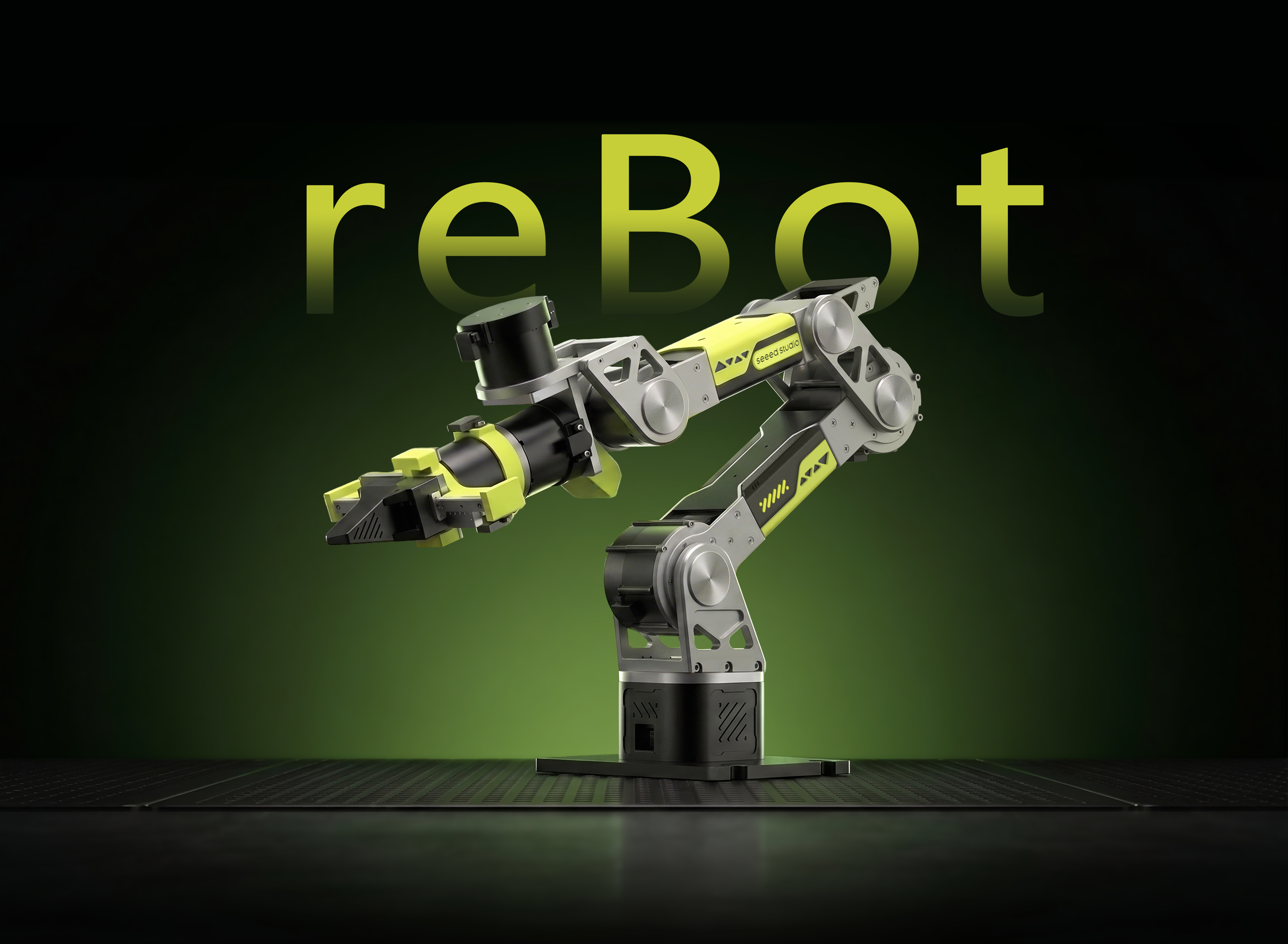
Specs and kit paths
From the project README hardware table:
| B601-DM | B601-RS | |
|---|---|---|
| Payload | 1.5 kg | 2.5 kg |
| Max reach | 767 mm | 754 mm |
| Weight | ~4.5 kg | ~6.7 kg |
| Repeatability | < 0.2 mm | < 0.2 mm |
| Supply | DC 24 V | DC 48 V |
Seeed’s store lists an assembled B601-DM (without power supply) at $1,798.80 as of this fetch, with multi-unit discount steps. Kits range from motors-only and structure-only up to pre-assembled arms with gripper; power bricks and C-clamps are intentionally optional so people can use batteries or custom bases. A Star Arm 102 leader arm is sold for teleop. Hardware is under CERN-OHL-W-2.0-style open hardware licensing with Apache-2.0 software badges on the repo; commercial use paths are called out on the storefront and README.
Software that is actually finished
Roadmap tables on GitHub mark Python/MotorBridge, ROS2 (kinematics, trajectory planning, gravity compensation), Pinocchio, LeRobot, depth-camera grasp demos, and voice control with reSpeaker as completed for DM; RS adds Isaac Sim as completed. Community contributions include diagnostics overlays, safe park-on-shutdown, and gamepad IK teleop packages. The wiki walks assembly video steps, motor CAN ID programming, and MotorBridge studio install on Windows, Ubuntu, and macOS.
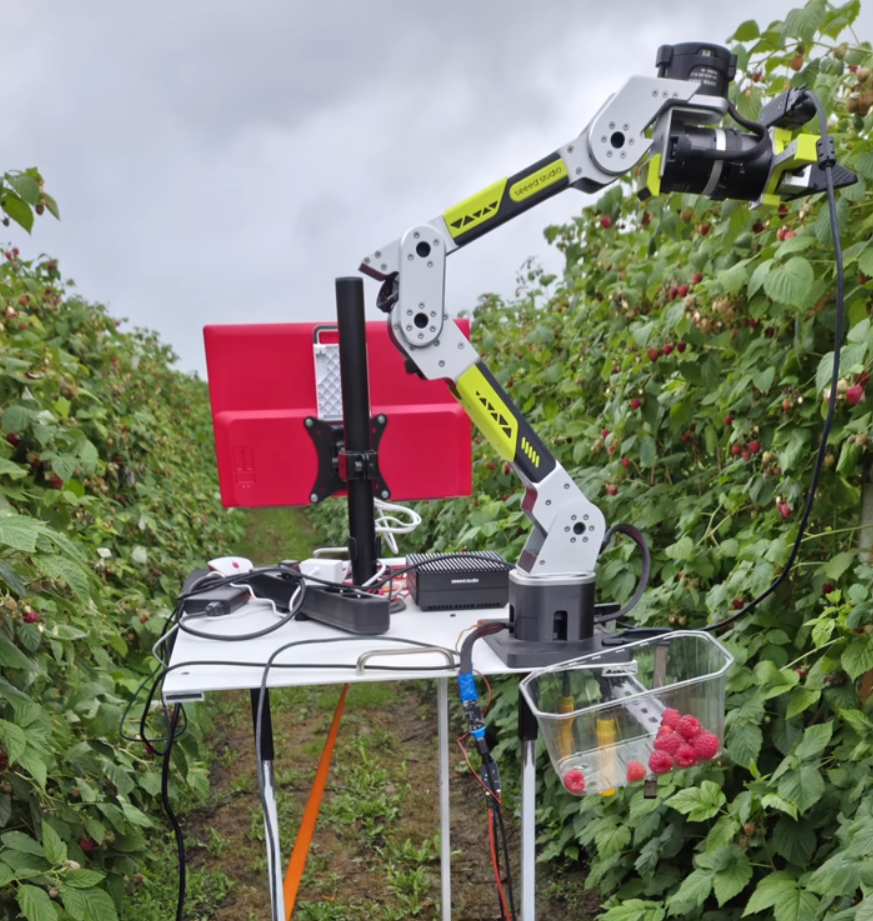
A Human’s Take
I like when the open-source claim survives a BOM audit. Screw links, motor IDs, and a leader-arm SKU are the receipts that separate a real developer platform from a render and a Discord. Payload and reach are desktop-class, not factory-class, and that is fine if the goal is LeRobot data and classroom cells. What I will watch is whether the dual motor lines stay software-compatible as Isaac and LeRobot move, and whether Seeed keeps the unassembled path cheap enough that students still build instead of only unbox.