Semantic Haptics Beats High-Fidelity Feel for Bimanual Teleop
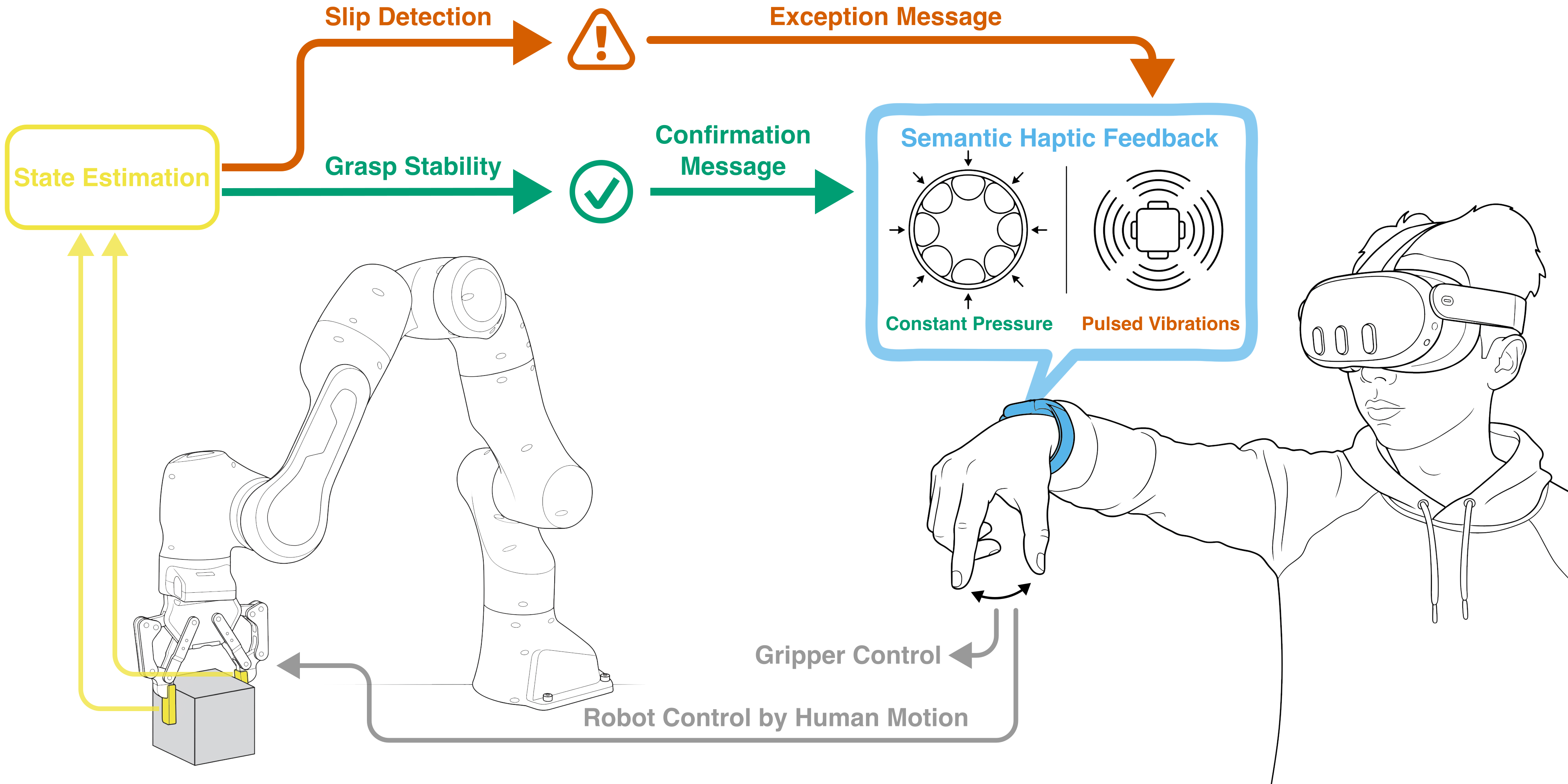
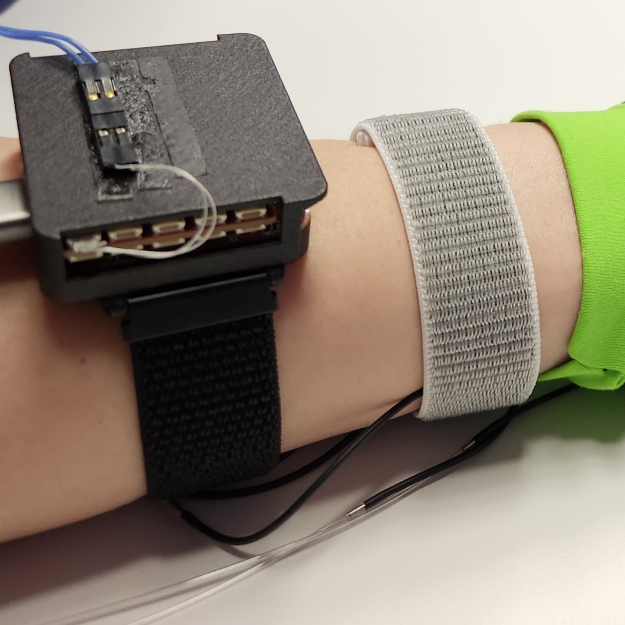
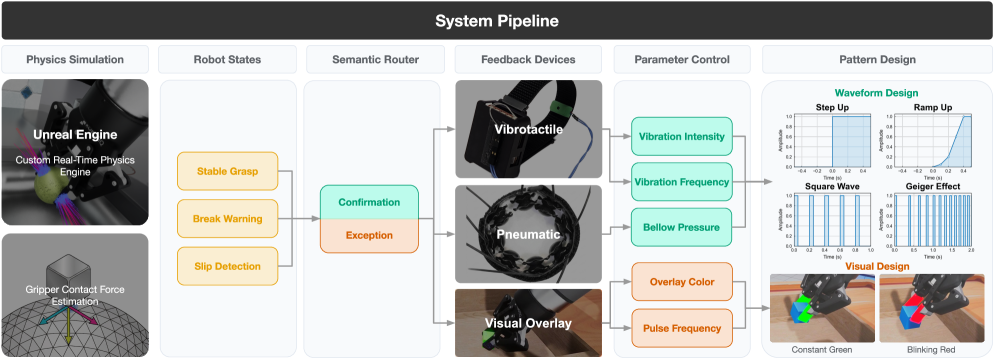
Most teleop haptic work tries to recreate real contact forces. That needs heavy sensing and can raise operator workload. Semantic Haptic Feedback (arXiv:2608.02780, submitted Aug 3, 2026) does the opposite: abstract wrist patterns for critical robot states — confirmations and exceptions — via pneumatic and vibrotactile bands.
What “semantic” means here
Robot states map into two buckets:
- Confirmations (e.g. grasp stability)
- Exceptions (e.g. slip)
A modular rendering pipeline in simulation maps those to simple patterns (constant pressure vs pulsed vibration in the teaser). One pattern can stand for many states — hardware stays cheap; the design is about information, not force fidelity.
Study takeaways (from the abstract)
Three evaluation studies compared semantic haptics to sensory haptics and visual feedback on pick-and-place teleop:
- Unimanual: semantic haptics performed similarly to other feedback.
- Bimanual: semantic haptics showed superior performance, with reduced task workload, increased situational awareness, and overall preference.
A Human’s Take
When both arms are busy, I don’t want a physics sim on my wrist — I want “stable” vs “slipping” without looking away. Semantic haptics is the right trade for multi-arm humanoid teleop and data collection: lower hardware bar, clearer signals. The bimanual preference is the result that should change how we kit operators.