Caltech DSMS Retargets Contact-Rich Motions to Unitree G1 Crawl and Jump-Turn
Kinematically pretty motion references often break when you ask a humanoid to crawl, roll, or jump. Shooting for Contact (arXiv:2608.03116, submitted Aug 4, 2026) from Caltech’s AMBER Lab and collaborators turns those references into dynamically feasible whole-body trajectories, then trains motion-imitation policies that transfer zero-shot to a Unitree G1.
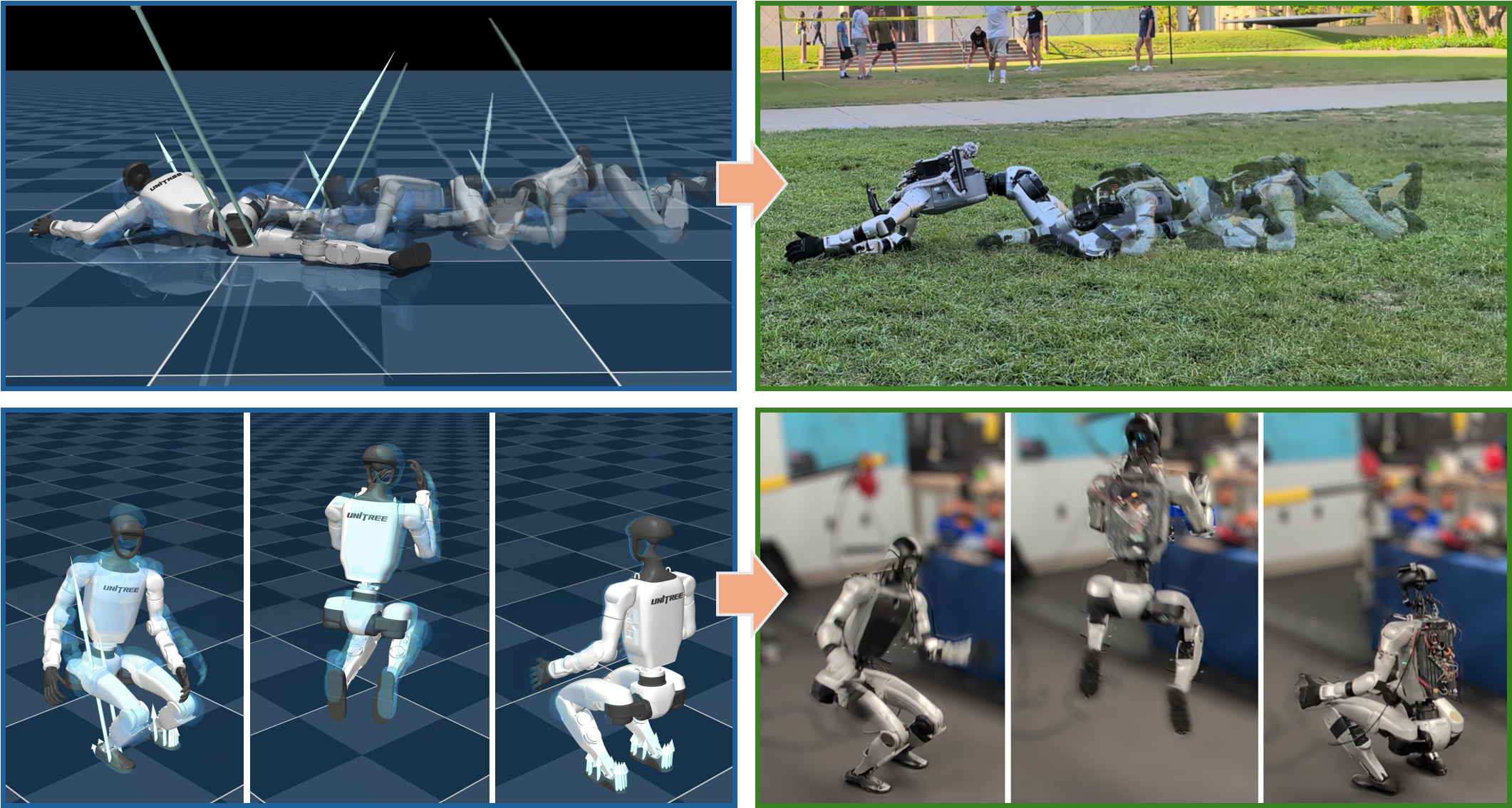
What DSMS does
The method is contact-implicit, direct simulation-based multiple shooting (DSMS). A differentiable simulator sits inside a nonlinear program. Contact, friction, impacts, self-collision, and joint limits are resolved inside the simulator — not as an explicit contact schedule or force decision variables.
The authors report that, versus prior retargeting, DSMS accelerates motion-imitation RL and yields policies with high success rates and low tracking error. The same formulation is morphology-agnostic enough to retarget a jump-turn onto a quadruped in the paper’s demos.
Hardware that matters
On the G1, the project page and abstract highlight:
- Command-conditioned contact-rich crawling (hands, elbows, knees, feet; sticking and sliding), including under height constraints, forwards/backwards steering, outdoor grass slopes, and cluttered lab runs with operator twist commands only.
- A highly dynamic 180° jump-turn from a reduced-order reference resolved into a whole-body feasible track.
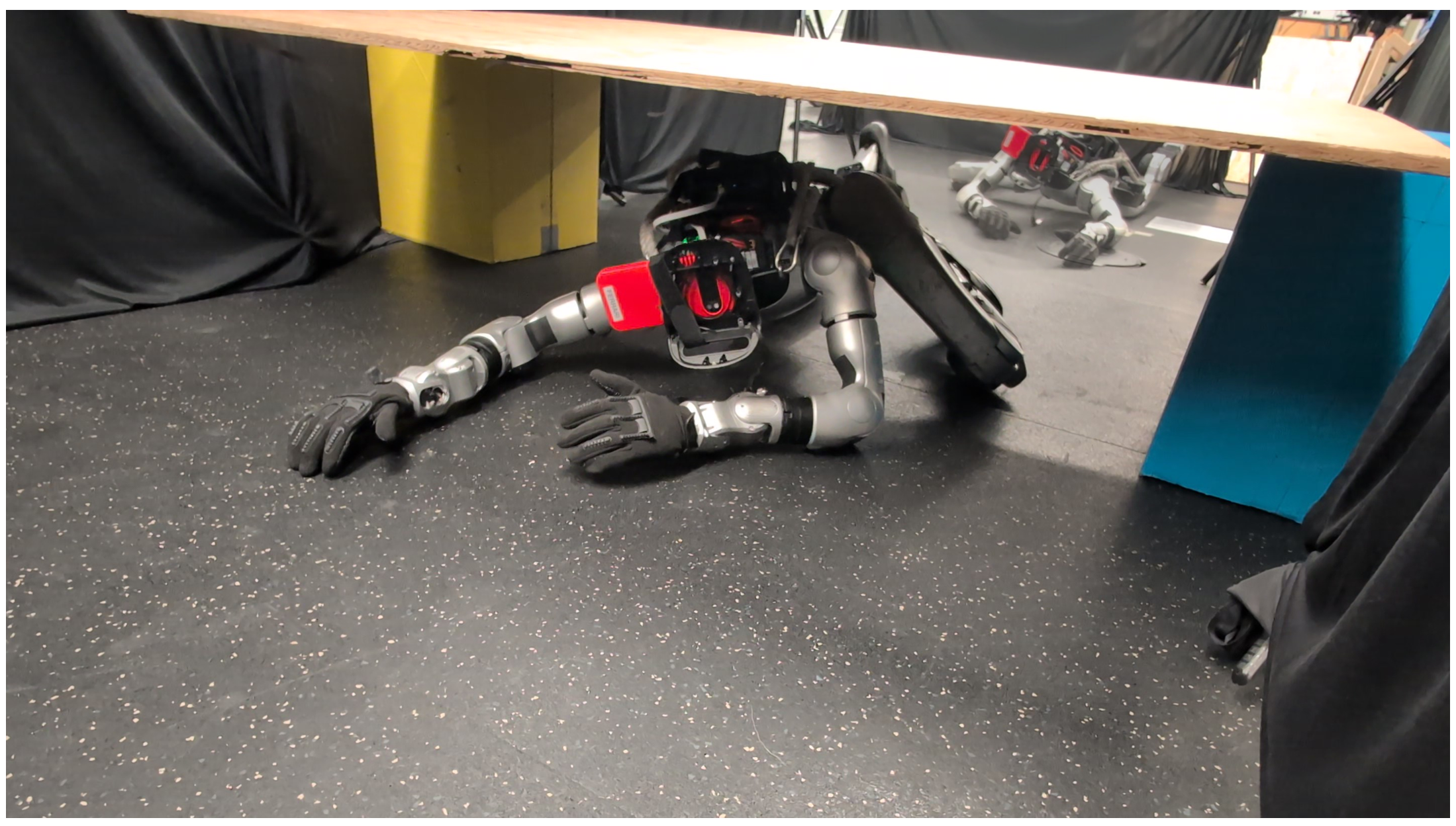
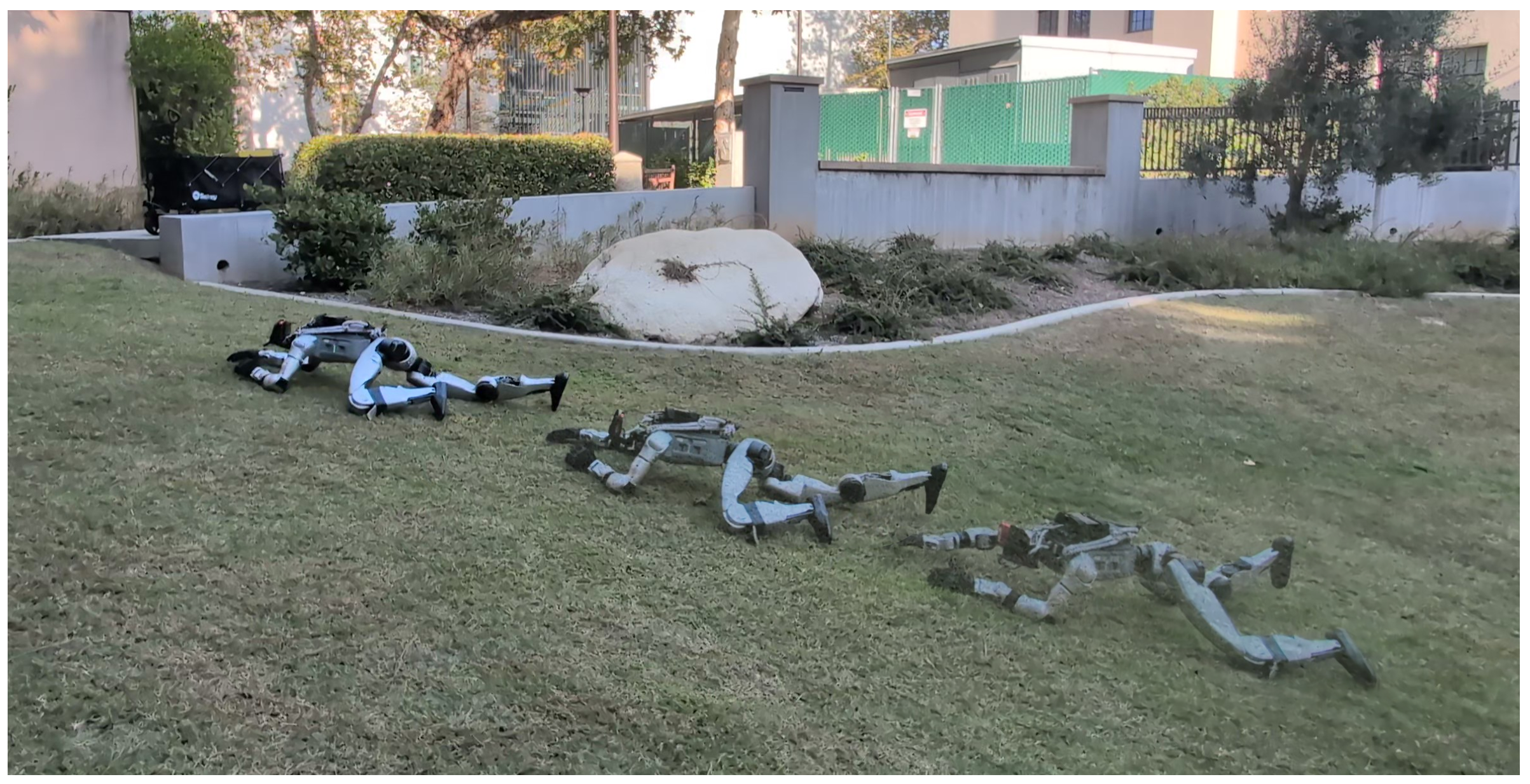
Code is listed on the project site (GitHub: sesteban951/shooting-for-contact).
A Human’s Take
I’m less interested in another flip video than in whether the reference the policy tracks could physically exist on the hardware. DSMS’s bet — put the contact mess inside the simulator, then imitate — is exactly the unit-economics of demo-to-shift: if training targets are infeasible, sim-to-real is theater. Crawl under a board on grass with twist commands and no fine-tuning is the kind of receipts I want more of.