SiMDex: Mine 5% of Ego Videos, Beat Random Mixing on Dexterous Tasks
Dumping every egocentric human clip into a VLA fine-tune is easy. Figuring out which clips help a robot hand is harder. SiMDex (arXiv:2608.04196, University of Tokyo / ByteDance Seed and collaborators, posted August 4, 2026) treats that selection as a recommendation problem.
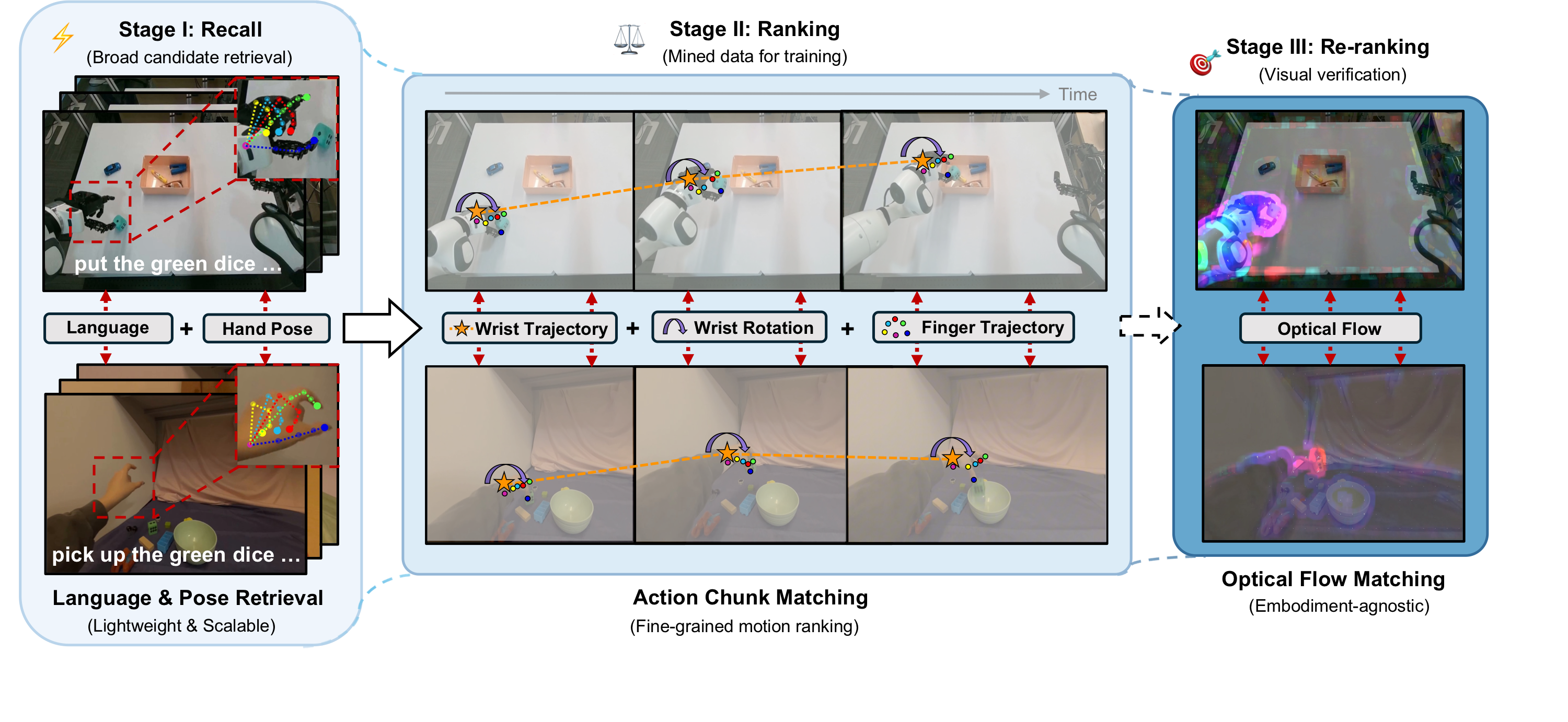
How the mine works
For each robot demonstration, SiMDex runs a cascade over a pool of about 32 million egocentric human samples (derived from EgoDex):
- Recall — cheap language + hand-pose similarity
- Ranking — wrist trajectory, wrist rotation, and finger motion alignment (this subset trains the VLA)
- Re-ranking — optical-flow check so kinematic look-alikes that do not match real motion get filtered
Actions live in a morphology-agnostic space (wrist 6D pose + five fingertip positions). The authors stress that the VLA architecture and training recipe stay unchanged — only the human data mix changes.
The result that sells the paper
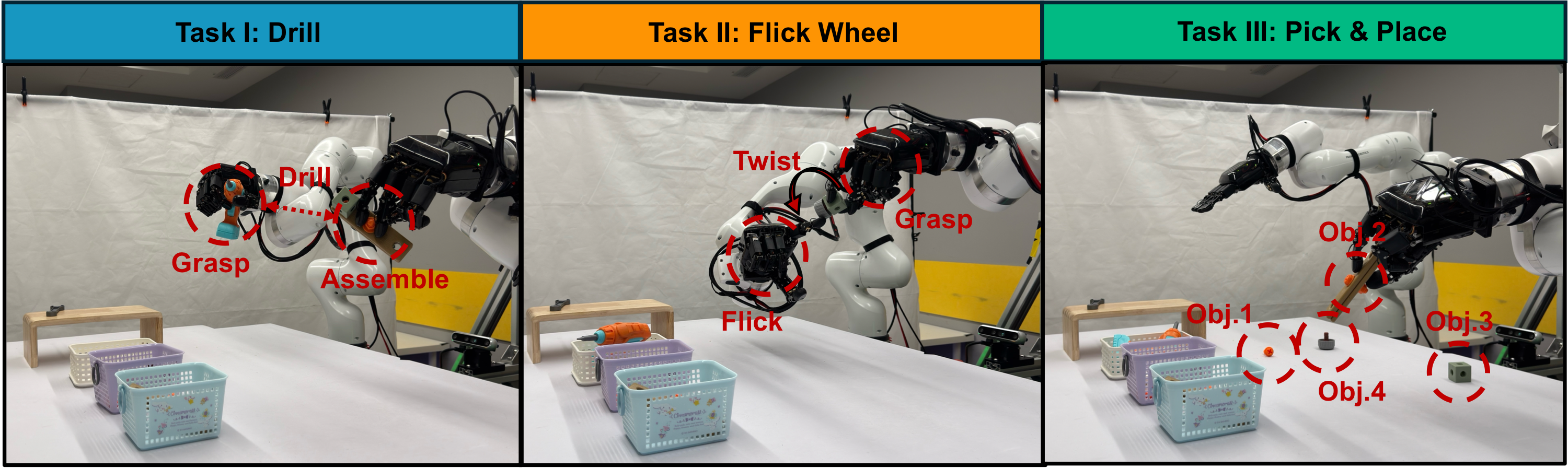
Against a strong baseline trained on the same amount of randomly sampled human data, SiMDex uses about 1.49M mined samples (<5% of the pool) and lifts overall success from 47.7% to 61.1% (+13.4 points) on three real dexterous tasks:
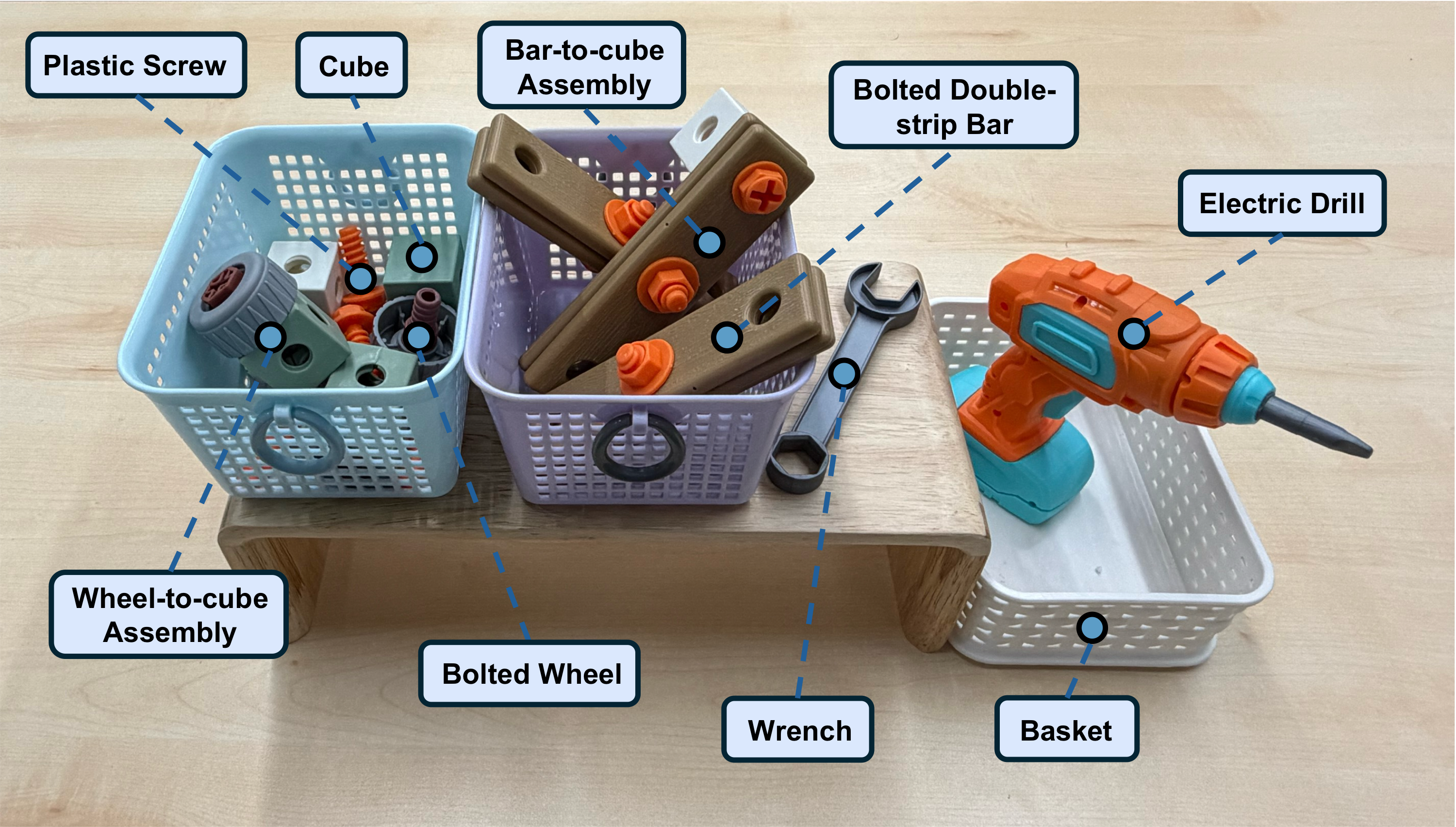
- Drill — multi-step tool use (grasp, assemble, trigger)
- Flick Wheel — fine fingertip twist/flick
- Pick & Place — four object geometries
Stages are scored separately so a late failure does not hide an early skill. Project demos include side-by-side rollouts versus a GR-Dexter baseline.
A Human’s Take
Selection beats scale is a useful corrective in a year when every lab is hoarding ego hours. If <5% of a curated pool beats an equal-size random dump, the next bottleneck is mining quality, not disk. I want open-sourced retrieval indices and a third-party hand stack to rerun the same three tasks. Until then, SiMDex is a strong argument that “more human video” is not the same as “better human video.”