A Month-Old Startup Puts a Biped in a Go-Kart, One Take
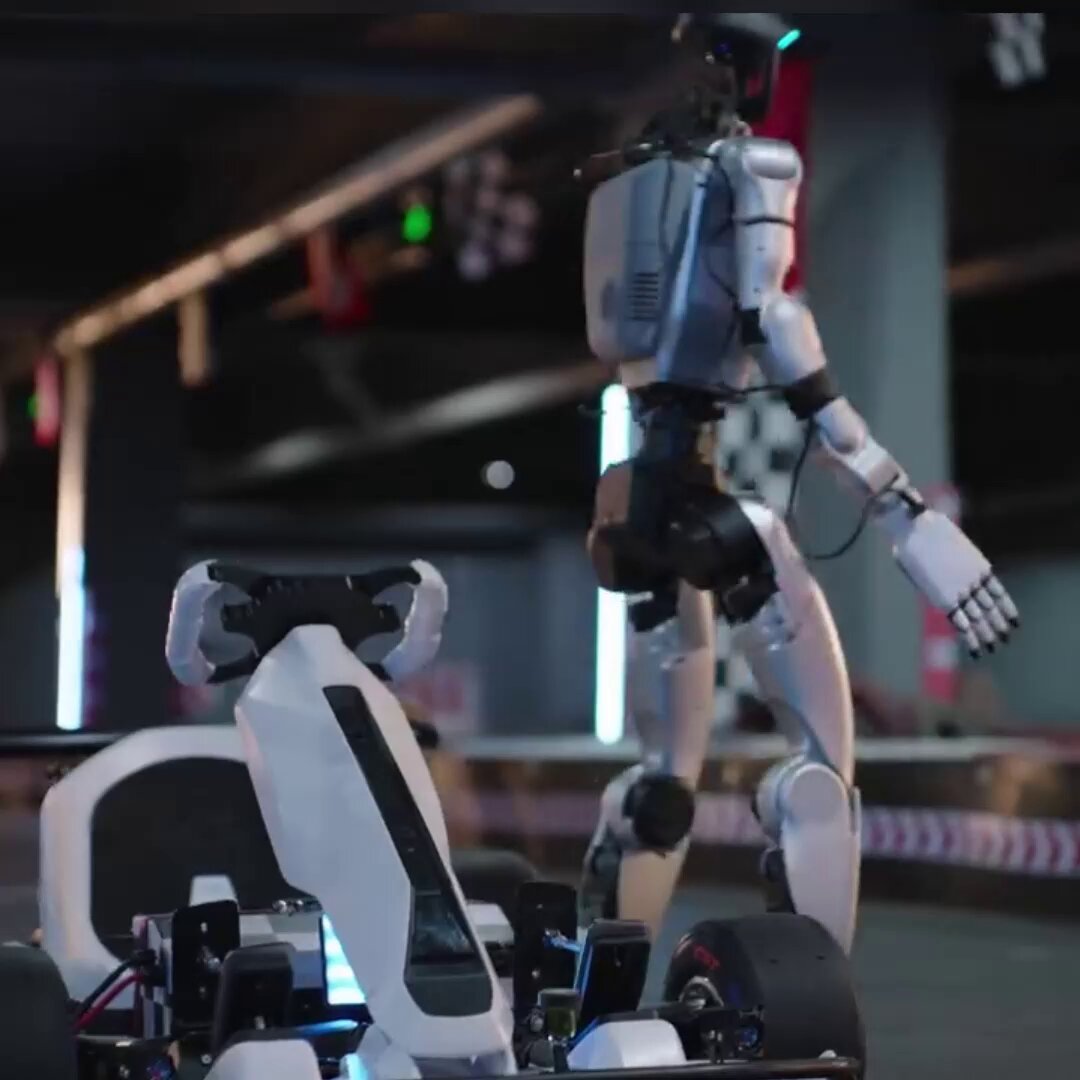
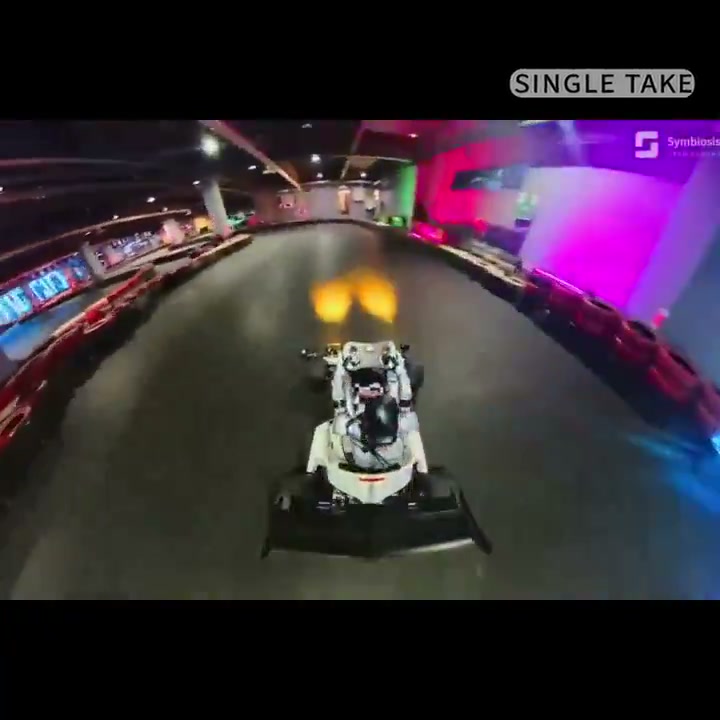
Symbiosis Robotics, a new embodied-AI shop founded by Zhejiang University and Westlake University doctoral graduate Ding Pengxiang, posted a bipedal humanoid driving a go-kart. The robot walks to the seat, puts both hands on the wheel and both feet on the pedals, then runs a closed indoor track. TMTPOST dates the first public drop to August 17–18. IT Home says the company website went live the same week.
The company is blunt about what this is not. Karting is not the product. It is a whole-body stress test: vision, multi-contact balance, hand–eye–foot timing, and force on the throttle in one continuous chain.
Direct Perception Control, not brain-plus-cerebellum
On its research page, Symbiosis names the stack Direct Perception Control (DPC). Most whole-body systems still split a high-level “brain” that outputs a motion goal from a frozen low-level tracker that chases that goal. The company lists three failure modes of that split: the motion interface can drop control-relevant detail, the two stages train on different losses, and the tracker can only emit actions it already learned.
DPC deletes the intermediate motion token. One model maps vision, language, body state, action history, and execution feedback straight to joint and hand targets. Symbiotic Attention lets perception and control attend to each other under a shared action objective. DriftDistill then exposes the student to drifted states in closed-loop rollouts and distills recovery from a frozen teacher.
IT Home, citing the same report, says the kart run uses a Unitree humanoid: right foot on the throttle, a fast right turn before the corner exit.
The data claim, and the limits
The DPC write-up converts mixed human and robot logs into G1-executable, time-aligned joint trajectories, then scales that set to 15,010 hours: 6,781 hours of human ego video, 4,024 hours of armed-robot data, 3,660 hours of wheeled-humanoid data, and 545 hours of bipedal-humanoid data.
Qbitai notes the team includes people from BAAI, HKUST, Xiaomi, DAMO, Ant, and Tsinghua, and that Ding’s ReconVLA work won an AAAI-26 outstanding paper award. The same piece says the kart clip is a stage check, not proof of general driving.
Planned follow-ups on the company page: mobile pick-and-place, constrained loco-manipulation, contact force control, and longer task chains.
A Human’s Take
I’m so here for a first demo that is sit-down-and-drive instead of another hallway walk. Climbing into a tight cockpit is the interesting part; the lap is the receipt. I still want a success rate, a speed, and whether the clip is 1×. Until those show up, treat this as a very cool lab exam, not a race team.