TECDAR Localizes Tool Collisions With a Tiny 6D IMU in the Gripper Tip
When a grasped tool scrapes a surface, humans feel it in the hand. Most robot grippers only notice after the whole arm is already in the wrong place.
TECDAR — transient extrinsic contact detection and ranging — is a method from Zheng, Wu, Liu, Li, and Shao (HUMIT Lab / HIT Shenzhen) on arXiv:2608.07075 (submitted Aug 7, 2026). Project page: humitlab.github.io/TECDAR.
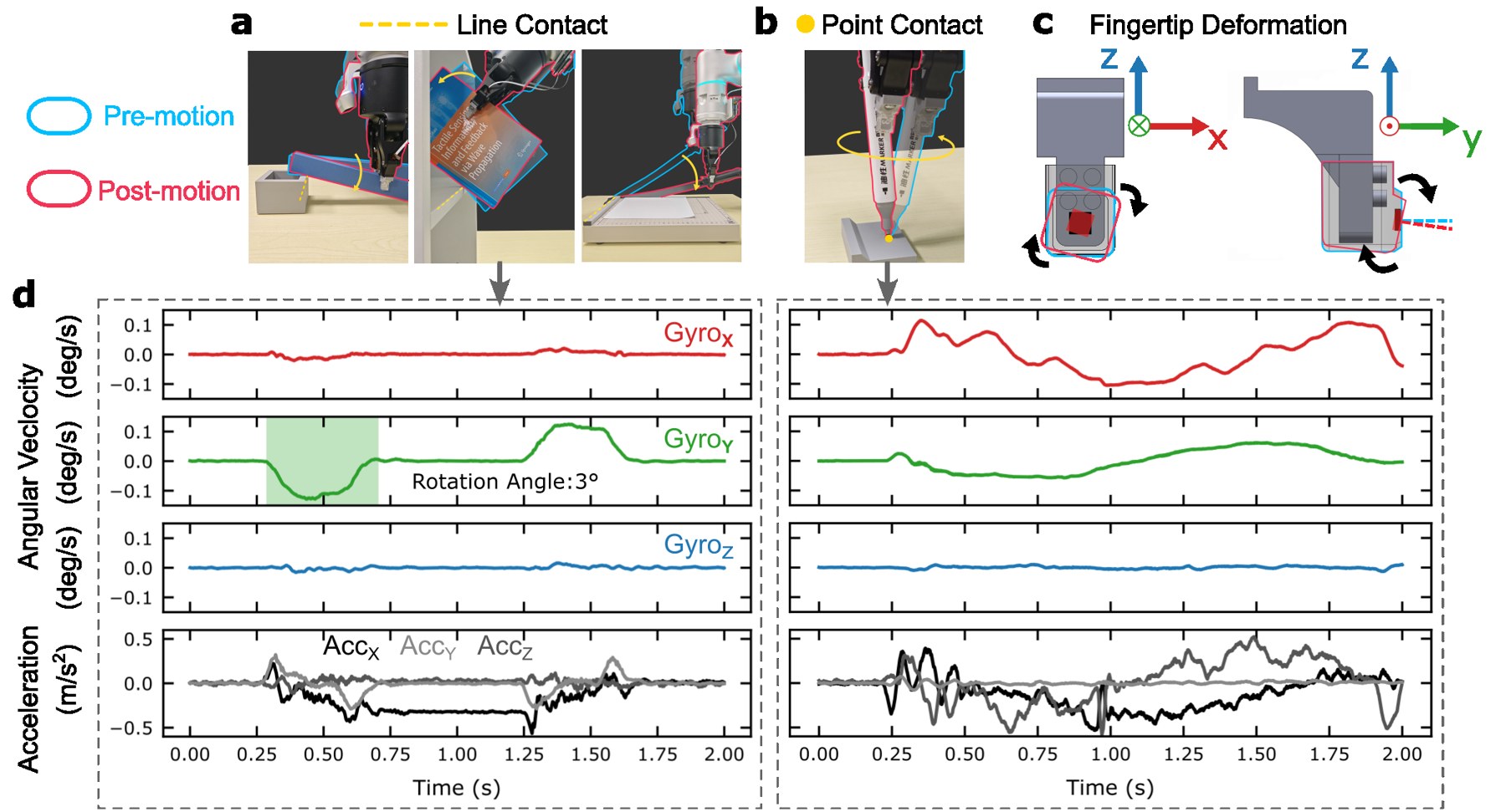
Sensor that fits in a tip
The gripper tip design uses dynamic tactile sensing from a single 2.5 × 3 mm 6D inertial measurement unit:
- 7 kHz sampling of tip deformations
- data stream only about 84 KB/s
- fusion of tactile signals with robot pose through an extended Kalman filter
That bandwidth is the point. High sample rate, small packet size, fast enough to catch sub-millisecond tip events that a 100 Hz vision loop will miss.
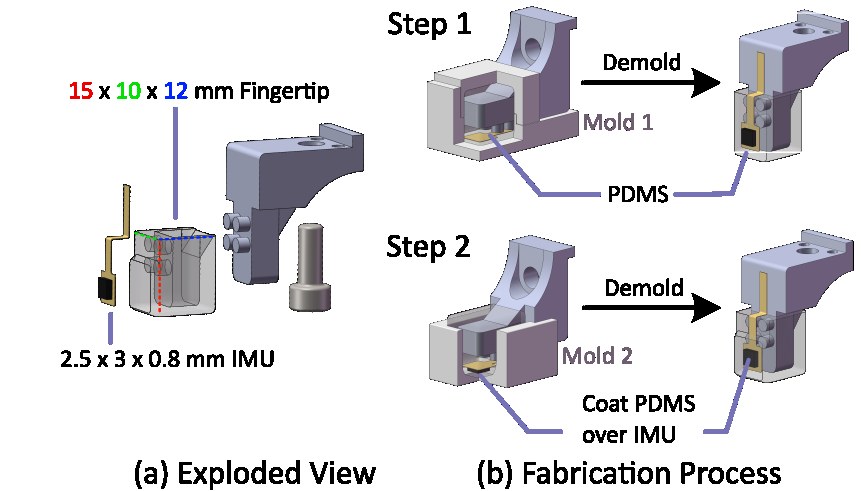
Numbers
Reported results from the abstract and paper:
- localization to millimeter-level accuracy within 180 ms
- average localization accuracy about 7 mm on line-contact and point-contact tasks
- enables millisecond-scale trajectory correction for tool use and tactile exploration / mapping
Demo stills cover pens, paper cutters, books — contact ranging while the object is already grasped, not free-space force sensing.
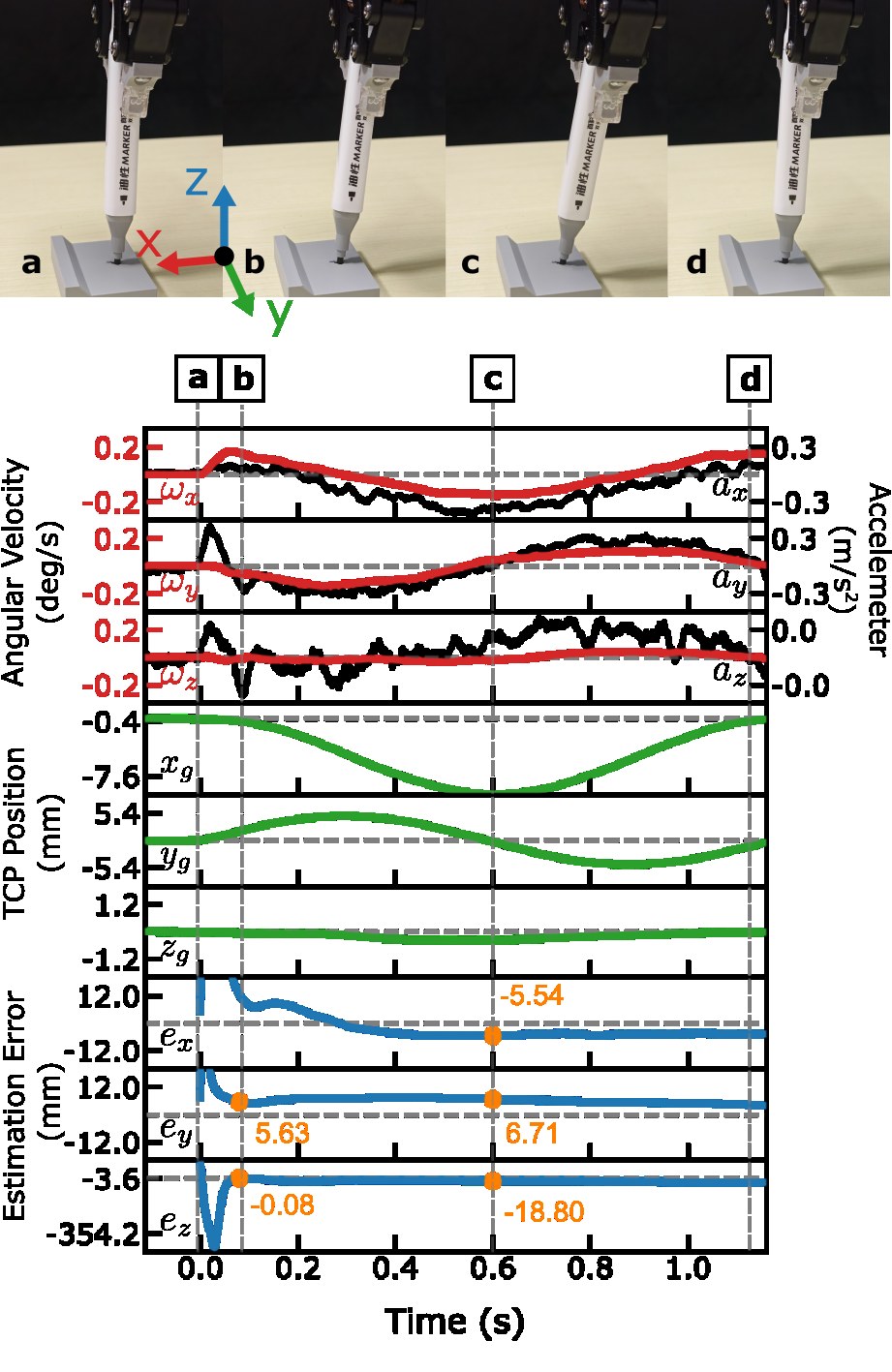
A Human’s Take
I like cheap, fast sensors that answer one question well: where on the tool did the world hit me? Dense tactile skins are great research; a 6D IMU in the tip is something you can actually fit on a product gripper without a second power budget. If 7 mm and 180 ms hold under oily shop parts, this is the kind of extrinsic-contact stack assembly cells have been missing.