TEMPO Splits VLA RL: Freeze Semantics, Train Actions Fast
Most teams post-train a vision-language-action model the same way: one RL loop, same step size, every weight fair game. That is simple. It is also a good way to scramble the semantics that made the pretrained model useful.
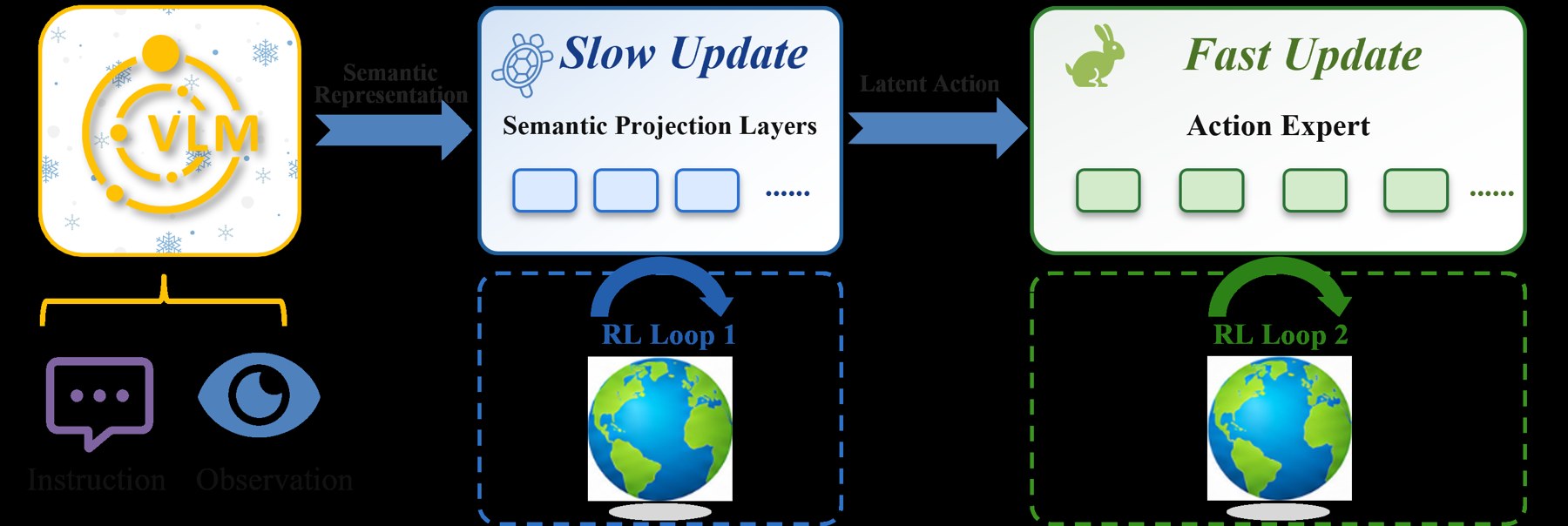
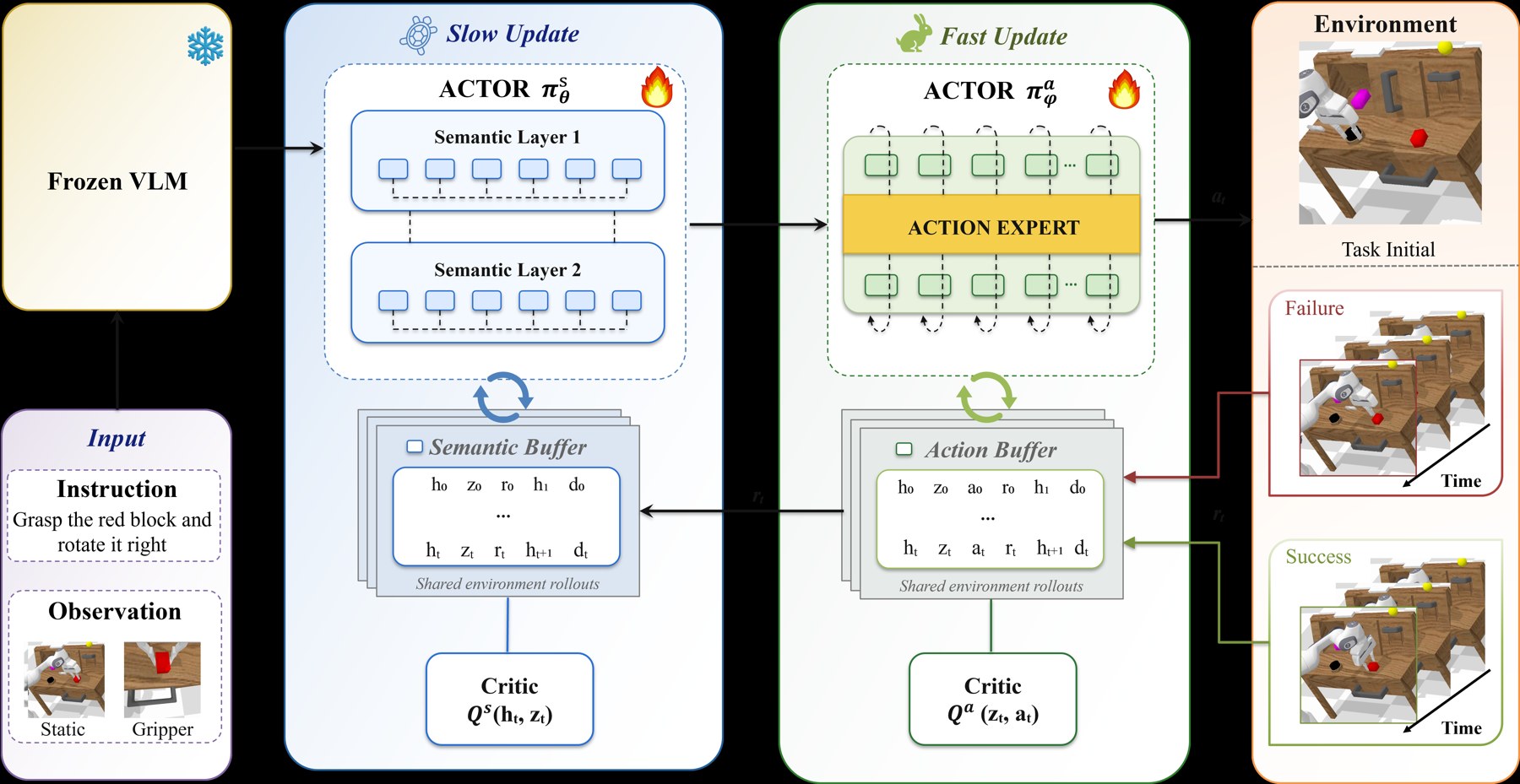
TEMPO (arXiv:2608.07314, submitted Aug 7, 2026) is a semantic-action decoupled, two-timescale RL post-training framework for VLAs. Authors Ziheng Liu and Quantao Yang freeze the pretrained vision-language backbone and only adapt two pieces: a semantic projection layer (updated infrequently) and a low-level action expert (updated frequently).
Why the split
The paper’s diagnosis is functional, not fashion:
- SFT drifts when the deployment distribution leaves the demo set.
- Uniform online RL applies the same update strategy to every component, even though language grounding and low-level control are not the same job.
TEMPO’s answer: keep general semantic representations fixed. Let the projection layer move slowly so latent actions stay stable. Let the action expert take the high-rate feedback from online interaction.
Results
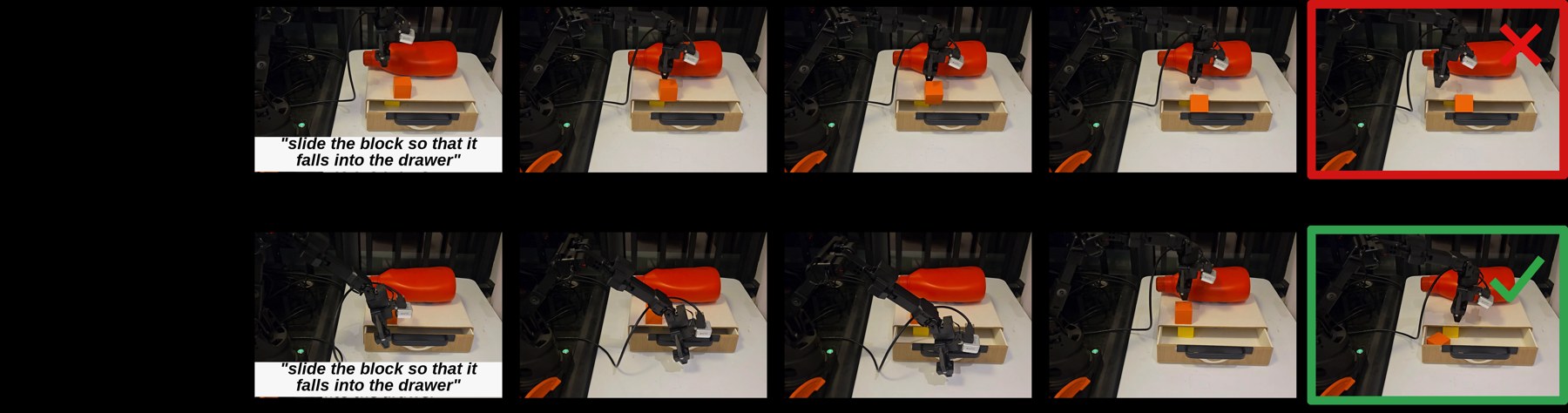
On the CALVIN benchmark and two real-world manipulation tasks, the paper reports that TEMPO consistently outperforms both pretrained state-of-the-art VLA baselines and a uniform RL post-training baseline, while reaching and maintaining higher evaluation rewards on the real tasks.
The authors frame the contribution as training discipline rather than a new architecture brand: same model family, different update schedule and freeze policy.
A Human’s Take
Here’s what I care about: whether the backbone is still a generalist after a weekend of on-policy thrashing. Fast control updates and slow semantic updates is how a lot of industrial control stacks already think, just without the transformer marketing. If TEMPO’s two-timescale split keeps holding when the action expert is wrong for longer than a lab session, post-training VLAs for a new cell gets less of a “hope we didn’t break language” exercise.