THRIVE Is a 50-Centimeter Therapist You Can Also Render
THRIVE (Therapeutic Humanoid Robot In Virtual Environment) is a home rehab stack for kids with upper-limb motor impairment, written up this week by Jin Xu, Yu-Ping Chen, and Ayanna Howard at Georgia Tech, Ohio State, and Georgia State.
The paper’s diagnosis is familiar: cerebral palsy hits about 1 in 345 U.S. children, most of them in the arms, and clinic-style repetition is hard to keep doing at the kitchen table. THRIVE’s answer is three parts that unplug from each other: VR games, a depth camera, and a small social robot that can also be a video or a sprite.
Four games, no Kinect
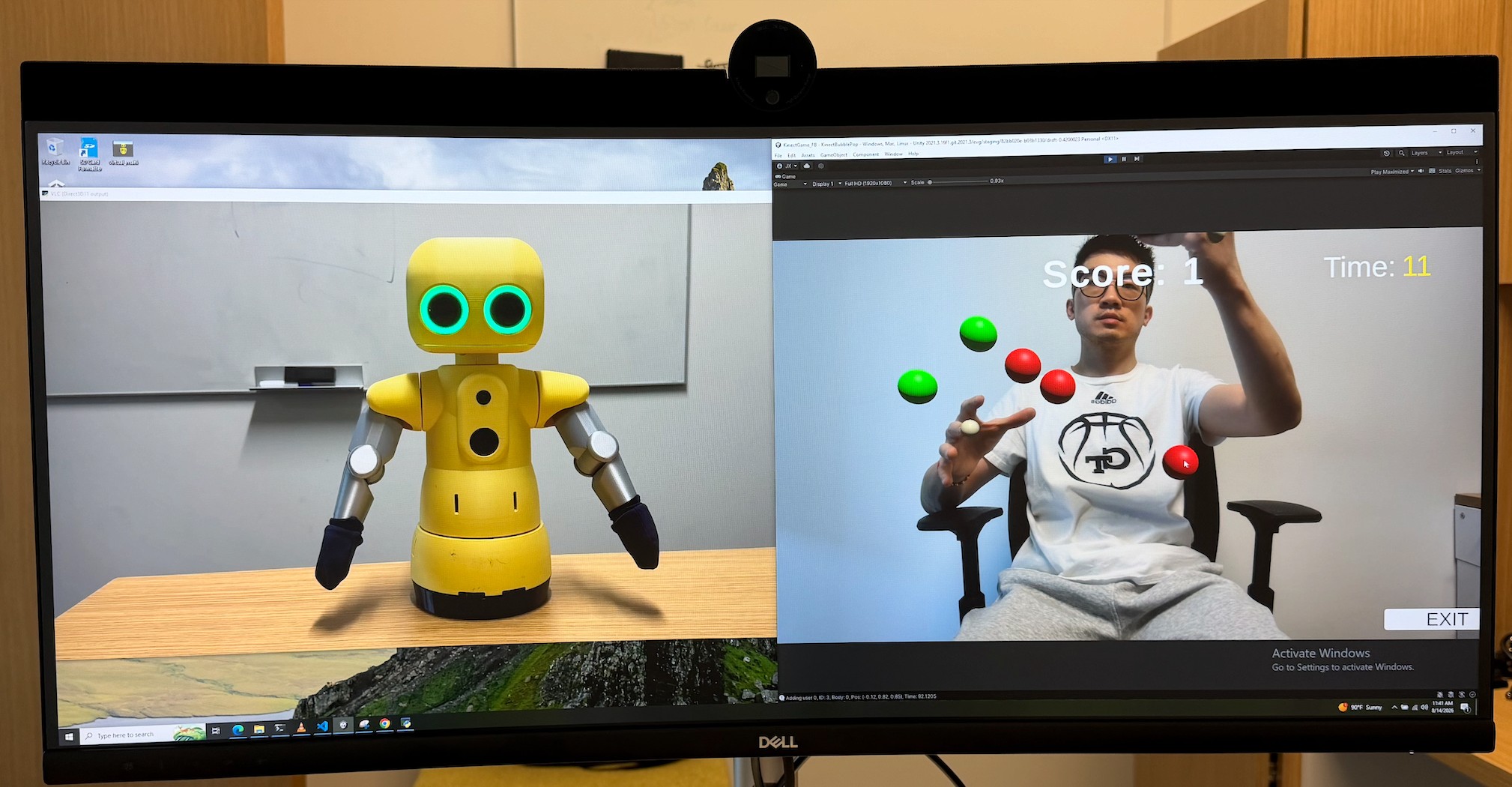
The games are a Super Pop VR remake after Microsoft killed the original camera. Targets can be bubbles, squares, or cartoon characters, with color, shape, and speed set per child.
- Popping: both arms, green bubbles good, red bubbles bad, timed
- Hitting: knock through a row of three to five
- Catching: one bubble drifting on both axes
- Grabbing: touch, carry, drop into a box
The motions they want are overhead, outward, and across midline, the ones kids with CP tend to skip. Tracking started on an Azure Kinect DK and moved to an Orbbec Femto Bolt after Azure Kinect was discontinued in 2023.
A 270-gram coach with three bodies
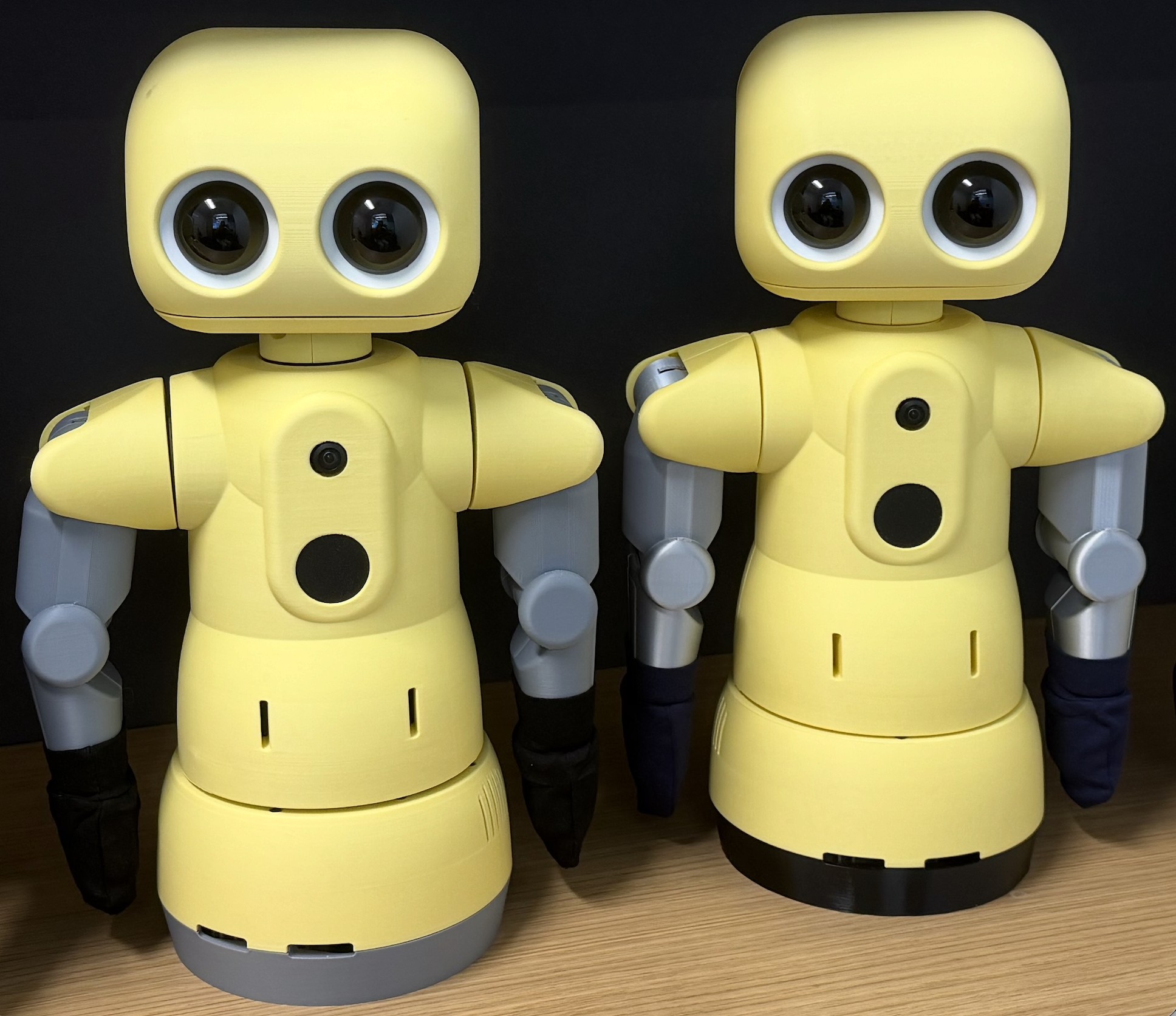
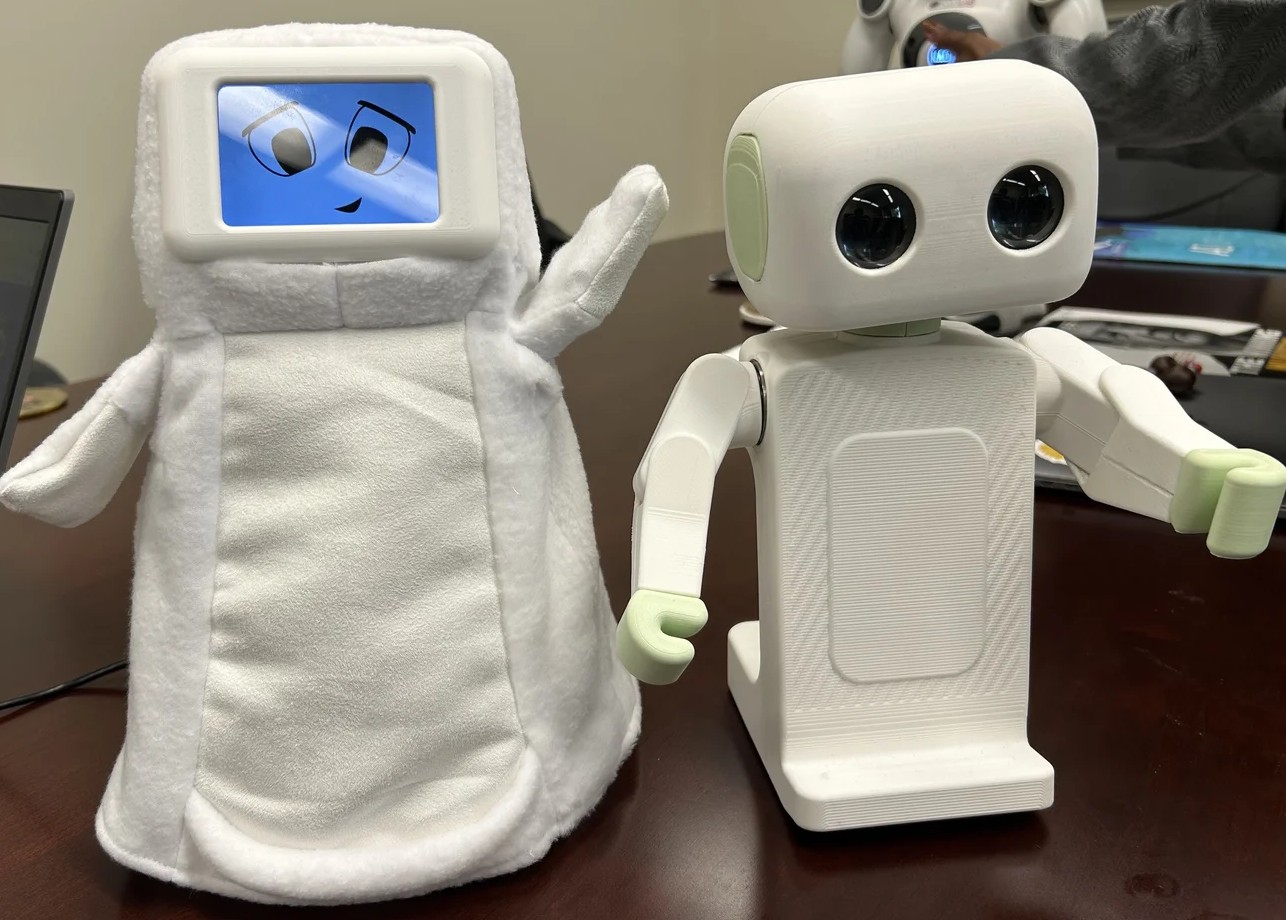
The physical robot was designed with startup Hello Robotics (hello-robo.com). It is 3D printed, about 50 cm tall, about 270 g, 7 DoF, Raspberry Pi 5, speakers, mics, and LED eyes. Green eyes mean idle. Blue means talking. The arms do a small orator wave while it speaks.
Scripts come from the older SuperPop-NAO study, then GPT-4 writes variants so kids do not hear the same sentence every session. A canned intro in the paper: “Hello. My name is Thrive, and I will be playing SuperPop with you today…” Mid-game it can say “Move a little faster” or “Let us move at the exact same speed.” After a round: “Fantastic! Wow! Good game.”
If you cannot ship the plastic, they film the same behaviors and play them as a remote-presence therapist, or render a CAD-matched virtual agent inside the game so a regular PC is enough.
What this paper is not
It is a platform paper. Future work, they write, is a trial with children with CP on physical versus remote-presence setups, looking at engagement, adherence, and motor outcomes. Funding is NIDILRR award 90IFST0009. Hello Robotics’ public site currently leads with MAKI Pro, a desktop Android; the paper cites that company as the hardware partner, not as a clinical-result source.
A Human’s Take
I like that they treated the robot as a coach you can swap, not as the therapy. A 270-gram 7-DoF print is the right size for a kid’s desk. The missing piece is the trial they have not run yet. Until someone measures reaching after eight weeks, this is a well-documented toy chest with a very polite yellow face.
Sources
- arXiv:2608.14462 — THRIVE abstract
- arXiv PDF — THRIVE full paper
- Hello Robotics — company site cited in the paper